
Home > Fire Suppression > Clean Agents
Clean Agent Fire Suppression Systems
Fast, residue-free fire suppression for sensitive assets, high value equipment, and mission-critical operations.
Clean agent fire suppression is designed to extinguish fires without water damage, cleanup, or corrosion. These systems are a strong fit for spaces where uptime matters and where sprinklers or dry chemical would create unnecessary collateral damage, including data centers, control rooms, telecommunications, medical environments, museums, archives, and industrial special hazards.
Suppression Systems, Inc. (SSI) designs, installs, and services clean agent solutions across Pennsylvania and the East Coast, with engineering support for complex hazards and code compliance under applicable NFPA standards.
At a Glance
- Rapid suppression to limit damage and downtime.
- Zero residue, no powder, no foam blanket, no secondary cleanup.
- Electronics and asset friendly when correctly engineered for the hazard.
- Multiple agent options including FK-5-1-12 (Novec 1230 class), inert gas blends, and select HFC agents where appropriate.
- Turnkey delivery from hazard review and design through installation, commissioning, and long-term inspection and maintenance.
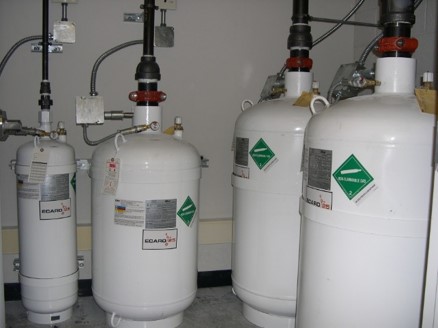
What Is a Clean Agent Fire Suppression System
A clean agent system uses a gaseous or vaporizing agent to suppress fire without leaving residue. In most applications, clean agents are paired with early detection and releasing controls, then discharged through a dedicated piping and nozzle network designed for the specific hazard.
How Clean Agents Suppress Fire
- Heat absorption, reducing flame temperature below the point of sustained combustion (common with FK-5-1-12 class agents).
- Oxygen reduction, lowering available oxygen in the hazard zone (common with inert gas systems).
- Chemical interruption of the flame chain reaction (common with certain HFC agents).
The correct agent and design depend on the space, the fire risk, occupancy, ventilation, and the authority having jurisdiction (AHJ).
Where Clean Agent Systems Are Used
- Data centers and server rooms, racks, UPS rooms, switchgear, telecom hubs.
- Control rooms and electrical rooms, MCCs, substations, SCADA spaces.
- Museums, archives, and libraries, irreplaceable collections and documents.
- Healthcare and laboratories, sensitive equipment and continuity needs.
- Industrial special hazards, high value machinery areas where water damage is unacceptable.
Clean Agent Options SSI Designs and Installs
FK-5-1-12 (Novec 1230 Class) Systems
FK-5-1-12 class clean agents are widely specified for special hazards where residue-free suppression and environmental considerations are important. These systems are typically engineered for fast discharge, uniform distribution, and the correct design concentration for the hazard.
Learn more: FK-5-1-12 clean agent systems
Inert Gas Systems (IG-55, IG-541 and Related Blends)
Inert gas systems suppress fire by reducing oxygen concentration in the protected space. They are a strong option for facilities seeking a long-term, naturally occurring agent strategy. Proper room integrity and engineered discharge are critical to performance.
Learn more: ProInert2 inert gas systems
HFC Agents and Long-Term Planning
Some legacy and specialty projects use HFC-based clean agents. Where HFC options are considered, planning should include supply availability, lifecycle considerations, and regulatory awareness. SSI helps clients compare technologies and choose a path that matches risk, uptime goals, and facility constraints.
Related reading: AIM Act overview and HFC phasedown planning
Engineering and Code Considerations
- Hazard and fuel load assessment to confirm the correct agent type and design basis.
- Room integrity and leakage considerations, especially for total flooding systems.
- Detection and releasing controls coordinated with your alarm and suppression sequence.
- Nozzle layout and hydraulic calculations using manufacturer design methods and field experience.
- Compliance documentation for AHJ review and insurance requirements.
SSI frequently engineers clean agent systems in accordance with applicable standards and accepted practices, including NFPA guidance for clean agent systems and fire alarm integration where required.
Helpful standards resources: NFPA Codes and Standards, OSHA
Inspection, Testing, and Maintenance
Clean agent systems are only protective when maintained. SSI provides inspection, testing, and maintenance to help keep systems reliable, code-aligned, and ready to perform. Service activities may include cylinder checks, system integrity review, functional testing of releasing components, and documentation for compliance and audits.
Explore: Service and maintenance support
Related Fire Suppression Technologies
Some hazards call for alternatives to clean agents. SSI also designs and supports:
- CO2 fire suppression systems
- Fike DuraQuench Pro water mist
- Fike Micromist self-contained water mist
- Victaulic Vortex hybrid fire suppression
- Full fire suppression overview
Why SSI
- Special hazard focus across fire suppression, detection, and explosion protection.
- Code-driven engineering with documentation that supports AHJ and insurer review.
- End-to-end execution from design through commissioning and lifecycle service.
- Regional responsiveness across PA and the East Coast for inspection, repairs, and upgrades.
Learn more about SSI: About SSI
Clean Agent FAQ
Are clean agents safe for occupied spaces
Suitability depends on the agent, design concentration, and the specific space. SSI engineers systems to align with applicable safety guidance, sequencing, and code requirements, and reviews constraints with the AHJ.
Do clean agent systems require a sealed room
Many total flooding systems perform best when room integrity supports the required hold time. Leakage and ventilation impact performance, so room integrity assessment is often part of proper system design.
What is the best clean agent for my facility
The best solution depends on your hazard, occupancy, downtime tolerance, environmental objectives, and building constraints. SSI can compare FK-5-1-12 class agents, inert gas options, and other fire suppression technologies and recommend the best fit.
Request a Clean Agent Consultation
If you are evaluating clean agent suppression for a data center, control room, archive, or special hazard, SSI can help you select the right technology and deliver a compliant design.
Contact SSI to discuss your project | Call 800-360-0687
Manufacturer resources (non-competitive): Fike, Standard Fluids