
Video Fire Detection (VFD) — AI-Powered Fire and Smoke Detection for Environments Where Spot Detectors Fail
Suppression Systems, Inc. (SSI) designs and installs Video Fire Detection (VFD) and thermal imaging systems for warehouses, aircraft hangars, industrial facilities, recycling plants, and any environment where conventional ceiling-mounted smoke detectors cannot provide reliable early warning.
VFD uses cameras and AI-driven image analytics to continuously monitor the protected space — identifying the visual signatures of flame and smoke at the level where they are actually occurring, not at a fixed sensor point 40 feet overhead. For environments with high ceilings, high airflow, extensive racking, or extreme particulate conditions, it is often the only detection technology that will reliably activate early enough to matter.
SSI deploys VFD systems across Pennsylvania, New Jersey, Maryland, Virginia, and Delaware, integrated with Fike fire alarm panels and Autocall TrueSite graphical workstations for unified monitoring and response.
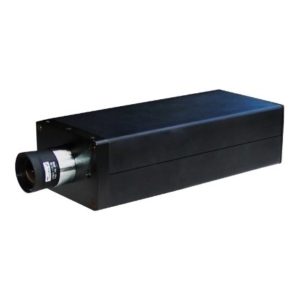
How Video Fire Detection Actually Works
Conventional smoke detection is reactive — a sensor waits for smoke particles to physically reach it. VFD is observational — cameras continuously watch the environment, and image analytics identify the distinctive visual patterns that flame and smoke produce. The detection happens at the scene, not at the ceiling.
A properly deployed VFD system combines three technical elements:
1. High-Resolution Camera Coverage
VFD cameras are positioned to cover the protected area — typically at height, but oriented to watch the zones where fire is most likely to develop: racking aisles, process equipment, storage areas, charging stations. A single VFD camera covers significantly more floor area than a single spot detector, and can be positioned to see places — such as deep within racking — that ceiling-mounted detectors physically cannot monitor.
2. Image Analytics and Pattern Recognition
The system analyzes each camera feed in real time, looking for the specific visual signatures of fire events: brightness changes consistent with flame, flicker patterns within known frequency ranges, movement patterns consistent with rising smoke, and color/shape characteristics distinct from ambient activity in the scene. These signatures are mathematically distinct from normal activity — forklifts moving, lights switching on, sunlight shifting through windows.
3. AI-Driven False Alarm Discrimination
The biggest operational problem with conventional detection in industrial environments isn’t missed fires — it’s nuisance alarms. Welding, steam from washdown, forklift exhaust, sunlight reflections off metal surfaces, and airborne dust all routinely trigger conventional smoke detectors. VFD analytics are specifically trained to distinguish these signatures from actual fire signatures — dramatically reducing false alarm rates while maintaining sensitivity to real events.
The core VFD advantage: VFD detects fire where it is, not where smoke eventually travels. In environments where smoke may not reach a ceiling detector at all — or may take minutes to do so — this is the difference between early warning and no warning.
When VFD Is the Right Detection Choice — and When It Isn’t
VFD isn’t a universal replacement for conventional detection. It is a specific solution for specific environmental challenges. The table below maps common detection problems to the technologies that actually solve them:
| Environment / Challenge | Best Detection Approach |
|---|---|
| High ceilings (above 30 ft), open floor area | VFD — overcomes smoke stratification and airflow dilution |
| High-bay racking with 30–40 ft vertical storage | VFD + linear heat detection in rack |
| Frequent nuisance alarms from welding, steam, or forklift exhaust | VFD — AI filtering discriminates these signatures |
| Extreme dust, debris, or particulate environment | VFD or thermal imaging — spot detectors foul quickly |
| Pre-ignition heat detection need (batteries, conveyors) | Thermal imaging — detects heat before visible fire |
| Data center or clean room — incipient smoke detection | VESDA air sampling — detects smoke before visible |
| Outdoor or open-air hazard (petrochemical, fuel storage) | Optical flame detection |
| Standard office or commercial space with normal ceiling heights | Conventional spot detection (addressable smoke/heat) |
In many large facilities, the right answer is a combination — VFD for the open floor and high-bay areas, spot detectors in offices and ancillary spaces, thermal imaging at critical assets, and air sampling in sensitive rooms. SSI designs integrated detection strategies that use each technology where it performs best.
Where SSI Deploys Video Fire Detection Systems
VFD is engineered for environments that challenge conventional detection. Specific applications where SSI has deployed VFD and thermal imaging systems include:
Warehouses and Distribution Centers
High ceilings, high-bay racking, substantial HVAC airflow, and frequent dock door openings create a detection environment where ceiling-mounted spot detectors routinely fail to provide reliable early warning. VFD provides direct visual coverage of rack aisles and floor areas where fires actually start. Read our full guide on warehouse and high-bay fire detection →
Aircraft Hangars and Maintenance Bays
Extreme ceiling heights, large door openings, jet exhaust interference, and fueling operations create conditions where conventional detection is unreliable. VFD combined with optical flame detection provides the speed and discrimination required for hangar fire protection under NFPA 409.
Manufacturing and Processing Facilities
Process heat, welding activity, and industrial airflow routinely trigger spot detector nuisance alarms. VFD’s AI-based discrimination distinguishes real fire signatures from normal process activity — maintaining detection sensitivity without the false alarm burden that erodes operator trust in the system.
Waste Management and Recycling Plants
Dust, debris, and airborne particulate foul conventional detectors and cause persistent nuisance issues. Self-heating within waste piles can also develop into fire without visible smoke reaching the ceiling. VFD and thermal imaging provide coverage for these environments where ceiling detectors simply cannot be maintained reliably.
Lithium-Ion Battery Storage and Charging Areas
Battery thermal runaway events produce a distinctive heat signature before visible smoke or flame develops. Thermal imaging combined with VFD — and purpose-built technologies like Li-Ion Tamer — provide pre-ignition detection for BESS installations, warehouses with heavy forklift charging operations, and data centers.
Historic and Architecturally Sensitive Buildings
Historic interiors, atriums, and architecturally sensitive spaces often cannot accommodate the ceiling penetrations required for conventional spot detection. VFD cameras can be positioned discreetly and integrated into existing surveillance infrastructure while providing full fire detection coverage.
Cold Storage and Refrigerated Warehouses
Extreme temperature differentials and high humidity make spot smoke detectors unreliable in cold storage environments. VFD and linear heat detection operate reliably in freezer and cooler conditions where conventional detectors are limited.
NFPA 72 Recognition and Code Compliance
NFPA 72 — the National Fire Alarm and Signaling Code — explicitly recognizes Video Fire Detection as a listed detection technology. VFD is not an alternative or supplemental system that requires special variance; it is a compliant primary detection method when properly designed, installed, and listed for the application.
SSI designs VFD systems to meet the full applicable code stack:
- NFPA 72 — detection system design, installation, testing, and maintenance requirements for VFD and related technologies
- UL listing requirements — all VFD cameras and analytics software must be listed for fire detection service
- Integration with UL 864-listed control panels — VFD systems connect to Fike and Autocall fire alarm panels as supervised detection inputs
- AHJ coordination — SSI handles permitting, submittals, and acceptance testing with the local AHJ for every installation
- Commissioning and documentation — full as-built documentation, calibration records, and sensitivity settings
- Annual testing and recalibration — VFD systems require ongoing verification under NFPA 72 test schedules
Integration With Fire Alarm Panels and Graphical Workstations
A VFD system is most effective when it is not a standalone surveillance tool, but a fully integrated part of the building’s fire alarm network. SSI installs VFD systems that feed directly into:

- Fike fire alarm panels — VFD cameras report as supervised detection inputs to the Cheetah Xi, SHP-PRO, and FCP panel platforms, with full event logging and releasing panel integration for suppression-equipped facilities
- Autocall TrueSite Workstations — VFD events display on graphical campus maps and floor plans, allowing operators to see both the alarm event and the live camera feed in one interface for instant verification
- Building management system integration — VFD events trigger coordinated building response including HVAC shutdown, door control, and mass notification activation
- Remote operator monitoring — facility managers and security personnel can verify events from off-site through integrated remote client software
This integration matters practically: an operator who sees both the alarm and the live camera image can verify the event and dispatch appropriate response in seconds, rather than sending a crew to physically investigate every activation.
Why SSI for Video Fire Detection
VFD is an engineering-intensive detection technology. Camera placement, field of view, lighting conditions, analytics calibration, and integration with the facility’s fire alarm panel all affect whether the system performs reliably over its operational life. SSI’s approach to VFD installation reflects that reality.
- Site-specific detection engineering — we evaluate ceiling heights, airflow, racking layout, lighting, and process activity before specifying a VFD design, not after
- Integrated detection strategy — SSI designs VFD as part of a complete detection approach, combining cameras, thermal imaging, spot detection, and air sampling where each performs best
- Fire alarm panel integration — VFD systems are installed as supervised inputs to Fike and Autocall panels, with complete event handling, not as standalone systems disconnected from the building’s alarm network
- Over 40 years of special hazard experience — SSI has been designing fire detection and suppression systems for challenging environments since long before VFD existed
- Regional expertise — we understand AHJ requirements across PA, NJ, MD, VA, and DE
- Long-term service and recalibration — VFD systems require periodic recalibration as facilities change; SSI handles this as part of ongoing service
Have a facility where conventional fire detection isn’t doing the job — or a new installation that needs it done right the first time? Contact SSI today to schedule a detection system evaluation or discuss a VFD project with our engineers.
Related SSI Resources
Detection Technologies:
- Warehouse Fire Detection — Why Ceiling Detectors Fail in High-Bay Facilities
- Advanced Fire Detection Systems at SSI
- Industrial Thermal Imaging
- Linear Thermal Detection
- Optical Flame Detection
- VESDA — Very Early Smoke Detection
- Li-Ion Tamer — Lithium-Ion Battery Detection
- Robotic Fire Watch Systems
Fire Alarm Panels That Integrate VFD:
- Fike Fire Alarm Systems
- Fike Fire Suppression Panels
- Autocall Fire Alarm Systems
- Autocall Fire Alarm Panels
- Autocall TrueSite Building Information System
Related Fire Alarm and Suppression: