
Industrial Fire Suppression Systems
Not every hazard is solved with sprinklers. SSI designs, installs, and services industrial fire suppression systems built around your fuel load, room risk, downtime tolerance, and compliance requirements.
Fast takeaway: Choose the suppression method that matches what you are protecting, what you cannot damage, and how quickly the fire can grow. Then engineer detection, releasing logic, and serviceability as one system.
Jump to
At a glance
Suppression systems we design and service
Selection guide
Common industrial applications
Design, installation, and service support
Downloads
FAQs
Request a consultation
At a Glance
What “industrial suppression” usually means
- A suppression agent matched to the hazard and the space
- Detection and releasing logic that triggers at the right time
- Interlocks, notifications, and shutdowns coordinated with your process
Where it is commonly used
- Critical rooms with electronics and high value assets
- Industrial hazards where water damage is unacceptable
- Special hazards, rotating equipment, process areas, vehicle bays
What trips projects up
- Trying to pick the agent first, without defining constraints
- Under-scoping detection, releasing, and supervision
- No service plan, which quietly degrades readiness over time
If you want fewer surprises, start with constraints, not brands.
Define what you are protecting, what you cannot contaminate or damage, occupancy considerations, ventilation and enclosure, acceptable downtime, and regulatory expectations. The system choice becomes obvious after that.
Suppression Systems We Design and Service
Clean Agent Systems
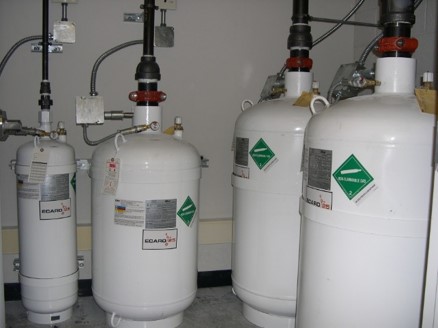
Designed for spaces where you need fast suppression with minimal cleanup and minimal asset impact, commonly used around sensitive equipment.
- Best for: data rooms, control rooms, electrical rooms, critical enclosures
- Design focus: enclosure integrity, ventilation, detection strategy, releasing logic
Related: Clean Agent Fire Suppression for Critical Rooms, ECARO-25 Systems
Carbon Dioxide (CO2) Systems
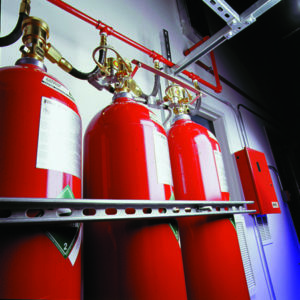
CO2 systems are used in specific industrial scenarios where rapid agent discharge is required and the hazard, space, and procedures support safe operation.
- Best for: select industrial hazards, machinery spaces, special hazard areas
- Design focus: safety procedures, supervision, detection, and controlled discharge
Related: Carbon Dioxide Systems, Fike CO2 Systems
Water Mist and Hybrid Systems

Water mist and hybrid approaches can provide effective suppression for certain risks while limiting collateral damage compared to traditional water delivery, depending on the hazard and space.
- Best for: specialized industrial hazards, select critical rooms, machinery protection
- Design focus: hazard type, coverage layout, water supply and system integration
Related: Fike MicroMist, Victaulic Vortex
Foam Suppression Systems
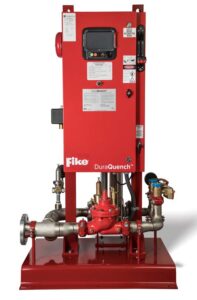
Foam systems are commonly used for specific flammable liquid and industrial hazards where surface coverage and rapid knockdown are priorities.
- Best for: select process hazards, industrial areas requiring foam-based protection
- Design focus: hazard classification, discharge method, and system reliability
Related: Fike DuraQuench Pro
Dry Chemical Systems
Dry chemical suppression is used for certain industrial hazards where rapid flame knockdown is needed and post-discharge cleanup is acceptable and planned.
- Best for: select industrial special hazards requiring fast knockdown
- Design focus: discharge pattern, detection and actuation, cleanup and restoration plan
Related: Dry Chemical Fire Suppression
Specialty Water Systems and Monitors
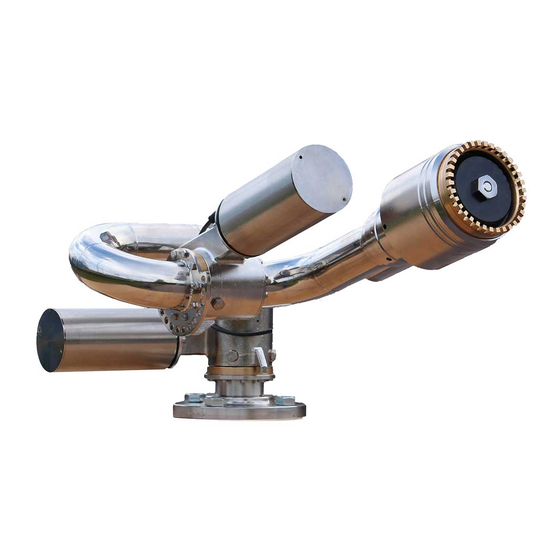
Specialty water suppression solutions, including monitors and application-specific water delivery, support industrial hazards where direct water application is the correct tactic and can be engineered safely.
- Best for: select industrial fire hazards needing targeted water application
- Design focus: coverage, hydraulics, controls, and integration with detection and operations
Related: Specialty Water Suppression Systems, Automatic Cannon Fire Suppression
Local Application and Pre-Engineered Options
Local application systems can protect specific hazards directly, reducing spread and limiting downtime when the protection scope is tightly defined.
- Best for: targeted hazards, enclosed equipment, point source risks
- Design focus: hazard confirmation, nozzle placement, activation, and service access
Related: Firetrace 3
Selection Guide
If you are picking a fire suppression system based on what you saw a competitor install, you are doing it backwards. Use this quick guide to align stakeholders before engineering begins.
| Your constraint | What it usually points to | What to verify in design |
|---|---|---|
| You cannot tolerate water damage | Clean agent, CO2, select mist or hybrid systems | Detection type, enclosure integrity, ventilation shutdown, releasing logic |
| The hazard is flammable liquid or process driven | Foam systems, specialty water approaches, hazard-specific methods | Discharge method, coverage, system reliability, operational procedures |
| You need targeted hazard protection, not whole-room | Local application systems, pre-engineered options | Nozzle placement, activation method, supervision, service access |
| Downtime is expensive, readiness matters | Any of the above, but engineered with supervision and serviceability | Inspection cadence, spare parts, testing plan, documentation, response support |
Before you request a quote, have this ready
- Room or hazard description, occupancy, and what must stay online
- Equipment layout, ceiling heights, obstructions, ventilation details
- Fire alarm integration needs, shutdown and interlock requirements
- Any existing suppression, detection, or special hazard constraints
Common Industrial Applications
- Critical rooms, electrical rooms, control rooms, and high value asset spaces
- Process hazards requiring foam, specialty water, or hazard-specific strategies
- Industrial equipment where local application protection reduces spread and downtime
- Facilities balancing compliance requirements with business continuity goals
Design, Installation, and Service Support
A suppression system is only valuable if it is installed correctly, tested correctly, and maintained with a plan. SSI supports the full lifecycle, design through service, so readiness does not decay quietly.
Engineered design
System selection, layout, releasing logic, and integration planning based on your space, hazards, and operational constraints.
Installation and commissioning
Correct installation, acceptance testing, documentation, and turnover support so the system is truly ready.
Inspection and service
Planned inspections, maintenance, and corrective actions to keep performance aligned with intent, not just “installed.”
Downloads
Frequently Asked Questions
How do I know which fire suppression system is right?
Start with constraints: what is the fuel, what can you not damage, is the space occupied, how is it ventilated, and what downtime is acceptable. Then match the agent and releasing strategy to those constraints.
Is a suppression system a replacement for sprinklers?
In many facilities, suppression systems protect specific hazards or critical rooms, while sprinklers protect the broader building. The right answer depends on your risk profile and design requirements.
What is the biggest mistake in special hazard suppression projects?
Selecting the agent without validating the room and operational realities, enclosure integrity, ventilation, interlocks, and the service plan. Those are the details that decide whether the system works when it matters.
Can SSI help with design and long-term service?
Yes. SSI supports design, installation, commissioning, and ongoing inspection and service programs so your system stays ready over time.
Trusted Systems and Integration
SSI works with proven suppression technologies and supports engineered integration, commissioning, and service so your protection is dependable, not improvised.
Request a Consultation
Get a suppression strategy that matches your risk and operations.
We can review your hazard, constraints, and goals, then recommend the right suppression approach and the right level of engineering detail to move the project forward.
Call: 1-800-360-0687
Request: Consultation

Suppression Systems Inc., 155 Nestle Way, Suite 104, Breinigsville, PA 18031