
Thermal Imaging Fire Detection and Hot Spot Monitoring
Thermal imaging fire detection uses infrared cameras to continuously measure surface temperatures across critical assets, identifying abnormal heat buildup before ignition occurs. By detecting the temperature rise that precedes fire — minutes or hours before smoke or flame appears — thermal imaging provides the earliest possible warning of impending fire conditions and supports predictive maintenance under NFPA 70B while complying with NFPA 72.
Suppression Systems, Inc. (SSI) designs, installs, and maintains thermal imaging detection systems for facilities across Pennsylvania, New Jersey, Maryland, Virginia, and Delaware. For over 40 years, our NICET-certified engineers have deployed pre-ignition detection technology in environments where conventional smoke and heat detectors react too late to prevent loss — battery energy storage, data centers, manufacturing, waste and recycling, and high-value electrical infrastructure.
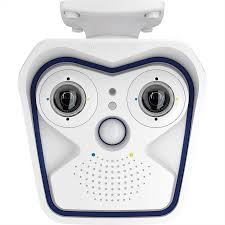
As a certified Fike partner, SSI integrates MOBOTIX thermal imaging with the building’s fire alarm panel, suppression releasing platform, building management system, and emergency communication infrastructure — turning early heat detection into a complete, coordinated response.

What Is Thermal Imaging Fire Detection?
Thermal imaging fire detection is a surveillance technology that uses infrared sensors to convert heat radiation into measurable temperature data and visual thermographic images. Unlike conventional fire detection — which waits for smoke particles or flame radiation — thermal imaging directly observes the temperature of every surface in its field of view, continuously, in real time.
Every object emits infrared radiation proportional to its temperature. A thermal imaging camera measures this radiation across thousands of points simultaneously and produces a visual heat map of the scene. When any point exceeds a learned baseline — or rises significantly above adjacent points — the system generates an alert. The entire process happens before there is any smoke, any off-gas, or any flame.
The core distinction: Conventional fire detection identifies a fire that has already started. Thermal imaging identifies the conditions that lead to fire — before ignition has occurred. The result is a fundamentally different relationship between detection and response: from emergency reaction to predictive intervention.
How Does Thermal Imaging Detect Fire Before It Starts?
A properly engineered thermal imaging fire detection system combines four technical capabilities, each addressing a specific limitation of conventional detection:
1. Continuous Infrared Surface Measurement
High-sensitivity infrared sensors measure temperature across every pixel of the camera’s field of view, every fraction of a second. A single camera continuously monitors thousands of measurement points — far more than would be practical with discrete temperature sensors. Resolution typically ranges from 320 × 240 to 640 × 480 pixels, with each pixel providing a measurable temperature value.
2. AI Baseline Learning
The system learns what normal looks like for the specific installation — process equipment heating during operation, electrical panels under load, battery cells during charging, ambient temperature variation by time of day. Alarms trigger on deviations from learned patterns, not on fixed temperature thresholds. A motor heating during normal operation does not alarm. A motor heating outside its normal operating envelope, or a bearing heating relative to its peers, does.
3. Environmental Performance
Thermal imaging operates reliably where smoke detection cannot — in total darkness, through dust, through high airflow, in outdoor conditions, and in environments with particulate contamination that would foul conventional detectors. The infrared signal is not affected by lighting conditions, smoke from neighboring activities, or the visual obstructions that limit other detection technologies.
4. Automatic Response Integration
When thresholds are exceeded, the system triggers a coordinated response — alarms at the operator console, supervised inputs to the fire alarm panel, HVAC modifications, equipment shutdown commands, mass notification, and notification to the central monitoring station. The same thermal image that shows the anomaly is preserved as a forensic record for incident investigation.
Thermal Imaging vs. Conventional Fire Detection: What’s the Difference?
Different detection technologies operate at different stages of a developing fire. Choosing the right one — or the right combination — depends on which stage you need to act at.
| Detection Technology | Stage Detected | Best Application |
|---|---|---|
| Thermal imaging | Pre-ignition heat buildup | BESS, electrical, conveyors, battery charging, waste piles |
| VESDA air sampling | Incipient smoke (microscopic particles) | Data centers, telecom, clean rooms, archives |
| Li-Ion Tamer off-gas | Electrolyte vapor release (lithium-specific) | BESS, lithium-ion battery storage |
| Video Fire Detection (VFD) | Visible smoke and flame | Warehouses, atriums, aircraft hangars |
| Optical flame detection | Flame radiation (UV/IR signatures) | Petrochemical, fuel storage, hangars |
| Conventional spot smoke/heat | Visible smoke or heat at the sensor | Standard commercial occupancies |
Thermal imaging is uniquely suited to applications where the failure mode produces measurable heat before producing smoke or flame — and where the consequences of waiting for smoke or flame are unacceptable. In most critical facilities, thermal imaging is deployed as part of a layered detection strategy rather than as a sole detection method.
When Should a Facility Use Thermal Imaging Fire Detection?
Thermal imaging is the right detection choice when one or more of these conditions apply to your facility:
- The fire risk involves a failure mode that heats before it smokes — battery thermal runaway, electrical resistance buildup, bearing failure, conveyor friction, spontaneous combustion in stored materials
- Smoke detection is unreliable in the environment — high airflow, extreme ceilings, dust and particulate, outdoor exposure, or conditions that foul conventional sensors
- The protected assets are high-value and irreplaceable — BESS installations, mission-critical electrical equipment, data center battery systems, manufacturing process equipment
- You need predictive maintenance capability — the same thermal imaging supports NFPA 70B electrical equipment inspection requirements and identifies bearing, motor, and connection issues before they become failures
- Insurance or AHJ requirements specify pre-ignition detection — increasingly common for BESS, lithium-ion storage, and high-value facilities
- Existing fire detection has failed to catch incidents in your industry — recycling fires, BESS thermal runaway events, and warehouse Li-ion fires have driven specific regulatory and insurance attention to thermal imaging
- You need 24/7 unmanned surveillance — thermal imaging operates continuously without operator attention and integrates with remote monitoring
Where SSI Deploys Thermal Imaging Fire Detection
Thermal imaging is the leading pre-ignition detection technology across a specific set of industrial and mission-critical applications. SSI engineers each deployment to the specific hazard profile, environment, and code requirements of the facility.
Battery Energy Storage Systems (BESS)
Lithium-ion thermal runaway begins with a measurable temperature rise — sometimes minutes, sometimes hours — before any off-gas, smoke, or flame. Thermal imaging is the only detection technology that operates reliably in this pre-ignition window. Required by an increasing number of AHJs and insurance carriers for NFPA 855 compliant BESS installations. Read our full guide on lithium-ion thermal runaway detection →
Data Centers — UPS Batteries and Switchgear
Continuous monitoring of UPS battery cabinets, distribution panels, transformers, and switchgear identifies overheating connections, loose terminals, and developing electrical faults before they cascade into outages or fires. Combines with VESDA air sampling for a layered detection strategy across the data hall, and supports the EPSMS integration for coordinated emergency response.
Waste, Recycling, and Materials Recovery Facilities
Waste piles, conveyors, and sorting operations face significant spontaneous combustion and lithium-ion battery ignition risk — and conventional smoke detection is routinely defeated by dust and particulate. Thermal imaging monitors bulk piles, tipping floors, and conveyor systems for the heat signatures that precede ignition, providing the early warning that allows operators to isolate or remove burning material before it propagates.
Coal, Biomass, and Grain Storage
Spontaneous heating in bulk stored materials — coal piles, wood chip storage, grain silos, biomass — develops internally over hours or days before any visible indication appears at the surface. Thermal imaging identifies internal hot spots through surface temperature differential, allowing for material redistribution, ventilation, or removal before combustion occurs.
Industrial Process Equipment
Conveyors, bearings, motors, drives, and rotating equipment in manufacturing environments generate identifiable heat signatures as they approach failure. Thermal imaging provides both fire prevention and predictive maintenance value, identifying the conditions that lead to both equipment failure and fire ignition through the same continuous monitoring infrastructure.
Electrical Equipment and NFPA 70B Compliance
Switchgear, MCCs, transformers, busways, and distribution equipment require periodic thermographic inspection under NFPA 70B. Permanently installed thermal imaging delivers continuous compliance with this requirement while providing real-time alarming on developing electrical faults — replacing periodic walk-around inspections with 24/7 automated monitoring.
Warehouses With Lithium-Ion Forklift Charging
High-throughput distribution centers with concentrated lithium-ion forklift charging represent a fast-growing fire risk category. Thermal imaging monitors the charging area continuously, identifying overheating battery packs, defective chargers, or improperly seated batteries. Often paired with Video Fire Detection (VFD) for the broader warehouse environment.
What NFPA Codes Apply to Thermal Imaging Fire Detection?

Thermal imaging detection operates within a multi-standard compliance framework. SSI designs every installation to meet the full applicable code stack:
| Standard | What It Governs in This Context |
|---|---|
| NFPA 72 | National Fire Alarm and Signaling Code — detection system design, installation, supervision, and testing |
| NFPA 70B | Standard for Electrical Equipment Maintenance — periodic thermographic inspection requirements for electrical equipment |
| NFPA 855 | Standard for Stationary Energy Storage Systems — detection requirements for BESS installations |
| NFPA 75 | Fire Protection for Information Technology Equipment — detection coordination with EPSMS and suppression for data center applications |
| NFPA 654 | Combustible Particulate Solids — relevant where thermal imaging monitors dust-handling equipment for self-heating |
| UL 864 / FM 3232 | Listing standards for the fire alarm control unit that supervises the thermal imaging detection input |
Beyond minimum compliance, thermal imaging often satisfies AHJ requirements that go beyond the NFPA baseline — particularly for lithium-ion storage, BESS, and waste handling facilities where local jurisdictions have implemented enhanced detection requirements following high-profile incidents.
How Does Thermal Imaging Integrate With Fire Alarm and Suppression?
Thermal imaging delivers its full value when it is integrated into the building’s complete fire and life safety platform — not deployed as a standalone surveillance product. SSI engineers every installation with supervised connections to:
- Fike fire alarm panels — Cheetah Xi and FCP series receive supervised thermal imaging inputs for coordinated detection-to-suppression response
- Autocall fire alarm systems — addressable integration with 4100ES, 4010ES, and 4007ES panels, with TrueSite graphical workstation visualization
- Building management systems (BMS) — BACnet and other protocols for coordinated HVAC, access control, and equipment shutdown
- PLC and SCADA systems — industrial process integration for automatic equipment isolation, shutdown, or cooling activation
- Battery management systems (BMS) — coordinated isolation of failing battery racks, modules, or cells in BESS applications
- Mass notification systems — automatic activation of occupant alerts when thermal events escalate
- Remote monitoring stations — 24/7 off-site surveillance with live thermal feed access for trained operators
Importantly, thermal imaging detection is typically not a suppression release trigger. The pre-ignition window the technology provides is most valuable for human investigation, equipment isolation, and controlled response — not automatic agent discharge. Suppression release is reserved for confirmed escalation through complementary detection layers, preserving the engineering principle that release should only occur on validated, cross-confirmed fire conditions.
The SSI Approach to Thermal Imaging Engineering and Delivery
Thermal imaging is engineering-intensive. Camera selection, placement, field of view, focal distance, baseline calibration, and integration with the fire alarm platform all directly affect whether the system performs reliably across its operational life. SSI’s process is structured around the full lifecycle:
1. Hazard Assessment and Coverage Design
Site evaluation of the specific assets requiring protection, thermal characteristics of the environment, sight-line analysis, and coverage layout. Each camera is positioned to monitor the actual failure points — not generic floor coverage.
2. Engineering Submittals and AHJ Coordination
Full design documentation for AHJ review including NFPA 72 compliance, integration approach with the fire alarm panel, supervisory architecture, and acceptance testing protocol.
3. Installation and Commissioning
NICET-certified technicians handle mounting, network configuration, fire alarm panel integration, AI baseline learning period setup, and full acceptance testing per the approved protocol.
4. Operator Training and Documentation
Facility staff trained on alarm interpretation, response procedures, and routine system checks. Reference documentation provided in formats your operations team can actually use.
5. Annual Inspection and Recalibration
NFPA 72 and NFPA 70B compliant annual testing, AI baseline reverification, sensitivity calibration, and software updates. The same team that installs the system maintains it.
Frequently Asked Questions
What is thermal imaging fire detection?
Thermal imaging fire detection is a technology that uses infrared cameras to continuously measure surface temperatures across critical equipment and identify abnormal heat buildup before fire ignites. Unlike smoke or flame detection, which respond after a fire has started, thermal imaging detects the pre-ignition heat conditions that lead to fire — providing minutes to hours of early warning depending on the failure mode.
How does thermal imaging differ from smoke detection?
Smoke detection waits for smoke particles to reach a sensor — meaning a fire must already be developing before detection occurs. Thermal imaging measures surface temperatures continuously across thousands of points, identifying heat anomalies before any smoke is produced. In applications like lithium-ion batteries, electrical equipment, and bulk material storage, the heat phase precedes smoke by minutes or hours, making thermal imaging significantly earlier as a detection method.
Is thermal imaging NFPA 72 compliant?
Yes. NFPA 72 recognizes thermal imaging as a listed detection technology when properly designed, installed, and integrated with a UL 864-listed fire alarm control panel. SSI engineers every thermal imaging installation to meet full NFPA 72 requirements including supervision, testing, documentation, and annual inspection.
Can thermal imaging detect lithium-ion battery fires?
Yes. Thermal imaging is the leading pre-ignition detection technology for lithium-ion thermal runaway. Lithium-ion failures produce measurable temperature rises minutes to hours before any off-gas, smoke, or flame appears — and thermal imaging is the only detection technology that operates reliably in this pre-ignition phase. It is commonly deployed in BESS installations, lithium-ion warehouses, EV charging facilities, and any environment with significant lithium battery exposure.
How early can thermal imaging detect a fire?
The detection window depends on the failure mode. Slow-developing failures — internal cell shorts, gradual electrical resistance buildup, spontaneous heating in stored materials — provide hours of detection lead time. Faster failure modes — mechanical damage, sudden electrical faults — provide shorter windows, but still earlier than smoke or flame detection. AI baseline learning further extends the effective window by identifying deviations from normal patterns before absolute temperature thresholds are reached.
Does thermal imaging work in dust and high airflow environments?
Yes — and this is one of its primary advantages over smoke detection. Infrared signals are not significantly affected by airborne dust, particulate, or high airflow. Thermal imaging operates reliably in environments where conventional smoke detectors foul, false alarm, or fail to activate at all — including warehouses, recycling plants, dust-handling facilities, and outdoor industrial environments.
How much does a thermal imaging fire detection system cost?
System cost varies based on coverage area, camera resolution, number of cameras, integration complexity, and the existing fire alarm infrastructure. A single-camera installation monitoring a discrete asset is significantly less expensive than a multi-camera deployment across a large BESS facility. SSI provides project-specific pricing after a site evaluation and design consultation. Insurance premium credits and the avoided cost of a single fire incident typically justify the investment in critical applications.
What is MOBOTIX and why does SSI use it?
MOBOTIX manufactures thermal imaging systems specifically engineered for industrial fire detection applications. Their cameras combine high-sensitivity infrared sensors with AI analytics trained for fire pre-ignition detection — not general-purpose security thermography. SSI specifies MOBOTIX because the platform is purpose-built for the applications we serve, with proven deployments in BESS, data centers, industrial process, and warehouse environments. Documentation is available in the resource section below.
Can thermal imaging be retrofitted into an existing facility?
Yes. Thermal imaging retrofits are common and typically straightforward. Cameras are mounted to provide coverage of the assets requiring protection without modifying the equipment itself. Integration with the existing fire alarm panel and building systems is engineered as part of the project. SSI can evaluate your facility, identify the right coverage approach, and stage installation to minimize operational impact.
How often does thermal imaging require maintenance?
Thermal imaging detection systems require annual inspection and testing per NFPA 72, including verification of camera function, baseline calibration, alarm threshold settings, and integration with the fire alarm panel. AI baseline retraining may be required after significant changes to the protected equipment or process — for example, the addition of new battery racks in a BESS or new process equipment in an industrial application. SSI provides annual service contracts that cover all required inspections and recalibration.
Technical Datasheets and Case Studies
Reference materials for engineers, facility managers, and decision-makers evaluating thermal imaging deployment:
- MOBOTIX Thermal Imaging for Battery Monitoring (PDF) — application brief for lithium-ion and battery thermal monitoring
- MOBOTIX Thermal Imaging Systems for Early Fire Detection (PDF) — overview of pre-ignition fire detection capabilities
- MOBOTIX 7 Thermal Camera Data Sheet (PDF) — technical specifications for the 640 × 480 HD thermal camera platform
- Kuhn Rikon Case Study (PDF) — real-world deployment example demonstrating MOBOTIX thermal imaging in an industrial environment
Detect Fire Risk Before It Becomes a Fire.
Thermal imaging gives you the one thing conventional fire detection cannot: a chance to act before there is a fire. For BESS installations, data centers, warehouses, recycling operations, and industrial facilities, that lead time is the difference between routine maintenance and catastrophic loss.
Suppression Systems, Inc. engineers, installs, and maintains thermal imaging detection systems as part of a complete fire and life safety strategy — not as a standalone surveillance product. Our certified engineers will evaluate your facility, identify the right coverage approach, and deliver a system designed to work the first time and every year after.
Contact SSI today to discuss a thermal imaging evaluation or schedule a consultation with our certified engineers. We serve Pennsylvania, New Jersey, Maryland, Virginia, and Delaware.