
Home > Fire Suppression > Clean Agents
Clean Agent Fire Suppression Systems
Buying ready guidance for critical rooms and special hazards, select the right clean agent or inert gas strategy, confirm the room will hold concentration, and deploy a code-aligned system that protects uptime.
High Intent, Start Here
If you are actively evaluating a clean agent system, use this page to choose a path fast. Then contact SSI for a design review and proposal aligned with your AHJ, insurer, and facility constraints.
Request a Clean Agent Consultation Call 1-800-360-0687
Protecting: data centers, server rooms, UPS rooms, switchgear, control rooms, SCADA spaces, telecom hubs, museums, archives, labs, and industrial special hazards.
Jump To
At a glance | Who this is for | Agent options | How it works | Room, HVAC, controls requirements | Buying process | Inspection and service | FAQ | Contact SSI
At a Glance
- Waterless suppression: designed to extinguish fire without water damage, residue, or corrosion risk that can follow sprinklers or powders.
- Engineered for enclosed hazards: total flooding systems depend on correct design concentration and the ability to hold it long enough to prevent re-ignition.
- Multiple technology paths: SF-1230 (FK-5-1-12 class), inert gas systems, and select HFC options where appropriate and planned for.
- Project-ready delivery: design, installation, commissioning support, and lifecycle inspection, testing, and maintenance.
- Code-aligned design: engineered around applicable NFPA guidance and coordinated releasing and alarm integration.
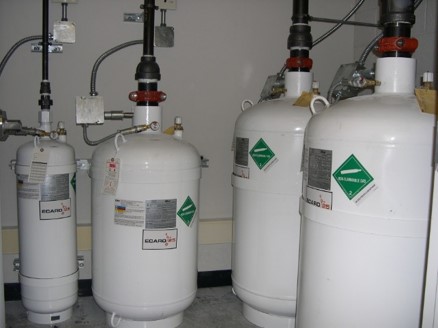
Existing page asset, clean agent cylinder bank example.
Who This Page Is For
This page is written for industrial buyers and project teams who are already product aware and need a decision-grade path to buy, specify, or upgrade a clean agent system.
- Facility managers responsible for uptime, insurance requirements, and life safety compliance.
- Engineers and consultants needing an engineered system scope that will pass AHJ review.
- EHS leaders needing documentation, inspection readiness, and controlled risk reduction.
- Operations teams protecting sensitive electronics, controls, and high-value production assets.
Clean Agent Options SSI Supports
The right agent depends on hazard type, room conditions, occupancy constraints, environmental objectives, and AHJ expectations. Use the options below to jump directly into the most relevant technology path.
Quick Path, Choose Your System
| Option | Best Fit When | Go Deeper |
|---|---|---|
| SF-1230, FK-5-1-12 class | You want residue-free suppression for critical rooms, with planning that considers long-term ownership and specs that may reference FK-5-1-12 terminology. | SF-1230 / FK-5-1-12 Guide |
| Inert gas systems | You want an inert gas strategy, oxygen reduction approach, and a solution that is heavily dependent on room integrity and engineered discharge. | ProInert2 | Inert Gas Guide |
| ECARO-25, FE-25, HFC-125 | You have a project fit that aligns with this agent family and need design, service, and documentation support. | ECARO-25 Page |
| FM-200, HFC-227ea | You have an existing FM-200 system or a legacy spec, and need inspection, service, recharge planning, or upgrade options with regulatory awareness. | FM-200 Page | AIM Act Planning |
If you are unsure which path fits your room, send SSI your room use, approximate dimensions, ceiling type, HVAC supply and return paths, and whether you have raised floor or containment.
What a Clean Agent System Is, How It Works
A clean agent fire suppression system is an engineered, total flooding system that discharges a gaseous or vaporizing agent through a dedicated piping and nozzle network. In most critical room applications, clean agents are paired with detection and releasing controls, then actuated automatically based on the designed release sequence.
How clean agents suppress fire
- Heat absorption: reduces flame temperature below sustained combustion thresholds, common for FK-5-1-12 class agents.
- Oxygen reduction: reduces available oxygen in the hazard zone, common for inert gas systems.
- Chemical interruption: interrupts the flame chain reaction, common for certain halocarbon agent families.
Core system components buyers should expect
- Agent storage cylinders, valves, and actuation hardware.
- Distribution piping and engineered discharge nozzles.
- Releasing control panel and releasing circuit supervision.
- Detection and alarm interface, often coordinated with the building fire alarm system.
- Room integrity and HVAC control interfaces that prevent agent loss during the required hold period.
Existing page asset, inert gas discharge concept animation.
Requirements That Decide Performance
Most clean agent projects do not fail because the cylinders are wrong. They fail because the room, HVAC, and control integration were not engineered as one system. If you want predictable performance, you must treat these as primary design requirements.
1, Room integrity and hold time readiness
- Total flooding systems perform best when the enclosure can hold the design concentration long enough for fire control and re-ignition prevention.
- Penetrations, door clearances, above-ceiling pathways, and uncontrolled openings are common leakage drivers.
- If you have a critical commissioning schedule, room integrity testing and sealing planning should be treated as a project scope, not an afterthought.
Go deeper: Proper Sealing of Clean Agent Rooms | Room Integrity Testing and Sealing
2, HVAC and airflow control
- Supply and return airflow paths can remove agent during discharge and hold time if not controlled.
- If above-ceiling space is a return plenum tied to the building system, plan for proper dampers and shutdown sequencing.
- Containment strategies and dedicated cooling units should be reviewed for how they change mixing and leakage behavior.
3, Detection, releasing logic, and documentation for AHJ review
- Releasing design should be coordinated with detection coverage, sequence of operation, and building alarm reporting requirements.
- Engineered calculations, design drawings, and commissioning documentation should support AHJ and insurer review.
- If you use advanced detection, coordinate power, interfaces, and placement with the releasing panel strategy.
Related pages: Design Considerations for Special Hazards | Fire Alarm and Detection | VESDA
How to Buy a Clean Agent System Without Rework
If you want a system that performs and passes acceptance, align these steps early. This is the practical path that prevents missed scope between architectural, mechanical, electrical, and life safety teams.
- Define the protected volume: room boundaries, above-ceiling, below-floor, and any containment zones.
- Confirm constraints: occupancy, uptime, allowable shutdowns, environmental planning, and AHJ expectations.
- Choose the technology path: SF-1230 (FK-5-1-12 class), inert gas, or other clean agent strategy based on hazard fit.
- Coordinate HVAC and controls: dampers, shutdowns, and releasing logic interfaces.
- Engineer and document: calculations, drawings, sequence of operation, and commissioning plan for AHJ review.
- Commission and maintain: acceptance testing readiness, then ongoing inspection, testing, and service.
What SSI Needs to Quote Correctly
- Room use and the equipment you are protecting, server room, UPS, MCC, archive, lab, or other special hazard.
- Approximate dimensions, ceiling type, and whether the above-ceiling space is used as a return plenum.
- HVAC supply and return paths, any exhaust, economizers, or make-up air that can affect hold time.
- Existing detection, releasing panel, and fire alarm integration requirements.
- If you have an existing system, agent type, last service date, and whether you need recharge planning.
Inspection, Testing, Maintenance, Keep the System Ready
Clean agent systems are protective only when maintained. Inspection, testing, and service keep your system aligned with applicable requirements and ready to perform.
Explore service support: Service and Maintenance | Fire and Explosion Protection FAQs
Related Fire Suppression Technologies
Not every hazard is a clean agent fit. SSI also supports other special hazard technologies when the hazard demands a different approach.
- Carbon Dioxide Fire Suppression
- Specialty Water Suppression Systems
- FireTrace
- Full Fire Suppression Overview
Codes and Standards Buyers Commonly Reference
Clean agent projects are judged by performance, documentation, and compliance. These standards are frequently referenced for design, integration, and special hazard rooms.
- NFPA 2001, Clean Agent Fire Extinguishing Systems
- NFPA 72, Fire Alarm and Signaling
- NFPA 75, IT Equipment Fire Protection
- OSHA, Worker Safety Guidance
Clean Agent FAQ
Are clean agents safe for occupied spaces
Suitability depends on the agent, design concentration, room conditions, and the specific space. SSI reviews constraints with your project team and designs to applicable guidance and code requirements.
Do I need a sealed room for clean agent suppression
Many total flooding applications perform best when the enclosure supports the required hold period. Leakage and ventilation can reduce effectiveness, so room integrity assessment is often part of proper design.
What is the best clean agent for my facility
The best choice depends on hazard and fuel type, downtime tolerance, occupancy profile, and building constraints. SSI can compare SF-1230 (FK-5-1-12 class), inert gas, and other options and recommend a path aligned with your project reality.
Service Area
SSI supports clean agent design, installation, and service throughout Pennsylvania and the East Coast, including common project coverage across PA, NJ, NY, DE, and MD, with engineering support for critical rooms and complex hazards.
Request a Clean Agent Consultation
If you are ready to buy, send your room details and protection goals. SSI can help you select the right technology and deliver a compliant design and proposal.
- Contact page: Contact Us
- Toll Free: 1-800-360-0687
- Phone: (610) 709-5000
- Fax: (610) 709-5001
- Email: info@suppressionsystems.com
Address: Suppression Systems Inc., 155 Nestle Way, Suite 104, Breinigsville, PA 18031.
Related Links
- SF-1230 / FK-5-1-12 Clean Agent Fire Suppression
- ProInert2 Inert Gas Fire Suppression
- ECARO-25 Clean Agent
- FM-200 Clean Agent
- AIM Act, HFC Phasedown Planning
- Design Considerations for Special Hazards
- Proper Sealing of Clean Agent Rooms
- Room Integrity Testing and Sealing
- Service
- About SSI
Manufacturer resources (non-competitive): Fike, Standard Fluids