
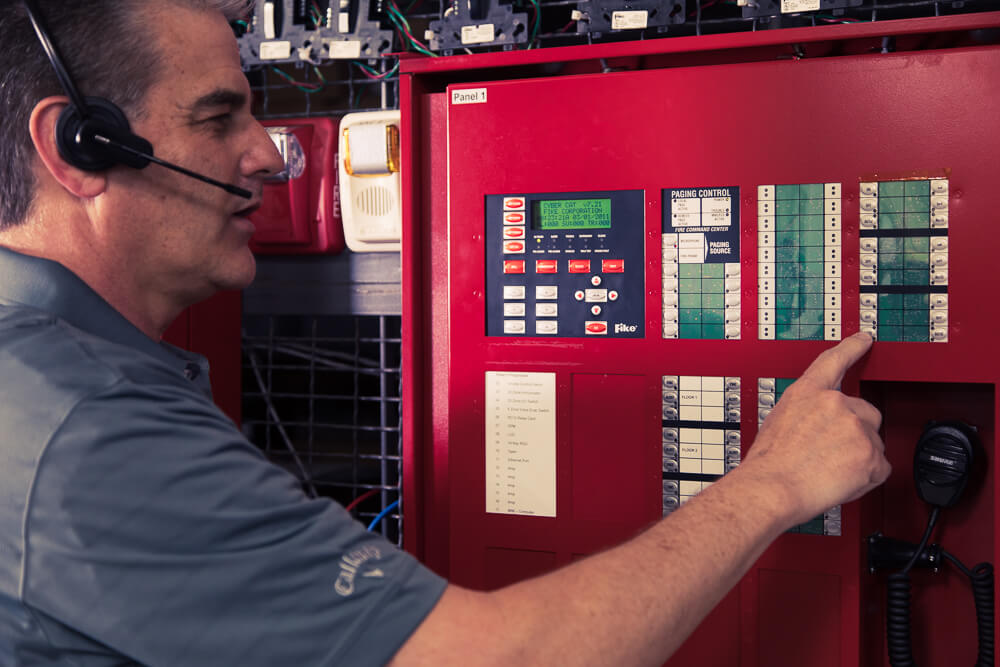
Gaseous Fire Suppression Systems & Clean Agents
Suppression Systems, Inc. (SSI) provides advanced gaseous fire suppression systems engineered for mission-critical facilities where water extinguishment is prohibited. From total-flooding clean agents to localized aerosol generators and pre-engineered tubing, our solutions suppress fires at the molecular level within seconds.
NFPA Clean Agent Codes & Environmental Standards
All clean agent installations comply with NFPA 2001 (Clean Agent Fire Extinguishing Systems), featuring third-party listings from FM Approvals and UL. For industrial operations with particulate and dust risks, explore our integrated industrial explosion protection & DHA compliance services.
Engineered Gaseous Fire Suppression Systems & Platforms
Specialized hardware platforms from global manufacturers, sized to protect your enclosure volume, airflow velocity, and sensitive electronics.
Firetrace® Automatic Detection & Suppression Systems
As an authorized Platinum Partner of Firetrace, SSI engineers pre-engineered micro-environment systems protecting CNC machines, electrical enclosures, fume hoods, and server cabinets.
- Pneumatic Detection Tubing: Heat-sensitive polymer tubing ruptures at the exact origin of fire, deploying agent immediately at the source.
- Direct & Indirect Configurations: Flexible delivery options through targeted discharge nozzles or pressurized tubing discharge.
- 100% Mechanical Operation: Operates completely independent of facility power, external sensors, or building wiring.
- Compact Modular Footprint: Self-contained cylinders mount directly on or inside industrial machinery.
FirePro® Condensed Aerosol Fire Extinguishing Systems
FirePro utilizes patented solid FPC compound that expands into condensed potassium aerosol, interrupting combustion at the molecular level without liquid chemicals or high pressure.
- Non-Pressurized Generators: Operates without pressurized cylinders, manifold piping, or distribution nozzles.
- Zero Ozone Depletion & Zero GWP: Certified eco-safe and non-conductive for high-voltage gear.
- Modular Space-Saving Layout: Ideal for battery energy storage systems (BESS), substations, and electrical switchgear.
- Minimal Maintenance Overhead: 15-year operational certified lifespan without hydrostatic pressure testing.
Monarch® Pyro-Chem Industrial Dry-Chemical Systems
The Monarch pre-engineered dry-chemical platform provides heavy-duty suppression for hazardous industrial operations handling flammable liquids and combustible vapors.
- Industrial Hazard Defense: Engineered for paint spray booths, dip tanks, quench tanks, and open mixing vats.
- FORAY® Dry Chemical Agent: High-performance monoammonium phosphate formulation suppressing Class A, B, and C fires.
- Total Flooding & Local Application: Engineered for overhead open-plenum protection as well as targeted local discharge.
- NFPA 17 & 33 Compliant: Fully code-certified for commercial coating, dipping, and finishing operations.
Fike® Total Flooding Clean Agent Systems
Engineered gaseous systems providing total enclosure flooding within 10 seconds, absorbing heat at the molecular level without conducting electricity or damaging sensitive equipment.
- Electrically Non-Conductive: Protects live computer rooms, control rooms, and telecommunications centers.
- Occupant-Safe Concentrations: Sized in strict compliance with NFPA 2001 safe-exposure limits (NOAEL/LOAEL).
- Rapid 10-Second Discharge: Quenches fires during early inception before thermal degradation compromises circuitry.
- Full Lifecycle Support: Fast cylinder refilling and replacement via our maintenance and repair division.
| System Platform | Primary Standards | Extinguishing Agent | Core Application Environments | Cylinder Pressure |
|---|---|---|---|---|
| Firetrace® | NFPA 2001 / NFPA 12 | Clean Agent (FM-200/Novec) or CO2 | CNC machines, server cabinets, electrical panels | 150 – 360 psi |
| FirePro® | NFPA 2010 / UL 2775 | Condensed Solid Aerosol (FPC) | Battery energy storage (BESS), substations, vaults | Non-pressurized |
| Monarch® Pyro-Chem | NFPA 17 / NFPA 33 | FORAY® Dry Chemical Powder | Paint spray booths, dip tanks, chemical mixing rooms | 350 psi |
| Fike Clean Agents | NFPA 2001 / ISO 14520 | ECARO-25® / FK-5-1-12 / FM-200 | Data halls, healthcare imaging, telecom hubs | 360 – 500 psi |
Gaseous Fire Suppression Technical FAQs
Key engineering questions regarding gaseous agents, aerosols, and local suppression systems.
What are gaseous fire suppression systems used for?
Gaseous fire suppression systems protect high-value mission-critical assets where water discharge would cause catastrophic business interruption, permanent electronic equipment loss, or electrical short circuits. They extinguish fires quickly without leaving residue or moisture behind.
What does being a Platinum Partner of Firetrace mean for customers?
As an authorized Platinum Partner of Firetrace, SSI maintains factory-trained technicians, priority manufacturer access, fast cylinder inventory, and certified engineering support for pre-engineered micro-environment systems protecting CNC machinery and electrical gear.
Are clean agent gases safe for occupied spaces?
Yes. Clean agents like ECARO-25 and FK-5-1-12 are sized in strict compliance with NFPA 2001 safe-exposure limits (NOAEL/LOAEL). They extinguish flames through rapid heat absorption without reducing ambient oxygen levels below breathable thresholds.
How does FirePro condensed aerosol differ from clean agent gas?
FirePro condensed aerosol generators utilize patented solid FPC compound that transforms into rapidly expanding micron-sized potassium salts, interrupting combustion chemically without requiring pressurized cylinders, distribution pipe networks, or dedicated cylinder rooms.
Request Information
“*” indicates required fields
"*" indicates required fields