
Linear Heat Detection (LHD): Continuous Fire Detection for Environments Where Spot Detectors Fail
Linear Heat Detection (LHD) is a fire detection technology that uses a heat-sensitive cable as a continuous detector, identifying heat anywhere along the cable’s length. Recognized under NFPA 72 as a line-type heat detector, LHD provides reliable, low-maintenance protection in environments where conventional spot smoke and heat detection cannot operate — cold storage, conveyor systems, cable trays, tunnels, hazardous locations, and other harsh industrial spaces.
Suppression Systems, Inc. (SSI) is a certified installer of Protectowire digital LHD and fiber-optic Distributed Temperature Sensing (DTS) systems across Pennsylvania, New Jersey, Maryland, Virginia, and Delaware. For over 40 years, our NICET-certified engineers have specified LHD as the foundational detection technology in environments where spot detection introduces unacceptable reliability gaps — and as part of layered detection strategies for high-value facility protection.
What Is Linear Heat Detection?
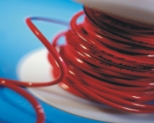
Linear Heat Detection — also called Linear Heat Detector, line-type heat detection, or LHD — is a fire detection technology where the detector itself is a length of cable rather than a discrete sensor at a fixed point. The cable runs continuously through the protected area, often installed where conventional smoke or heat detection physically cannot operate: inside cable trays, along conveyor belts, behind insulated panels, around equipment housings, through tunnels and pipelines, or in extreme-temperature environments like freezer warehouses.
The functional analogy used in NFPA 72 is that LHD acts as a “continuous run of spot detectors.” Heat anywhere along the cable triggers an alarm — which means the system detects fire at the location where it actually develops, not where smoke happens to travel.
The engineering principle in one sentence: Where a spot detector waits for fire signatures to travel to a fixed location, LHD is positioned at the location where fire is most likely to develop — and detects it there, immediately, without waiting for migration through air, dust, condensation, or stratified ceiling space.
How Does Linear Heat Detection Work?
LHD comes in two engineering families, each suited to different applications and price points. SSI specifies the right technology based on the facility’s needs, not as a one-size-fits-all default.
Digital LHD (Protectowire)
Digital LHD cable consists of two conductors separated by a heat-sensitive polymer insulator. When any point along the cable reaches the rated alarm temperature, the polymer melts at that point, allowing the two conductors to touch and creating a short circuit. The fire alarm panel reads this as an alarm condition and — in digital LHD systems — can also report the distance along the cable to the alarm point, giving operators precise alarm location identification.
Digital LHD is the right choice for most cold storage, industrial, and harsh-environment applications. It is simple, durable, code-listed, and requires no power at the detection point. The cable is the entire detector — there are no field electronics to maintain, calibrate, or replace.
Fiber-Optic LHD / Distributed Temperature Sensing (DTS)
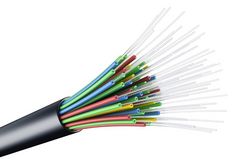
Fiber-optic LHD uses a fiber-optic cable as a continuous distributed temperature sensor. A controller injects laser pulses into the fiber and analyzes the backscattered light using Raman or Brillouin spectroscopy to derive temperature readings at thousands of points along the cable — often at 1-meter resolution over runs of several kilometers.
DTS provides rate-of-rise alarms, programmable pre-alarms, real-time temperature mapping, and thermal trend analysis alongside fixed-temperature alarming. It is the right choice for tunnels, pipelines, power cable trays, large industrial process facilities, and applications where temperature profiling provides operational value beyond fire detection alone. DTS is more capable than digital LHD — and more expensive — and SSI specifies it where the application calls for it.
Both technologies are recognized under NFPA 72 as line-type heat detectors. Both are UL listed and FM approved when installed with appropriately listed equipment. The choice between them is engineering, not marketing.
Digital LHD vs. Fiber-Optic DTS: How to Choose
| Capability | Digital LHD | Fiber-Optic DTS |
|---|---|---|
| Best for | Cold storage, conveyors, racking, hazardous locations | Tunnels, pipelines, power cables, large facilities |
| Detection type | Fixed temperature alarm at any point | Fixed + rate-of-rise + continuous temperature mapping |
| Alarm location | Distance to alarm point (digital systems) | Precise location plus full thermal profile |
| Cable length | Typical runs up to ~3,000 ft per zone | Up to several kilometers per controller |
| Pre-alarm capability | Fixed alarm only | Programmable multi-stage pre-alarms |
| Cable replacement after alarm | Heat-damaged section must be replaced | Fiber typically reusable after event |
| Relative cost | Lower capital, lower lifecycle | Higher capital, broader analytical value |
| Code recognition | NFPA 72 line-type heat detector | NFPA 72 line-type heat detector |
For most facilities, digital LHD is the right answer. DTS is the right answer when the application benefits from continuous temperature data, very long run lengths, or programmable rate-of-rise capability — typically large industrial processes, tunnels, and high-value infrastructure where the analytical capabilities justify the cost.
Where SSI Deploys Linear Heat Detection
LHD is the right detection technology wherever spot smoke or heat detection cannot reliably operate — or where the value of detecting fire at the location of ignition justifies engineering the system around continuous cable coverage.
Cold Storage and Refrigerated Warehouses
Conventional smoke detectors are unreliable below approximately 32°F due to condensation, frost, and cold air stratification. The Protectowire XLT digital LHD cable is rated for continuous operation down to −60°F (−51°C) and is UL listed and FM approved. It is the foundational detection technology for freezer rooms, coolers, and cold storage facilities with combustible foam insulation. Read our full cold storage fire detection guide →
Conveyor Belts and Material Handling
Conveyor systems are a leading ignition source in warehouses, manufacturing, mining, food processing, recycling, and fulfillment operations. Bearing failure, belt slippage, friction, electrical faults, and accumulated combustible debris all develop heat signatures that LHD identifies before flame appears. The cable can be routed along the entire conveyor length, detecting overheating at the source — including in elevated, hard-to-access locations where spot detectors are impractical to install or maintain.
Cable Trays and Electrical Distribution
Electrical fires in cable trays propagate rapidly through stacked conductors and can travel through buildings via the cable infrastructure itself. LHD installed directly within or alongside cable trays detects overheating at the conductor level — before insulation ignition triggers a propagating cable fire. This is particularly critical for power generation facilities under NFPA 850 protection requirements.
Hazardous and Corrosive Environments
Chemical plants, refineries, petrochemical facilities, and other hazardous locations operate under intrinsically safe electrical requirements. Protectowire XCR series cables use fluoropolymer jackets and are FM approved for installation in Class I and Class II Division 1 hazardous locations. Low-voltage operation and passive detection make LHD the appropriate technology for environments where powered field devices introduce ignition risk.
Tunnels, Cable Vaults, and Underground Infrastructure
Road tunnels, rail tunnels, utility tunnels, and cable vaults present extreme detection challenges — long linear geometry, high airflow, inaccessible ceiling locations, and high consequence of failure. Fiber-optic DTS provides continuous temperature mapping across kilometers of tunnel length, with rate-of-rise detection that can identify developing fires far earlier than spot detection. Required for tunnel applications under NFPA 502.
High-Bay Warehouses With Rack Storage
In high-bay warehouses with extensive racking, ceiling-mounted spot detection is often defeated by smoke stratification, airflow dilution, and physical obstruction by stored product. LHD installed within rack structures or at intermediate levels provides detection at the height where fire is most likely to develop — particularly valuable in facilities where in-rack sprinkler protection is also required. See our warehouse fire detection guide →
Aircraft Hangars and Large Open Spaces
Aircraft hangars combine extreme ceiling height with large hangar door openings that disrupt smoke movement. LHD installed at hangar door tracks and along structural elements provides detection that ceiling-mounted spot sensors cannot reliably deliver. Integrates with foam suppression systems required under NFPA 409.
Power Generation and Transformer Protection
Power plants protect cable trays, transformers, switchgear, generators, and turbine enclosures under NFPA 850 requirements. LHD wrapped around transformers and installed within enclosures provides direct detection of insulation breakdown and equipment overheating — before fire suppression release becomes necessary. Fiber-optic DTS extends this capability to large outdoor switchyards and cable runs between plant facilities.
What Codes and Standards Apply to Linear Heat Detection?
LHD operates under a multi-standard compliance framework — both the foundational fire alarm code and application-specific standards depending on the facility type:
| Standard | What It Governs |
|---|---|
| NFPA 72 | National Fire Alarm and Signaling Code — line-type heat detector spacing, supervision, installation, and testing requirements |
| UL 521 | Heat Detectors for Fire Protective Signaling Systems — listing standard for LHD cables and controllers |
| FM 3210 | FM Global approval standard for heat detectors, including linear types |
| NFPA 850 | Fire Protection for Electric Generating Plants — cable tray, transformer, and turbine enclosure protection |
| NFPA 502 | Road Tunnels, Bridges, and Limited Access Highways — fire detection requirements |
| NFPA 409 | Aircraft Hangars — detection and suppression requirements |
| NFPA 13 | Sprinkler installation — pre-action sprinkler systems often released by LHD activation |
| NFPA 70 (NEC) | National Electrical Code — Class I and II Division 1 hazardous location wiring requirements |
| FM Global Data Sheet 8-29 | Refrigerated Storage — insurance underwriting requirements for cold storage detection |
SSI handles AHJ coordination, design submittals, acceptance testing, and ongoing annual inspection across the full code stack — including the FM Global Data Sheets that increasingly drive insurance underwriting decisions for industrial facilities.
How Does LHD Integrate With Fire Alarm and Suppression Systems?

LHD is most effective when installed as a supervised detection input to the building’s complete fire alarm and suppression platform — not deployed as a standalone monitoring system. SSI engineers every LHD installation with coordinated integration:
- Fike fire alarm panels — Cheetah Xi and FCP series accept LHD as supervised detection inputs, with full event logging and integration with the releasing service for clean agent, water mist, and CO₂ suppression
- Autocall fire alarm systems — addressable integration through addressable input modules, with TrueSite graphical workstation visualization of alarm location data from digital LHD systems
- Pre-action sprinkler release — LHD activation triggers pre-action sprinkler valves, minimizing fluid delivery time delays in cold storage and other dry-pipe environments
- Suppression system releasing — for clean agent (FM-200, ECARO-25, FK-5-1-12), CO₂, and water mist systems where LHD serves as the primary detection layer
- HVAC and damper control — coordinated shutdown during fire events
- Equipment shutdown commands — conveyor isolation, refrigeration equipment de-energization, electrical disconnects
- Mass notification — coordinated occupant evacuation across the facility
- Central monitoring — 24/7 supervised notification with precise alarm location reporting
Why LHD Has the Lowest Total Cost of Ownership in Harsh Environments
For facility managers evaluating detection options in cold storage, conveyor, cable tray, and industrial applications, LHD’s lifecycle economics consistently outperform alternatives:
- No powered field devices — the cable is passive; nothing in the protected space requires power, batteries, or remote diagnostics
- No calibration cycles — digital LHD cable has no drift, no chemistry, no sensitivity that degrades over time
- Minimal annual inspection burden — NFPA 72 functional testing is straightforward, with no individual sensor heads to clean or replace
- Durable in harsh conditions — fluoropolymer jackets resist chemical exposure, mechanical abrasion, and temperature extremes
- Long operational life — properly installed LHD cable routinely operates for the full life of the protected facility
- Easy localized repair — if heat damage occurs at one point, only the affected cable section requires replacement
- Insurance underwriting favorability — FM-approved LHD installations are well-regarded by industrial insurance carriers
The combination of code-listed reliability, low maintenance, and durable construction makes LHD the most cost-effective detection technology for the applications it was engineered for. The alternative — installing spot detection that doesn’t work reliably and replacing fouled or failed sensors repeatedly — costs significantly more over a decade of operation while delivering worse detection.
Frequently Asked Questions
What is Linear Heat Detection?
Linear Heat Detection (LHD) is a fire detection technology that uses a heat-sensitive cable as a continuous detector. Instead of individual spot sensors at fixed locations, the cable itself detects heat anywhere along its length. NFPA 72 recognizes LHD as a line-type heat detector. The technology is widely used in cold storage, conveyors, cable trays, tunnels, hazardous locations, and other environments where spot smoke or heat detection cannot reliably operate.
How does digital linear heat detection work?
Digital LHD cable consists of two conductors separated by a heat-sensitive polymer insulator. When heat anywhere along the cable reaches the cable’s rated alarm temperature, the polymer melts at that point, allowing the conductors to touch and creating a short circuit. The connected fire alarm panel reads the short as an alarm condition. Digital LHD systems can also report the distance along the cable to the alarm point, giving operators precise location information.
What is the difference between digital LHD and fiber-optic DTS?
Digital LHD is a simpler, cable-based technology where the heat-sensitive polymer triggers a fixed-temperature alarm at the point of heat exposure. Fiber-optic Distributed Temperature Sensing (DTS) uses a fiber-optic cable with a laser-based controller that measures temperature continuously along the entire fiber length, supporting fixed alarms, rate-of-rise detection, programmable pre-alarms, and full thermal mapping. Digital LHD is the right choice for most cold storage and industrial applications; DTS is preferred for tunnels, pipelines, large industrial processes, and applications requiring continuous temperature data.
Is linear heat detection NFPA 72 compliant?
Yes. NFPA 72 explicitly recognizes line-type heat detectors as a compliant detection technology, with specific spacing, installation, and supervision requirements. UL-listed and FM-approved LHD cables — including Protectowire — meet NFPA 72 requirements when installed properly and connected to a UL 864-listed fire alarm control panel. SSI designs every LHD installation to NFPA 72 compliance and handles AHJ coordination, acceptance testing, and annual inspection documentation.
What temperatures can LHD operate at?
Standard LHD cables cover most industrial temperature ranges. Protectowire XLT cable is rated for operation down to −60°F (−51°C), making it suitable for the deepest cold storage and freezer applications. The cable’s operating temperature is separate from its rated alarm temperature — the rated alarm temperature is the threshold at which the cable activates an alarm when exposed to a fire condition, while the operating temperature is the ambient range across which the cable functions reliably without false activation.
Can LHD be used in hazardous locations?
Yes. Fluoropolymer-jacketed LHD cables — including the Protectowire XCR series — are FM approved for installation in Class I and Class II Division 1 hazardous locations including chemical plants, refineries, and petrochemical facilities. The cable operates at low voltage and meets intrinsically safe standards, making it appropriate for environments where powered field devices introduce ignition risk.
What happens to the cable after a fire alarm?
For digital LHD, the heat-damaged section of cable must be cut out and replaced after activation. The polymer between the conductors has melted at the alarm point and cannot be restored. The undamaged sections of the cable run remain serviceable. For fiber-optic DTS, the fiber typically survives the event and remains operational after the alarm condition clears — unless the fiber itself was physically damaged by the fire. SSI handles cable replacement and system restoration as part of post-incident service.
How is LHD installed and maintained?
LHD installation involves routing the cable through the protected area per NFPA 72 spacing requirements, terminating both ends at end-of-line resistors or controllers, and connecting to a supervised input on the fire alarm panel. The cable can be mounted directly to structures, attached to racking and conveyor systems, or installed through cable trays as needed. Maintenance is minimal — the cable requires no calibration, has no powered field components, and NFPA 72 annual testing involves verifying continuity, supervision, and panel response.
Can LHD trigger pre-action sprinkler release?
Yes — and this is one of LHD’s most common integrations. Pre-action sprinkler systems require an electrical release signal from a fire alarm panel to allow water to enter the piping network. LHD provides reliable, NFPA-compliant detection appropriate for cold storage, dry-pipe, and other applications where pre-action systems are required. The combination of early LHD detection and pre-action release minimizes the fluid delivery delay that is inherent in dry-pipe sprinkler systems.
How does LHD compare to spot heat detectors?
Spot heat detectors monitor a small area at the location they are mounted. To cover a large or linear space, many spot detectors are needed — and each one must be installed, supervised, and maintained individually. LHD covers the same area with a single continuous cable, often at lower total cost and significantly lower maintenance burden. More importantly, LHD can be installed in locations where spot detectors physically cannot be mounted reliably — within racking, along conveyors, inside cable trays, and through cold storage facilities — providing detection at the point of ignition rather than at fixed ceiling locations.
The SSI Approach to Linear Heat Detection Engineering
LHD installations succeed when the cable is in the right location, the cable type matches the environment, and the integration with the fire alarm panel is engineered properly. SSI handles the full lifecycle:
1. Application Assessment
Site evaluation, hazard analysis, and selection of digital LHD or fiber-optic DTS based on the specific application. Cable rating, alarm temperature, and routing engineered to the environment.
2. Design and AHJ Submittal
NFPA 72 compliant cable layout, spacing calculations, supervision design, and full submittal documentation for AHJ approval. Insurance carrier requirements (FM Global, Zurich, AXA XL) addressed during design.
3. Installation and Commissioning
Factory-trained, NICET-certified technicians handle cable installation, fire alarm panel integration, supervised circuit verification, and full acceptance testing per the approved AHJ protocol.
4. Operator Training and Documentation
Facility staff training on alarm interpretation, location identification, and response procedures. Reference documentation for the AHJ, insurance underwriter, and operations team.
5. Annual Inspection and Service
NFPA 72 annual functional testing, cable continuity verification, supervisory circuit testing, panel software updates, and post-incident replacement when activation occurs.
The Right Detection for Environments Where Spot Sensors Don’t Work.
Linear Heat Detection is the engineered answer for cold storage, conveyors, cable trays, tunnels, hazardous locations, and any environment where spot detection introduces unacceptable reliability gaps. Suppression Systems, Inc. designs, installs, and services Protectowire digital LHD and fiber-optic DTS systems across the East Coast — engineered for code compliance, insurance acceptance, and operational reliability.
Contact SSI today to schedule an LHD assessment or discuss a new project with our certified engineers. We serve Pennsylvania, New Jersey, Maryland, Virginia, and Delaware.