
Catching Lithium-Ion Thermal Runaway Before Ignition: How Thermal Imaging Protects Battery Energy Storage and Charging Facilities
A lithium-ion battery fire is not like other fires. By the time visible smoke or flame appears, the battery has already entered thermal runaway — a self-sustaining chemical reaction that can spread cell-to-cell, module-to-module, and rack-to-rack faster than conventional fire suppression can respond. Once the cascade begins, containment becomes the goal; prevention is no longer possible.
What makes lithium-ion fires preventable is what happens before ignition. In the minutes — sometimes hours — leading up to thermal runaway, the failing cell or module is hot. Measurably, detectably hot, well above its normal operating temperature, and clearly distinguishable from the surrounding equipment. The window to intervene is real. The question is whether your detection system can see it.
Conventional smoke detection cannot. Heat detection cannot — by the time spot heat sensors activate, the cell is already in runaway. Thermal imaging, deployed correctly, can. It is the leading pre-ignition detection technology for lithium-ion hazards, and the foundation of any defensible NFPA 855 fire safety strategy for battery energy storage and high-density charging environments.
Suppression Systems, Inc. (SSI) designs and installs thermal imaging fire detection systems for BESS installations, warehouses, EV facilities, and any environment with significant lithium-ion battery hazard exposure across Pennsylvania, New Jersey, Maryland, Virginia, and Delaware.

What Thermal Runaway Actually Is — and Why Conventional Detection Misses It
Thermal runaway is a self-reinforcing chain reaction inside a lithium-ion cell. When the cell’s internal temperature exceeds a critical threshold — typically driven by an internal short, mechanical damage, manufacturing defect, overcharge, or external heat exposure — the cell’s exothermic reactions begin to release more heat than the cell can dissipate. That heat accelerates the reaction. The acceleration releases more heat. The cycle compounds.
The progression unfolds in distinct phases — and only the last two are visible to conventional detection:
| Phase | What Happens | Detectable By |
|---|---|---|
| 1. Abnormal heating | Cell temperature rises above normal operating range due to internal fault | Thermal imaging only |
| 2. Off-gas release | Cell vents electrolyte vapor and decomposition gases (CO, H₂, hydrocarbons) | Thermal imaging + off-gas detection |
| 3. Smoke generation | Visible particulate emerges as decomposition advances | Smoke detection — but runaway is already in progress |
| 4. Ignition and flame | Cell ignites; thermal runaway begins propagating to adjacent cells | Flame detection — but cascade is already happening |
The detection window is Phase 1. Once off-gassing begins in Phase 2, intervention is still possible but the response timeline shortens dramatically. By Phase 3, conventional fire suppression is fighting an active fire — not preventing one. Thermal imaging is the only widely available technology that operates reliably in Phase 1, when the failing cell is just measurably hot and nothing else is happening yet.
Why Thermal Imaging Is the Right Detection Technology for Lithium-Ion Hazards
Thermal imaging cameras use infrared sensors to measure surface temperatures continuously across a wide field of view, producing both a visual thermal image and discrete temperature values for every point in the scene. For lithium-ion applications, this delivers four engineering advantages no other detection technology offers:
1. Pre-Ignition Detection Window
Thermal imaging identifies the temperature rise in Phase 1 — before any off-gas, smoke, or flame is present. Depending on the failure mode, this provides a detection window measured in minutes to hours before thermal runaway begins, allowing for evacuation, equipment shutdown, isolation, and emergency response while the situation is still controllable.
2. Continuous Coverage of Every Visible Cell
A single thermal camera monitors thousands of measurement points across an entire battery rack, charging area, or storage container — every cell, every connection, every cable, simultaneously and continuously. Point-based temperature sensors require physical contact with specific cells and cannot scale to large installations. Thermal imaging scales.
3. Visual Verification and Forensic Record
When an alarm activates, operators see exactly which cell, module, or rack is heating — not just that “an alarm has activated.” This dramatically improves response speed and accuracy, and provides a recorded visual history for incident investigation, insurance claims, and regulatory reporting.
4. AI Discrimination Between Normal and Abnormal Heat
Modern thermal imaging platforms use AI analytics to learn the normal thermal signature of an installation — discharge cycles, charging cycles, ambient temperature variation, time-of-day patterns. Alarms trigger on deviations from that baseline, not on absolute temperature thresholds, dramatically reducing false alarms while maintaining sensitivity to real anomalies.
The Layered Detection Approach for Lithium-Ion Protection
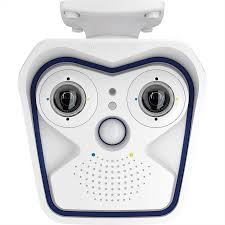
Thermal imaging is the foundation of lithium-ion fire protection — but no single technology is sufficient on its own for a critical hazard. A properly engineered installation combines thermal imaging with complementary detection layers, each addressing a different phase of the runaway progression.
| Layer | Detects | Response Window |
|---|---|---|
| Thermal imaging | Pre-ignition heat anomaly (Phase 1) | Minutes to hours before ignition |
| Li-Ion Tamer off-gas detection | Electrolyte vapor release (Phase 2) | Minutes before visible smoke |
| VESDA air sampling | Incipient smoke particulate (Phase 3 early) | Before visible smoke at the ceiling |
| Video Fire Detection (VFD) | Visible smoke and flame (Phase 3–4) | Real-time fire confirmation |
Each layer’s alarm escalates the response. A thermal anomaly might trigger a maintenance investigation. Off-gas confirms the situation requires immediate action. Smoke or flame confirms suppression release is justified. The combined system gives operators the longest possible decision window while ensuring nothing slips through if early-warning intervention isn’t possible.
What Happens When Thermal Imaging Detects an Anomaly
A thermal imaging alarm is only useful if it triggers the right response. SSI integrates thermal detection with the building’s fire alarm panel, suppression releasing system, BESS battery management system, HVAC controls, and emergency communication infrastructure — so every alarm activates a coordinated, automatic response sequence.
- Visual and audible alarm at the operator console — with the live thermal image showing exactly which cell or module is heating
- Notification to the fire alarm panel — Fike or Autocall systems receive the supervised input and log the event
- HVAC modification — increased ventilation to dilute potential off-gas accumulation, coordinated with detection logic
- BMS integration — battery management system commands isolation of the affected rack, module, or cell where capability exists
- Pre-suppression coordination — if escalation continues, the system progresses to the suppression release sequence with proper pre-discharge warning
- Mass notification activation — building occupants alerted to evacuate the affected area before any suppression discharge
- Remote monitoring notification — central monitoring station alerted with full event detail and live thermal feed access
- Forensic recording — thermal imagery and event logs preserved for post-incident investigation and regulatory reporting
Where Lithium-Ion Thermal Imaging Detection Belongs
Any facility with significant lithium-ion battery exposure should evaluate thermal imaging detection as part of its fire protection strategy. The specific application drives the design — coverage layout, camera resolution, AI training parameters, and integration approach all vary by environment.
Battery Energy Storage Systems (BESS)
Grid-scale and behind-the-meter BESS installations under NFPA 855 jurisdiction. Thermal imaging provides continuous coverage of battery racks inside containerized or building-integrated installations, with AI-trained baselines that account for normal charge/discharge cycle temperature variation. Critical for both new installations and retrofits to existing BESS facilities facing tightening regulatory requirements.
Warehouses With Forklift Battery Charging
High-throughput distribution centers and fulfillment facilities with concentrated lithium-ion forklift charging stations represent one of the fastest-growing lithium fire risk categories. Thermal imaging monitors the charging area continuously, identifying overheating battery packs, defective chargers, or improperly seated batteries before they progress to thermal runaway. Pairs naturally with advanced warehouse fire detection strategies →
EV Charging Infrastructure and Service Facilities
Fast-charging stations, EV service bays, and indoor parking garages with EV charging present significant lithium fire risk that conventional building detection cannot adequately address. Thermal imaging monitors charging infrastructure and parked vehicles for the heat signatures that precede battery failure, providing early warning in environments where smoke detection is unreliable due to ventilation and vehicle exhaust.
Data Centers With Lithium UPS Backup
Data centers transitioning from VRLA to lithium-ion UPS systems gain significant operational benefits — and acquire a new fire risk profile that requires updated detection strategy. Thermal imaging monitors UPS battery cabinets, charging circuits, and connection points continuously, providing the pre-ignition warning that traditional VESDA air sampling alone cannot deliver for lithium hazards.
Battery Manufacturing, Recycling, and Distribution
Production lines, quality control labs, recycling sorting operations, and bulk lithium-ion storage all face elevated thermal runaway risk from damaged, defective, or degraded cells. Thermal imaging provides scalable surveillance across large floor areas where individual cell monitoring would be impossible.
Marine, Aerospace, and Specialty Applications
Lithium-ion battery installations in vessels, aircraft hangars, and specialty equipment environments where the fire suppression response is constrained by occupancy, ventilation, or geometry. Pre-ignition detection is especially valuable where post-ignition response would be slow or limited.
The Code Side: NFPA 855 and the Regulatory Landscape
NFPA 855 — Standard for the Installation of Stationary Energy Storage Systems — is the central code governing BESS fire safety. It addresses installation requirements, separation distances, ventilation, fire detection, suppression, and emergency response planning specifically for stationary lithium-ion energy storage.
Thermal imaging directly supports NFPA 855 compliance:
- NFPA 855 detection requirements — provides continuous, listed detection coverage that can satisfy or exceed the standard’s smoke detection requirements when properly designed
- NFPA 72 compatibility — thermal imaging detection inputs supervised through UL 864-listed fire alarm panels (Fike, Autocall) per NFPA 72
- NFPA 70B predictive maintenance — same thermal imaging infrastructure supports electrical equipment monitoring required under NFPA 70B
- UL 9540A test integration — installations using UL 9540A-tested battery systems benefit from detection technology that catches the failure modes characterized by the test methodology
- AHJ acceptance — many AHJs now require enhanced detection beyond standard NFPA 72 minimums for lithium-ion installations; thermal imaging is increasingly the preferred technology
- Insurance and FM Global requirements — underwriters and FM Global Data Sheets increasingly reference pre-ignition detection capability as a baseline for lithium-ion fire protection adequacy
SSI handles code interpretation, AHJ coordination, design documentation, commissioning, and ongoing inspection for the full thermal imaging detection package — including integration with the broader fire alarm and suppression system.
Frequently Asked Questions
How early can thermal imaging detect a lithium-ion failure?
The detection window depends on the failure mode and the camera’s sensitivity, but most lithium-ion failures produce a measurable temperature rise minutes to hours before ignition. Slow-developing failures (internal short progressing over time) provide longer windows; fast-developing failures (mechanical damage) provide shorter ones. In all cases, thermal imaging detects earlier than smoke, off-gas, or flame-based technologies. The detection window is also longer when AI baseline analytics are properly trained on the installation, because deviations from normal patterns are identified before absolute temperature thresholds are reached.
Can thermal imaging replace conventional smoke detection in a BESS?
In some applications, yes — and increasingly, AHJs are accepting thermal imaging as primary detection. In most installations, the right approach is layered: thermal imaging provides pre-ignition detection, with smoke detection (often VESDA air sampling) and/or off-gas detection (Li-Ion Tamer) serving as secondary layers that confirm escalation and trigger suppression release. NFPA 855 requirements and local AHJ acceptance determine the specific combination required for any given installation.
What’s the difference between thermal imaging and an infrared thermometer?
An infrared thermometer measures temperature at a single point. A thermal imaging camera measures temperature simultaneously at thousands of points across its field of view, producing a continuous thermal map of the entire scene. For a BESS or large battery installation, point measurement is impractical — you would need a sensor at every cell. Thermal imaging delivers complete continuous coverage from a single camera, plus the visual context that allows operators to immediately see where any anomaly is occurring.
How does thermal imaging avoid false alarms from normal heating?
Modern thermal imaging platforms use AI analytics to learn the normal thermal pattern of an installation — including charge cycles, discharge cycles, ambient temperature variation, time-of-day patterns, and individual cell or module characteristics. Alarms trigger on deviations from learned normal patterns, not on absolute temperature thresholds. A cell heating during a normal charge cycle does not alarm. A cell heating outside its normal cycle, or heating above its peer cells, does. This dramatically reduces false alarms compared to fixed-threshold detection.
Is thermal imaging required by NFPA 855?
NFPA 855 does not explicitly mandate thermal imaging by name, but the standard’s detection requirements increasingly drive operators toward pre-ignition detection technologies — and thermal imaging is the leading option in that category. Many AHJs, insurance carriers, and project owners now treat thermal imaging as a de facto requirement for BESS installations of meaningful scale. SSI can review your specific application’s code obligations.
What is MOBOTIX and why does SSI use it?
MOBOTIX is a global manufacturer of high-resolution thermal imaging systems specifically engineered for industrial fire detection applications, including lithium-ion battery monitoring. Their thermal cameras combine high-sensitivity infrared sensors with AI-driven analytics designed for fire detection — not general-purpose security thermal imaging. SSI specifies MOBOTIX as its primary thermal imaging platform because the technology is purpose-built for the applications we serve, and the AI is trained specifically for fire pre-ignition detection.
Can we retrofit thermal imaging into an existing BESS or warehouse?
Yes. Thermal imaging retrofits are common and typically straightforward — cameras can be mounted to provide coverage of existing battery racks, charging stations, or hazard areas without modifying the protected equipment itself. Integration with the existing fire alarm panel and BMS is engineered as part of the project. SSI can evaluate your facility, identify the right camera locations and coverage approach, and stage installation to minimize operational impact.
How does thermal imaging coordinate with suppression release?
In a properly engineered installation, thermal imaging is not a release trigger by itself — the goal of thermal detection is pre-ignition warning that supports investigation and intervention, not automatic suppression. Suppression release is typically initiated by confirmed cross-zoned detection from smoke (VESDA), off-gas (Li-Ion Tamer), or flame detection layers, with proper pre-discharge sequencing per NFPA standards. Thermal imaging alerts the operator and triggers response procedures while the situation is still recoverable; suppression is the last-resort response when escalation cannot be prevented.
Technical Resources and Case Studies
For deeper technical detail on MOBOTIX thermal imaging deployment in lithium-ion and industrial fire detection applications:

- MOBOTIX Thermal Imaging for Battery Monitoring (PDF) — application brief for lithium-ion battery thermal monitoring
- MOBOTIX Thermal Imaging Systems for Early Fire Detection (PDF) — overview of early fire detection capabilities
- MOBOTIX 7 Thermal Camera Data Sheet (PDF) — technical specifications for the 640 x 480 HD thermal camera platform
- Kuhn Rikon Case Study (PDF) — real-world deployment example demonstrating MOBOTIX thermal imaging in an industrial environment
Catch It Before It Catches Fire.
Lithium-ion fires are preventable when they’re caught in Phase 1. Thermal imaging is how you catch them. Suppression Systems, Inc. has been engineering early-warning fire detection for the East Coast’s most demanding facilities for over 40 years — and we deploy thermal imaging specifically as part of an integrated lithium-ion protection strategy, not as a standalone surveillance product.
Contact SSI today to discuss a thermal imaging evaluation for your BESS, warehouse, EV facility, or data center. We serve Pennsylvania, New Jersey, Maryland, Virginia, and Delaware.