
Clean Agent False Discharge: Why It Happens, What It Costs, and How to Prevent It
A clean agent suppression system that discharges when there is no fire is not a minor inconvenience. It is an expensive, disruptive event that triggers regulatory scrutiny, puts occupants at risk, potentially damages equipment, and always demands a full investigation before the system can be restored to service.
False discharges happen. But in most cases, they are preventable — and the single most important factor in preventing them is the design and programming of the suppression releasing panel that controls the system.
Suppression Systems, Inc. (SSI) designs and installs Fike releasing panel systems across Pennsylvania, New Jersey, Maryland, Virginia, and Delaware — engineered specifically to prevent false discharge while ensuring the system activates instantly when a real fire event occurs.
What Is a Clean Agent False Discharge?
A false discharge — sometimes called an inadvertent or accidental discharge — occurs when a clean agent suppression system releases its agent into a protected space without an actual fire event. The agent is real. The release sequence is real. The consequences are real. The fire is not.
False discharges can happen in a fraction of a second. Clean agent systems are designed to respond fast — that speed is exactly what makes them effective in protecting critical assets. But that same speed means that if the triggering logic is wrong, there is no meaningful opportunity to intervene once the sequence begins.
Common clean agent systems at risk include systems protecting:
- Data centers and server rooms
- Telecom switching and network operations centers
- Electrical rooms and switchgear
- Control rooms and process control facilities
- Archives, museums, and irreplaceable storage environments
- Any enclosed special hazard space protected by FM-200, ECARO-25, SF-1230/FK-5-1-12, or CO₂
The Real Cost of an Accidental Discharge
The costs of a false discharge extend well beyond the agent recharge. Facilities that have experienced one understand that the agent itself is often the least expensive part of the problem:
| Consequence | What It Means in Practice |
|---|---|
| Agent recharge cost | Clean agent cylinders must be fully recharged before the system is returned to service — a significant material cost depending on system size and agent type |
| Facility downtime | The protected space must be evacuated, ventilated, inspected, and the system recharged and retested before operations resume — hours to days of downtime in critical environments |
| Occupant safety risk | If a person is in the protected space during discharge, exposure to high concentrations of some clean agents poses a health risk — particularly CO₂ systems, which are immediately dangerous to life at suppression concentrations |
| Equipment and environmental exposure | The force and pressure of a clean agent discharge can damage sensitive equipment, displace materials, and in some cases create condensation or residue issues depending on agent type |
| Mandatory investigation | NFPA 2001 and most AHJs require a documented investigation and root cause analysis before a system that has discharged can be returned to service |
| Insurance and liability exposure | A false discharge raises questions about system design, maintenance history, and operator procedures — all of which may factor into insurance claims and liability determinations |
| Unprotected period | Until the system is recharged and returned to service, the protected space has no suppression coverage — creating a gap in fire protection during a period of active investigation |
The recurring pattern: Most facilities that have experienced a false discharge find that the root cause traces back to a single-detector trigger, an aging or improperly programmed releasing panel, or a detection device that malfunctioned or was disturbed during maintenance. All of these are engineering and design problems — not inevitable risks of having a suppression system.
What Actually Causes a Clean Agent False Discharge?
Understanding the root causes is the first step toward prevention. False discharges typically trace back to one or more of the following:
1. Single-Detector Triggering
If a releasing panel is programmed to initiate suppression discharge on a single detector activation — without requiring confirmation from a second independent detection zone — any malfunction, contamination, or disturbance of that one detector can trigger a full discharge. A contractor bumping a smoke detector during ceiling work. A cleaning crew using aerosol near a sensor. A detector that has drifted out of calibration. Any of these becomes a full suppression event.
2. Improper Panel Programming
A releasing panel that has been improperly programmed — or programmed correctly for one application and later modified without a full review — can execute a release sequence based on the wrong input logic. This is particularly common in facilities where the suppression system has been serviced or modified by contractors who are not factory-certified on the releasing panel platform.
3. Aging or Failed Detection Devices
Smoke detectors and heat detectors have finite operational lives. Detectors that have aged beyond their service interval, accumulated contamination, or experienced internal component failure can generate spurious alarm signals that trigger the releasing sequence. Detectors that are not inspected and tested on the schedules required by NFPA 72 are a known false discharge risk.
4. No Pre-Discharge Abort Capability
Some older or simpler releasing panel designs do not include a pre-discharge abort function — or the abort station is not properly located, labeled, or tested. Without a functional abort capability, even a correctly detected alarm condition that turns out to be a false alarm (burning dust, steam, welding fumes) cannot be stopped once the sequence begins.
5. Maintenance Activities Without System Isolation
Work performed in or near a protected space — HVAC maintenance, ceiling tile replacement, painting, equipment installation — can activate detectors if the suppression system is not placed in a properly documented and supervised maintenance bypass. A releasing panel without well-designed bypass and isolation procedures is a false discharge waiting to happen during normal facility operations.
6. Improper System Design
In some cases, the detection layout itself is the problem — detectors placed too close to HVAC discharge points, in areas with high particulate concentrations, or covering zones that were not properly evaluated during design. A suppression system is only as reliable as the detection design that feeds it.
How Proper Releasing Panel Design Prevents False Discharge
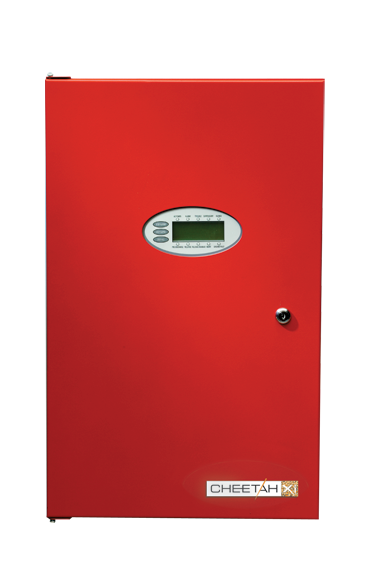
The single most effective engineering control against false discharge is the design of the releasing panel itself — specifically, how it processes detection inputs and sequences the release. A properly designed, properly programmed releasing panel addresses every root cause listed above:
- Cross-zoned detection confirmation — the panel requires alarm signals from two independent detection zones before initiating any suppression sequence. A single malfunctioning or disturbed detector cannot trigger a release on its own.
- Pre-discharge time delay — after detection confirmation, the panel initiates a timed pre-discharge period with audible and visual warning before any agent is released. This window allows occupants to evacuate and gives operators the opportunity to investigate and abort if appropriate.
- Abort capability — a properly installed and tested abort station allows authorized personnel to halt the release sequence during the pre-discharge window if the condition is determined to be non-fire.
- Intelligent detection logic — advanced releasing panels can apply detector sensitivity thresholds, alarm verification timers, and other software-based logic filters to reduce the likelihood of spurious activations reaching the release sequence.
- Supervised bypass and isolation modes — proper releasing panels include documented bypass capability that allows maintenance activities to be conducted safely without placing the entire system in an unsupervised bypass state.
- Full event logging — every alarm, bypass, abort, and release event is logged with timestamps, giving facilities the documentation they need for NFPA 2001 investigations and insurance purposes.
How Fike Releasing Panels Address False Discharge Risk
The Fike Cheetah Xi and SHP-PRO releasing panels are purpose-built around these prevention principles. They are not general-purpose alarm panels adapted for suppression control — they are designed from the ground up as releasing panels, with false discharge prevention built into their core architecture.
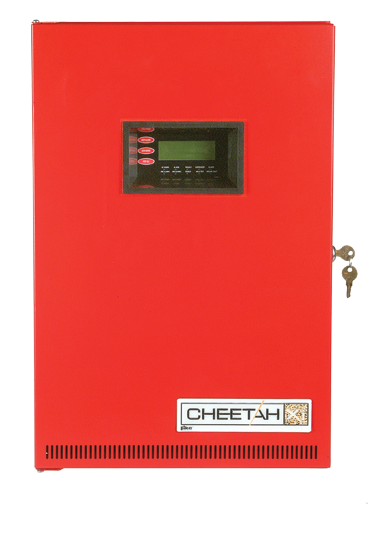
Fike Cheetah Xi — For Complex, Multi-Zone Facilities
The Cheetah Xi’s intelligent processing platform supports cross-zoned detection logic, pre-discharge sequencing, abort capability, and full event logging across a peer-to-peer network of up to 128 panels managing over 1,000 devices. Its 0.25-second response capability ensures that when a confirmed, cross-zoned fire event occurs, the system responds without hesitation — but its detection logic means a single-point anomaly never reaches the release sequence. Designed for data centers, industrial facilities, and any multi-zone special hazard environment where both speed and false-discharge prevention are non-negotiable.
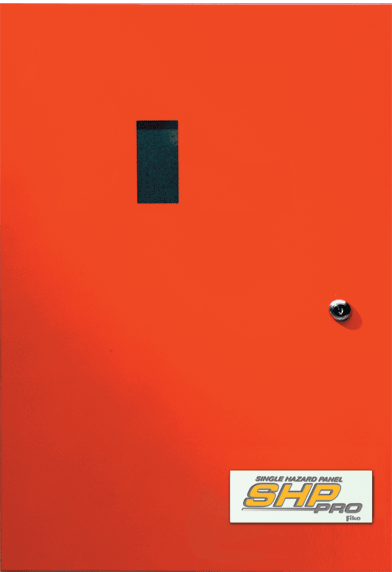
Fike SHP-PRO — For Single-Zone Applications
The SHP-PRO is Fike’s purpose-built single-zone releasing panel — the right solution for server rooms, telecom closets, electrical rooms, and other discrete hazard spaces. Like the Cheetah Xi, it is engineered as a releasing panel with proper cross-zone confirmation logic, pre-discharge timing, and abort capability — not a basic alarm panel with a relay bolted on. Its JumpStart auto-programming capability reduces the risk of programming errors during commissioning, one of the common sources of false discharge risk in smaller systems.
What NFPA Requires for False Discharge Prevention
NFPA 2001 — the standard governing clean agent fire extinguishing systems — and NFPA 72 both contain provisions that, when properly applied, significantly reduce false discharge risk:
- Cross-zoned or confirmed detection — NFPA 2001 requires that automatic suppression release be initiated by confirmed detection using approved logic to minimize inadvertent discharge
- Pre-discharge alarm — a warning signal must be activated before agent release to alert occupants and allow evacuation
- Time delay — a time delay between detection confirmation and agent release provides the operational window for evacuation and abort
- Abort stations — when required, abort capability must be properly installed, labeled, and tested annually
- Annual inspection and testing of the releasing sequence — NFPA 72 and NFPA 2001 require full releasing sequence testing, not just panel alarm testing, to verify that the complete cross-zone, pre-discharge, and abort sequence is functioning correctly
- Post-discharge investigation requirements — NFPA 2001 requires a documented investigation and corrective action before a system that has discharged is returned to service
A system that was designed and installed correctly — with a proper releasing panel, cross-zoned detection, pre-discharge sequencing, and annual testing — meets these requirements and substantially reduces false discharge risk. A system that was not is a compliance liability in addition to an operational one.
What to Do If Your System Has Already Had a False Discharge
If your clean agent or CO₂ suppression system has already experienced a false discharge, the immediate priorities are:
- Ensure the protected space is safe for re-entry — ventilate the space and confirm agent concentration has cleared before allowing personnel to return
- Document the event thoroughly — log all panel event data, alarm history, and any known activities in the protected space at the time of discharge; this is required by NFPA 2001 and essential for insurance purposes
- Conduct a root cause investigation before recharging — recharging the system without identifying and correcting the root cause creates a high probability of repeat discharge; NFPA 2001 requires this step
- Have a certified technician evaluate the releasing panel programming and detection logic — this is the most common source of false discharge and requires review by someone factory-trained on the specific panel platform
- Evaluate whether the releasing panel itself is appropriate for the application — older or improperly specified panels may need to be replaced to provide the detection confirmation logic required by current NFPA standards
SSI can respond to false discharge events, conduct root cause evaluations, and recommend corrective action — including panel replacement or reprogramming where the investigation identifies panel design as a contributing factor.
Has Your System Had a False Discharge — Or Are You Concerned It Could?
Suppression Systems, Inc. has been designing, installing, and servicing clean agent and special hazard suppression systems for over 40 years. We know what causes false discharges, how to engineer against them, and how to evaluate whether an existing system’s releasing panel and detection logic are doing the job they should be.
Contact SSI today to request a system evaluation, discuss a false discharge investigation, or get a recommendation on releasing panel design for a new or upgraded system. We serve PA, NJ, MD, VA, and DE.
Related SSI Resources
Fike Releasing Panels and Fire Alarm Systems:
- Fike Fire Suppression Panels — Cheetah Xi and SHP-PRO Overview
- Fike Fire Alarm Systems — Integrated Detection and Suppression Control
- Fire Alarm and Suppression System Integration — A Practical Guide
Clean Agent and Special Hazard Suppression Systems:
- Clean Agent Fire Suppression Systems
- SF-1230 / FK-5-1-12 Clean Agent Fire Suppression
- ECARO-25 Clean Agent Suppression
- FM-200 Clean Agent Suppression
- CO2 Fire Suppression Systems — NFPA 12 Guide
- Design Considerations for Special Hazard Fire Suppression
Room Integrity and System Readiness: