
Spark Detection and Extinguishing Systems
Detect sparks, embers, and hot particles inside ducts and conveyors, trigger targeted extinguishing in milliseconds, and stop ignition sources before they reach collectors, silos, or process vessels.
One minute answer
Spark detection is ignition source control for ducting and conveying. It identifies hot particles early, then triggers fast, localized extinguishing and shutdown, so a small ember does not become a dust collector fire or a downstream explosion event.
Why this matters in real plants
- Most catastrophic incidents start small, friction, tramp metal, overheated bearings, welding, and process upsets.
- Ducting and conveying lines move ignition sources fast, the collector is often the first large fuel reservoir they reach.
- Spark detection buys time and removes the ignition source before it reaches the worst location.
This is often paired with a full industrial explosion protection strategy and recommendations from a Dust Hazard Analysis.
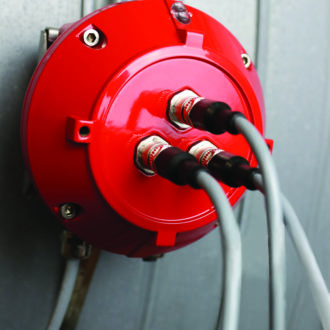
SSI installs the FLAMEX YMX 5000 infrared detector series for spark and flame detection in ducts, chutes, and conveyors.
How Spark Detection and Extinguishing Works
The best systems are simple in concept and ruthless in execution. Detect early, act fast, and keep the ignition source from traveling further.
- Detection: infrared sensors continuously monitor for hot particles, sparks, or embers inside the transport path.
- Signaling: the sensor sends an instant signal to the field control unit.
- Extinguishing: a targeted water mist or fog discharges at the right point, cooling the ignition source before it reaches the collector or vessel.
- Shutdown: fans and material flow can be stopped, reducing propagation risk and preventing re-ignition further downstream.
FLAMEX YMX 5000 IR Detector Series
This detector platform is built for harsh industrial conditions, with features that reduce blind spots and improve long-term reliability.
Reliability features
- Self-monitoring optics with real-time, through-the-lens checking for contamination or reduced capability.
- Field-removable lens for maintenance without replacing the full unit.
- Stainless steel housing for harsh, abrasive environments.
Installation and visibility
- Up to three remote sensors can connect to a single, field-mounted control unit, reducing wiring complexity.
- External LEDs show detector status at a glance.
- Wide operating temperature range, from -40°F to 221°F.
Hazardous locations
- EX versions are available for Class 2 Division 1 hazardous areas.
- Designed as part of an FM Approved spark detection and extinguishing solution.
Where Spark Detection Is Used
Spark detection is most effective where ignition sources can enter, travel, and reach a high-fuel location.
Common system locations
- Ductwork feeding dust collectors, baghouses, and filter receivers
- Pneumatic conveying lines and enclosed transfer points
- Chutes and conveyors moving combustible bulk solids
- Return air and recirculation paths where an incident can spread into occupied areas
Industries that rely on it
- Woodworking and timber, sawdust, chips, sanding lines
- Grain and agriculture, elevators, feed mills, processing
- Food processing, flour, sugar, spices, powders
- Textiles and paper, fiber transport and dust collection
- Metalworking where combustible metal dust is present
Design Checklist, What You Need Before You Quote
If your goal is fewer redesign loops and a faster path to a correct installation, stop sending vague requests. Provide the details below up front.
Duct and process details
- Duct sizes, material, and access points, including elbows, branches, and long runs
- Normal airflow direction and velocity, plus any reversing or pulse conditions
- Material being conveyed and known hazard info, if available
- Where the line terminates, dust collector, silo, dryer, cyclone, mill, or other equipment
Controls and utilities
- What shutdown actions are required, fan stop, conveyor stop, diverter position, upstream isolation
- Water supply availability and constraints, freeze concerns, pressure and flow
- Alarm integration needs, PLC, HMI, plant annunciation, maintenance notifications
- Maintenance access plan for detector inspection and lens cleaning
If you have not completed hazard characterization, start with combustible dust testing, then align protection scope through a Dust Hazard Analysis.
Standards and Insurance Alignment
Spark detection is commonly recommended as part of ignition source control programs in combustible dust environments. Your AHJ, insurer, and internal risk requirements often drive the final scope and documentation expectations.
Frequently Asked Questions
What is a spark detection system?
A spark detection system uses infrared detectors to identify sparks, embers, or hot particles inside ducts and conveyors, then triggers extinguishing and shutdown to remove the ignition source before it reaches higher risk equipment.
Does spark detection prevent explosions?
It reduces ignition source risk, which is a major driver of fires and deflagrations in dust handling systems. It works best as a layer within a broader program that can include venting, suppression, and isolation.
Where should detectors be placed?
Placement is driven by duct geometry, velocity, and where ignition sources can enter or accelerate toward the collector or vessel. Long runs, elbows, branches, and transfer points are common design drivers.
What happens when the system detects an ember?
The control unit initiates pre-programmed actions, targeted water mist discharge and process shutdown signals to stop movement of the ignition source and reduce propagation risk.
Is water mist always acceptable?
Many applications use water mist effectively, but process constraints matter. Food, sanitation, freeze risk, and corrosion concerns should be addressed in the design stage, not after install.
How do you validate the right system scope?
Start with combustible dust testing and a Dust Hazard Analysis, then map the full system, ignition sources, interconnections, and downstream consequences to select the right layers of protection.
Next Steps, Get a Correct Design, Not a Guess
If you want this to work when it matters, do these three things first
- Map your duct and conveying paths, including branches, return air, and where lines terminate.
- Confirm combustible dust hazards and credible ignition scenarios, then align scope with a DHA.
- Engineer detection zones, extinguishing points, and shutdown logic for your actual layout and constraints.
SSI designs, installs, and services FM Approved spark detection solutions for industrial facilities across the East Coast.
Request a consultation or call 1-800-360-0687 .
Related resources
Suppression Systems Inc., 155 Nestle Way, Suite 104, Breinigsville, PA 18031