
Home > Explosion Protection > Explosion Detection & Control
Explosion Detection & Control
Explosion Detection & Control, the millisecond decision layer behind active explosion protection
Who this is for: EHS leaders, plant managers, engineers, maintenance teams, and insurers looking for engineered, code-aligned active explosion protection, not generic guidance.
What SSI does: We design, install, and service explosion detection and control systems that recognize the earliest stages of a deflagration and activate suppression, isolation, and shutdown sequences fast.
Talk to an expert now: 1-800-360-0687 or Request a consultation
At a Glance
- Acts in milliseconds, detection triggers mitigation actions before an event escalates.
- Protects common dust process equipment, including dust collectors, silos, conveyors, bucket elevators, and process vessels.
- Coordinates suppression and isolation devices plus process shutdown and interlocks.
- Built around modular control architecture, suited for single zones or multi-zone facilities.
- Designed and serviced by SSI across Pennsylvania and the East Coast.
Jump Links
What it is | How it works | EPACO system | Detector types | Where it fits | Requirements | Design considerations | Downloads | FAQs | Service area | Next steps
What an Explosion Detection & Control System Is
In combustible dust and flammable process environments, time is the enemy. An explosion detection and control system is the sensing and decision layer that detects an incipient deflagration and triggers active mitigation, fast.
Think of it as the system that turns sensors into action, coordinating high-speed suppression and isolation devices plus process shutdown sequences. It is the operational “brain” behind active explosion protection.
Related: Industrial Explosion Protection and Explosion Suppression Systems.
How an Explosion Detection System Works
An engineered detection and control sequence is simple in concept, and unforgiving in execution. The workflow below is what you are buying: speed, certainty, and a controlled response.
- Detection: Pressure and or optical detectors continuously monitor the protected zone.
- Signaling: At the first validated event signature, a signal is sent to the controller.
- Activation: The controller actuates mitigation devices such as explosion suppression bottles and or fast-acting isolation valves.
- Process control: Interlocks shut down material flow and equipment to prevent escalation and secondary hazards.
- Monitoring and documentation: Event history and system status support maintenance, troubleshooting, and compliance documentation.
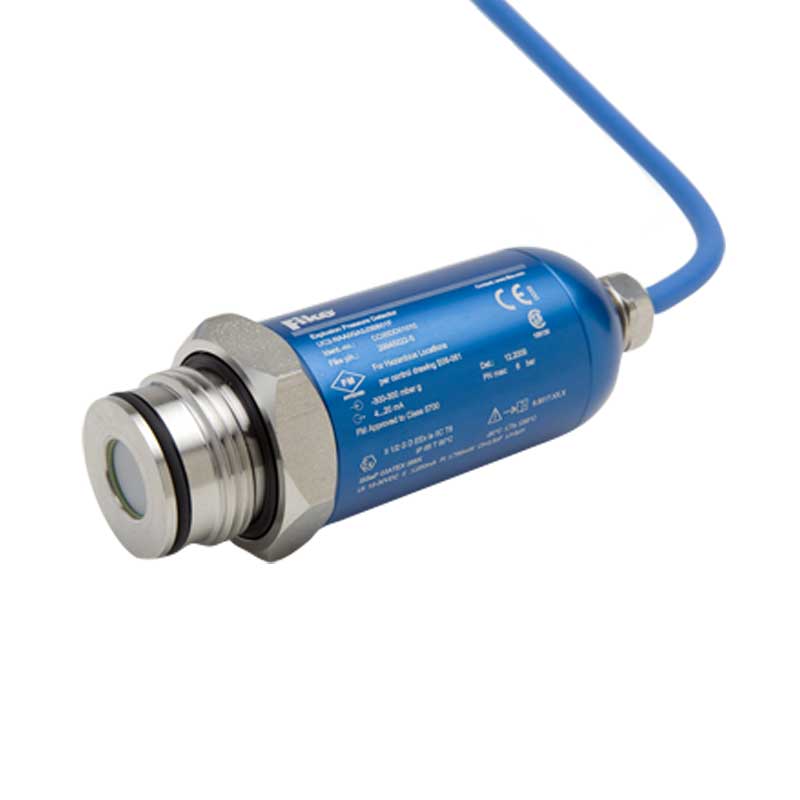
Example pressure detector used for high-speed deflagration sensing.
The Fike EPACO System, Modular Detection & Control
SSI installs the Fike EPACO platform for explosion detection and control. EPACO is modular, which matters when you need to protect one hazard, or scale to multiple zones across a facility without compromising response time or maintainability.
Core Components
- Explosion Protection Controller (EPC): the primary controller that receives detector inputs and actuates mitigation devices.
- Power Supply Unit (PSU): supervised power architecture with battery backup capability for continuity.
- Annunciator Module (AM): operator interface for system status, event history, and monitoring.
- Relay Card (RC8): outputs for shutdowns, slowdowns, remote notifications, and interlocks.
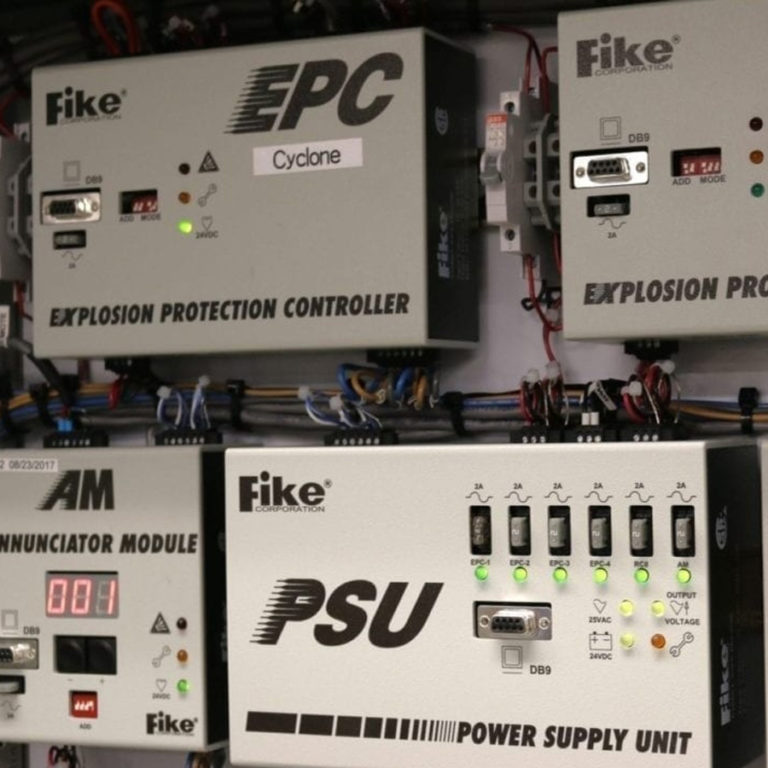
EPACO components shown together, controller, power supply, and annunciator module.
Detector Technology, Pressure vs Optical
Detector selection is not a brochure decision. It should match the hazard behavior, enclosure geometry, process dynamics, and the mitigation strategy being actuated.
| Detector type | What it senses | Common fit | Practical notes |
|---|---|---|---|
| Ceramic pressure detectors | Rapid pressure rise signature of a deflagration | Many dust process hazards and vessels | Speed and validation logic matter, mounting location and impulse lines must be engineered. |
| Optical detectors | Flame radiation signature | Larger volumes and select applications based on fuel behavior | Line of sight, obscuration potential, and background sources should be evaluated during design. |
Example optical detector used to sense flame radiation signatures.
Where Explosion Detection & Control Fits
Detection and control is typically paired with active explosion protection devices. If you only have passive measures, detection may still support interlocks and shutdown sequencing, but it will not substitute for engineered mitigation where required.
Common protected equipment
- Dust collectors and baghouses
- Storage silos and bins
- Conveyors and bucket elevators
- Cyclones and filters
- Process vessels, dryers, and enclosed equipment
Helpful context: Combustible Dust Testing, Dust Hazard Analysis (DHA), and Explosion Isolation.
Requirements and What Buyers Miss
Explosion detection and control is performance-critical. The wrong assumptions show up later as nuisance trips, poor integration, or acceptance issues. These are the fundamentals to validate early.
- Hazard basis: dust data and operating modes that define credible event scenarios.
- Mitigation strategy: suppression, isolation, venting, or a combined approach, and what the controller must actuate.
- Process shutdown plan: interlocks and sequencing that prevent secondary fuel feed and flame propagation.
- Power and supervision: supervised wiring, power continuity, and service access for lifecycle reliability.
- Acceptance pathway: documentation, AHJ coordination, and insurer expectations defined before installation.
Compliance and code context
Applicable standards depend on your hazard and jurisdiction. Many combustible dust programs reference NFPA standards and OSHA expectations, plus insurer or corporate engineering requirements. SSI supports engineered solutions aligned to the approval and documentation pathway that applies to your site.
- NFPA 69, explosion prevention systems (reference for program pathways).
- NFPA 652, fundamentals of combustible dust.
- OSHA combustible dust resources, enforcement emphasis and guidance links.
- FM Global, insurer-driven performance expectations and guidance (site specific).
- U.S. Chemical Safety Board (CSB), incident investigations that highlight dust explosion failure modes.
Design Considerations for Real Facilities
Most failures are not because the controller is “bad.” They are because the system was not engineered for the process reality. Below are the decisions that separate reliable protection from chronic problems.
1) Detector placement and validation logic
- Pressure detectors need correct mounting, process impulse considerations, and validated thresholds that avoid nuisance trips.
- Optical detectors require line of sight planning and a review of obscuration and background radiation sources.
- Multi-zone layouts should match process segmentation, not convenience.
2) Integration with mitigation devices
- Explosion suppression and isolation devices must be matched to the hazard and triggered on a validated, time-critical sequence.
- Shutdown and interlocks should be engineered to stop fuel feed, isolate connected equipment, and prevent propagation.
- Related pages: Explosion Suppression, Explosion Isolation, Explosion Venting.
3) Lifecycle reliability and service access
- Supervised wiring and power continuity are not optional, they are part of the reliability design.
- Event history, diagnostics, and clear annunciation reduce downtime and speed troubleshooting.
- Plan for periodic inspection and service, your insurer and AHJ often care as much about maintenance documentation as installation.
For broader planning: Design Considerations for Special Hazards.
Industries That Rely on Explosion Detection
Explosion detection and control is commonly used anywhere combustible dust or process conditions can produce a rapid deflagration risk. If your facility has a dust collection system, enclosed conveying, milling, mixing, or drying, you should assume detection and mitigation will be part of the engineered discussion.
Typical environments include:
- Food processing and ingredients handling
- Wood products, furniture, and panel manufacturing
- Chemicals, plastics, and specialty materials
- Agriculture, grain handling, and feed operations
- Metal and additive processes where combustible particulate is present
Why Partner with SSI
Your detection and control system has to work once, perfectly, under the worst day conditions. SSI is built for engineered work where compliance, integration, and service readiness matter.
- SSI was founded in 1983, and has been serving industrial fire and explosion protection needs for over 40 years.
- Our explosion protection work has included detection and control solutions since 2004.
- Turnkey support, design, installation, commissioning, and ongoing service.
- Proof pages: 10 Reasons to Choose SSI and What Our Clients Say.
Downloads and Product Documents
Use the documents below for baseline planning and component familiarity. Final design and acceptance should follow the applicable code pathway, manufacturer guidance, and AHJ requirements.
- Explosion Protection Controller (EPC) Data Sheet, PDF
- Power Supply Unit (PSU) Data Sheet, PDF
- Annunciator Module (AM) Data Sheet, PDF
- Relay Card (RC8) Data Sheet, PDF
- Ceramic Pressure Detector Data Sheet, PDF
- IREx Optical Detector Data Sheet, PDF
Frequently Asked Questions
What is an explosion detection system?
An explosion detection system is a network of sensors and a controller designed to recognize the earliest stages of a deflagration and trigger mitigation actions. It is the control layer behind active suppression and isolation.
How is this different from a fire alarm system?
Fire alarm systems are typically designed to detect fire conditions and notify occupants or trigger building responses. Explosion detection and control is engineered to act in milliseconds to trigger mitigation. They solve different problems and operate on different time scales. See: Fire Alarms and Detection Systems.
Are these systems FM Approved?
Many EPACO components are FM Approved, and FM Approved components are commonly specified for industrial explosion protection projects. Final acceptance depends on the system design, installation, documentation, and the requirements of your insurer and AHJ.
What information does SSI need to quote a project?
- Equipment list and process flow, what is connected to what.
- Dust test data and or DHA outputs if available.
- Drawings, dimensions, vent ducts, and enclosure details.
- Your preferred acceptance pathway, AHJ, insurer, corporate engineering, or a combination.
Service Area, Pennsylvania and the East Coast
SSI is headquartered in Breinigsville, PA, and supports industrial facilities across Pennsylvania and the East Coast, including many sites within a practical 12-hour drive radius for engineered support and ongoing service.
Common coverage includes: Pennsylvania, New Jersey, New York, Maryland, Delaware, Virginia, West Virginia, Ohio, Massachusetts, Connecticut, Rhode Island, New Hampshire, Vermont, and Maine.

Next Steps, Get a Fast, Practical Recommendation
If you are product-aware and ready to move: We can help you validate detector strategy, zoning, and integration requirements, then align the design with your compliance and acceptance pathway.
Call: 1-800-360-0687 | Email: info@suppressionsystems.com
Request a Consultation and ask for an Explosion Protection assessment or detection and control design review.