
Your Fire Alarm and Suppression System Should Work as One. Here’s What Happens When They Don’t.
In many facilities, fire alarm and fire suppression are treated as two separate systems — designed separately, installed separately, and sometimes maintained by different contractors. On paper, they both exist. In an emergency, the gap between them can be the difference between a contained incident and a catastrophic loss.
This page explains the integration problem, what a proper solution looks like, and which facilities are most at risk when fire alarm and suppression don’t communicate.
Suppression Systems, Inc. (SSI) designs and installs integrated fire alarm and suppression systems across Pennsylvania, New Jersey, Maryland, Virginia, and Delaware — using Fike fire alarm and releasing panel technology built specifically for this purpose.
The Integration Problem: What Goes Wrong When Systems Don’t Communicate
A standard fire alarm panel is designed to detect, alert, and notify. It activates horns and strobes. It sends a signal to the monitoring station. It logs the event.
What it is not designed to do — unless it is specifically built and programmed as a releasing panel — is directly command a suppression system to discharge.
When those two functions are handled by separate, uncoordinated systems, several things can go wrong:
- Delayed suppression activation — if the suppression system relies on a separate trigger or manual intervention, it may not discharge until significant fire development has already occurred
- No coordinated pre-discharge sequence — in a properly integrated system, the alarm panel initiates HVAC shutdown, damper closure, elevator recall, and audible pre-discharge warnings before the suppression agent releases; without integration, these happen independently or not at all
- Code compliance gaps — NFPA 72 and NFPA 2001 have specific requirements for detection, alarm sequencing, and releasing control — a disconnected system design may fail inspection or leave the owner with uninsurable liability
- Troubleshooting confusion — when two independent systems are both involved in a suppression event, identifying what triggered, what activated, and what didn’t can be extremely difficult without unified logging
- Suppression agent waste or premature discharge — without proper abort sequences and cross-zoned detection confirmation, a single-detector false alarm can trigger a full suppression release in a clean agent system
The bottom line: A fire alarm system and a suppression system that are not designed to work together introduce risk at exactly the moment they’re needed most. For special hazard environments — data centers, server rooms, industrial process areas, clean rooms — that risk is unacceptable.
What Is a Releasing Panel — and Why Does It Matter?
A releasing panel is a fire alarm control panel that is specifically listed and programmed to directly command the discharge of a suppression system. It is not a general-purpose fire alarm panel with a relay wired to a separate suppression controller. It is a purpose-built, code-compliant device designed to manage the entire pre-discharge and discharge sequence as a unified, coordinated event.
A proper releasing panel sequence typically includes:
- Detection confirmation — cross-zoned detection (two independent alarm inputs) before any release, to prevent false discharge
- Pre-discharge alarm — audible and visual warning giving occupants time to evacuate before agent release
- HVAC and damper shutdown — stopping airflow to prevent agent dilution and fire spread before suppression discharge
- Elevator recall and door hold-open release — coordinated building response during the event
- Suppression system release command — direct, timed activation of the clean agent, CO₂, water mist, or other suppression system
- Post-release functions — notification, logging, and signal transmission to monitoring stations
All of this happens in a controlled, pre-programmed sequence — with timing, confirmation logic, and abort capability built in. This is what a proper integrated system looks like.
How Fike Solves the Integration Problem
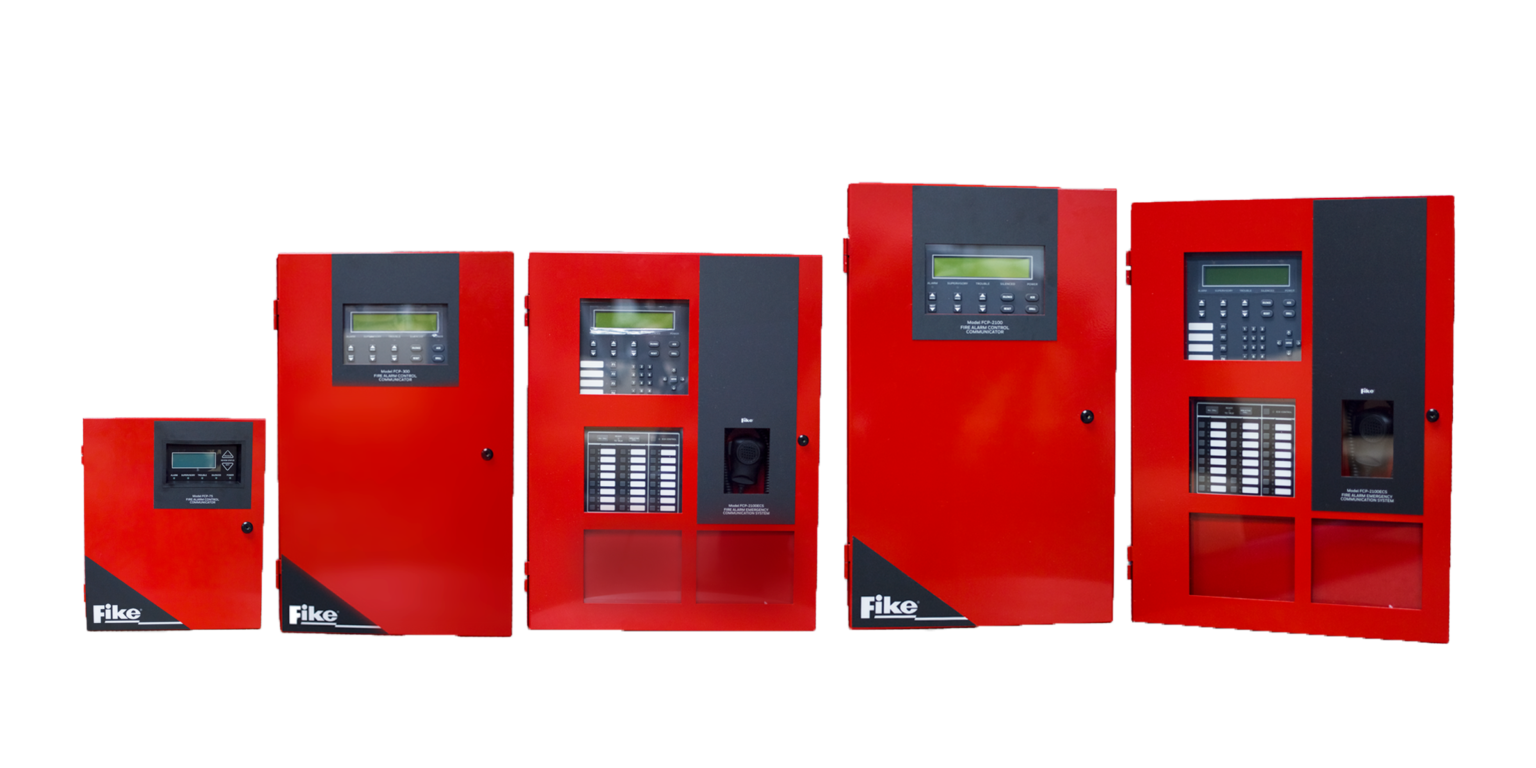
Fike fire alarm panels are engineered from the ground up as releasing panels — not standard alarm panels adapted for suppression control. The Fike Cheetah Xi, the platform’s intelligent core, is purpose-built for exactly this use case: high-speed detection confirmation, coordinated pre-discharge sequencing, and direct suppression system release — all within a single, unified platform.

Key integration capabilities of the Fike platform:
- Quarter-second detection-to-response capability — the Cheetah Xi responds from alarm to activation in 0.25 seconds, critical in fast-developing fire scenarios in data centers and industrial environments
- Cross-zoned detection logic — requires confirmation from two independent detection zones before initiating suppression release, minimizing false discharge risk
- Direct suppression system command — natively controls clean agent systems (FM-200, ECARO-25, SF-1230/FK-5-1-12), CO₂ systems, water mist deluge valves, and dry chemical systems
- HVAC shutdown and damper control — integrated within the same panel and sequence, not as a separate relay afterthought
- Peer-to-peer network design — supports up to 128 interconnected panels with no single point of failure, for multi-zone and multi-building installations
- Abort capability — allows authorized personnel to abort the release sequence during the pre-discharge window if the alarm is determined to be a false condition
What a Fully Integrated Fike System Controls in an Emergency
The table below shows the range of functions a properly programmed Fike releasing panel coordinates during a single suppression event — functions that, in a disconnected system, either don’t happen or happen without coordination:
| Function | How Fike Handles It |
|---|---|
| Detection confirmation | Cross-zoned logic requires two independent alarm inputs before initiating sequence |
| Occupant warning | Pre-discharge alarm activates audible and visual alerting before agent release |
| HVAC shutdown | Stops airflow to the protected space to prevent agent dilution and fire spread |
| Damper closure | Closes fire and smoke dampers to contain the suppression agent within the hazard zone |
| Elevator recall | Initiates elevator recall per NFPA 72 requirements |
| Suppression release | Direct command to clean agent, CO₂, water mist, or dry chemical system after pre-discharge delay |
| Abort sequence | Allows authorized personnel to halt release during pre-discharge window |
| Monitoring notification | Transmits alarm, supervisory, and release signals to central monitoring station |
| Event logging | Full event history in a single system log for post-incident review and NFPA documentation |
Which Facilities Have the Highest Integration Risk?
Integration problems tend to show up in specific situations. If any of these describe your facility, it’s worth a conversation with an engineer:
- Clean agent rooms with a standard alarm panel — if your server room, data center, or telecom room has a clean agent system but the fire alarm panel was not specifically listed as a releasing panel, the integration may not be code-compliant
- Systems installed in phases or by different contractors — fire alarm added by one contractor, suppression by another, with coordination handled by a relay or a verbal handshake between engineers — a common source of integration gaps
- Older systems being upgraded — legacy panels often can’t support the releasing functions required by current NFPA 72 and NFPA 2001 requirements; replacing the panel without addressing integration creates a new compliance problem
- Industrial facilities with multiple hazard zones — facilities with CO₂, dry chemical, or foam systems protecting process equipment where the fire alarm network was designed for life safety notification only
- Facilities that have failed suppression system inspections — releasing panel compliance issues are a common finding during annual inspections under NFPA 2001
- Any facility where the fire alarm and suppression contractors have never jointly reviewed the system design — this alone is a red flag worth addressing
The Code Side: NFPA 72 and NFPA 2001 Integration Requirements
Both NFPA 72 (National Fire Alarm and Signaling Code) and NFPA 2001 (Standard on Clean Agent Fire Extinguishing Systems) contain specific requirements governing how fire alarm systems interact with suppression systems. The short version:
- NFPA 72 requires that releasing service fire alarm systems meet specific programming, testing, and documentation standards distinct from standard alarm systems
- NFPA 2001 requires that clean agent systems be activated by listed detection systems with defined pre-discharge sequences, timing, and occupant notification
- Both codes require annual inspection and testing of the integrated system — not just the alarm panel and suppression system independently
SSI designs every integrated system to meet both codes from the start — and handles all commissioning documentation, acceptance testing, and annual inspection under both NFPA 72 and NFPA 2001 requirements.
Not Sure If Your Systems Are Properly Integrated? SSI Can Find Out.
Suppression Systems, Inc. has been designing and installing integrated fire alarm and suppression systems for over 40 years. We understand the engineering requirements on both sides — fire alarm and suppression — and we design systems where the two work together by design, not by assumption.
If you have an existing system and aren’t certain whether your fire alarm and suppression are properly integrated, or if you’re planning a new installation in a special hazard environment, SSI can evaluate your current setup and identify any gaps.
Contact SSI today to request a site evaluation or discuss an integration project. We serve facilities across Pennsylvania, New Jersey, Maryland, Virginia, and Delaware.
Related SSI Resources
Fire Alarm:
- Fike Fire Alarm Systems — Cheetah Xi, FCP Panels, and Integrated Suppression Control
- Fike Fire Suppression Panels
- Fire Alarm and Detection Systems — SSI Overview
Suppression Systems That Fike Controls:
- Clean Agent Fire Suppression Systems
- CO2 Fire Suppression Systems — NFPA 12 Guide
- Dry Chemical Fire Suppression
- Fire Suppression Systems — SSI Full Overview
Related Topics: