
Cold Storage Fire Detection: Why Conventional Systems Fail in Refrigerated Warehouses — and What Actually Works
Cold storage facilities and refrigerated warehouses are among the most demanding environments in commercial fire detection. The combustible foam insulation panels that maintain temperature, the ammonia-based refrigeration that powers the cooling, the dry-pipe and pre-action sprinkler systems required to prevent freezing, and the extreme operating temperatures themselves all combine to create a fire risk profile that conventional ceiling-mounted detection was never designed to address.
When fires happen in cold storage facilities — and they do, with documented incidents in the food, pharmaceutical, and e-commerce sectors — they tend to develop fast, burn hot, and resist suppression. The first line of defense isn’t suppression. It’s detection that actually works in freezing temperatures, identifies the failure before propagation, and triggers the right response sequence early enough to matter.
Suppression Systems, Inc. (SSI) designs and installs fire detection systems for cold storage and refrigerated warehouse facilities across Pennsylvania, New Jersey, Maryland, Virginia, and Delaware. Our NICET-certified engineers specify Protectowire linear heat detection alongside complementary technologies engineered to operate reliably in sub-zero environments where conventional detection cannot.
Why Cold Storage Fire Risk Is Fundamentally Different
A refrigerated warehouse is not a normal warehouse that happens to be cold. The engineering features that make it work as a cold storage facility are exactly the features that make it dangerous when something ignites.
1. Combustible Foam Insulation
Modern cold storage facilities use polyurethane (PUR), polyisocyanurate (PIR), and polystyrene (EPS, XPS) foam insulation — sometimes several inches thick — to maintain temperature with reasonable energy efficiency. These foams are highly flammable, burn at high heat release rates, and release toxic gases including carbon monoxide and hydrogen cyanide when ignited. Without an adequate thermal barrier, an ignition source can engulf an entire room in flames within minutes. Documented NFPA loss reports have linked unprotected foam insulation directly to total-loss cold storage fires.
2. Ammonia Refrigeration Risk
Many large cold storage facilities use ammonia-based refrigeration for energy efficiency. Ammonia is flammable within specific concentration ranges and is acutely toxic at lower concentrations. An ammonia leak combined with a fire event becomes a compounded emergency — life safety, evacuation, and suppression all complicated by the toxic and reactive properties of the refrigerant. IIAR and OSHA standards specifically address ammonia handling, and integrated fire detection must coordinate with the facility’s ammonia leak detection.
3. Sprinkler Systems With Built-In Delay
Standard wet-pipe sprinkler systems cannot be used in freezing environments. NFPA 13 requires dry-pipe or pre-action sprinkler systems in spaces below 40°F, with the piping network filled with pressurized air or nitrogen rather than water. When a sprinkler activates, water must travel from a remote source through the piping before it reaches the fire — a delay measured in seconds to tens of seconds, during which the fire continues to grow. NFPA 13 establishes specific fluid delivery time benchmarks, but the fundamental physics means cold storage suppression starts later than it would in a wet-pipe environment.
4. Detection Technology Failure in Extreme Cold
Conventional ceiling-mounted spot smoke detectors are unreliable below approximately 32°F. Condensation forms inside the detector chamber, ice accumulates on the device, and the sensor response is slowed by cold air physics. Spot heat detectors face similar limitations — their fixed-temperature ratings interact poorly with the extreme baseline cold, and they cannot reliably distinguish a real fire from normal temperature variation. Many cold storage facilities operate with detection coverage that exists on paper but does not work in practice.
5. High Ceilings and Air Stratification
Cold storage warehouses are typically 30 to 50 feet tall to maximize storage capacity. Cold, dense air settles at floor level; warmer air rises slowly. Smoke from a developing fire stratifies far below ceiling-mounted detectors — and even where it eventually reaches the ceiling, the journey takes long enough that significant fire development has already occurred.
6. Hidden Ignition Sources Inside Equipment
HID lighting fixtures, refrigeration compressors, forklift battery charging stations, conveyor systems, evaporator coils, and electrical distribution all generate the heat conditions that lead to ignition — frequently inside equipment housings or behind insulated panels where conventional detection cannot see them. HID lamps alone can operate above 800°F surface temperatures, and electrical distribution accounts for approximately 18% of warehouse fires according to NFPA loss data.
The compounding problem: By the time a cold storage fire is large enough for conventional detection to identify it, the suppression system is fighting both a fast-developing foam-insulation fire and the built-in delay of a dry-pipe system trying to deliver water. The right answer is detection that activates earlier — and that operates reliably in the same temperatures that defeat spot detectors.
How Linear Heat Detection Solves the Cold Storage Detection Problem
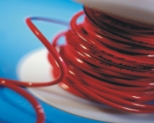
Linear Heat Detection (LHD) is the detection technology specifically engineered to overcome the cold storage detection problem. Instead of waiting for smoke or heat to travel to a fixed point sensor, LHD uses a heat-sensitive cable that functions as a continuous run of heat detectors — installed wherever the fire risk is highest, including locations that ceiling-mounted spot detectors physically cannot monitor.
For cold storage applications, the most widely deployed LHD platform is the Protectowire XLT digital cable, rated for continuous operation down to −60°F (−51°C). Protectowire XLT is UL listed and FM approved as a line-type heat detector under NFPA 72.
Continuous Coverage at the Right Location
LHD cable can be installed along racks, ceilings, conveyor systems, behind insulated panels, near refrigeration equipment, in evaporator coil housings, along electrical distribution trays, and at any other location where ignition is plausible. A single cable run protects an entire area — and the cable’s physical position determines where the detection actually occurs, not where the smoke happens to drift.
Reliable Operation in Sub-Zero Environments
The XLT digital LHD cable’s heat-sensitive polymer is engineered for cold environments. It is not susceptible to the condensation, frost, or thermal stratification issues that defeat spot smoke detection. It does not require power at the detection point. It does not require periodic calibration. It is a passive, durable, code-listed detection technology that simply works at the temperatures cold storage facilities actually operate at.
Precise Alarm Location Identification
Digital LHD systems can report the precise distance along the cable to the alarm point — meaning operators and emergency responders know not just “fire detected in cold storage” but “fire detected in rack aisle 14, approximately 22 feet from the south wall.” That specificity dramatically improves response time and accuracy, especially in dark, cold, smoke-filled environments where physical search is dangerous.
Low Maintenance Total Cost of Ownership
The cable is the detector. There are no powered field devices to maintain, no batteries to replace, no calibration cycles, no individual sensor heads to clean or test. NFPA 72 annual testing is straightforward, and the system’s operational reliability in cold storage applications is well-documented. For facility managers comparing detection options, LHD typically delivers the lowest lifecycle cost of any reliable cold storage detection approach.
A Complete Cold Storage Detection Strategy: LHD as the Foundation
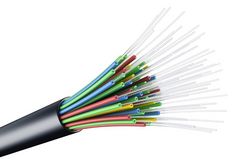
Linear heat detection is the foundation of cold storage fire detection — but a complete strategy layers complementary technologies, each operating at a different phase of the fire progression or covering a different part of the facility. SSI engineers cold storage detection across multiple layers:
| Detection Layer | Best Use in Cold Storage |
|---|---|
| Linear Heat Detection (LHD) | Primary coverage in freezers, coolers, racking, conveyors, and equipment areas; operates reliably in extreme cold |
| VESDA air sampling | Pipe network draws air samples from multiple points, useful for incipient smoke detection in transition zones and equipment rooms |
| Thermal imaging | Continuous monitoring of refrigeration equipment, electrical distribution, HID lighting, and forklift battery charging areas |
| Video Fire Detection (VFD) | Wide-area coverage in dock areas, transition spaces, and warmer warehouse sections where ceiling height defeats spot detection |
| Li-Ion Tamer off-gas | For facilities with lithium-ion forklift battery charging — a fast-growing fire risk in modern cold storage operations |
| Ammonia leak detection | Separate dedicated detection for facilities with ammonia refrigeration, coordinated with fire alarm response |
The exact combination is engineered for each facility. A box-in-box configuration (refrigerated room inside a larger warehouse) calls for a different layering than a fully conditioned big-box freezer. Facilities with forklift charging at the dock require different protection than facilities without. SSI evaluates each environment individually before specifying the detection approach.
Where Detection Goes in a Cold Storage Facility
Cold storage facilities have distinct zones with different fire risks and different detection requirements. A well-engineered system addresses each zone with the right technology:
- Freezer rooms (below 0°F) — Protectowire XLT linear heat cable through racking and at ceiling level, with cable routed close to high-risk equipment
- Cooler rooms (40°F and below) — Linear heat detection with optional thermal imaging at refrigeration equipment; VESDA where wall-mounted sampling is feasible
- Compressor and refrigeration mechanical rooms — Thermal imaging on compressors and electrical distribution; LHD on equipment housings; coordinated ammonia leak detection for ammonia-based systems
- Battery charging areas — Li-Ion Tamer off-gas detection for lithium-ion forklift fleets; thermal imaging for VRLA battery rooms
- Conveyor systems — LHD cable routed along conveyor frames detecting friction, bearing failure, and belt overheating
- Cable trays and electrical distribution — LHD cable along tray runs for direct conductor monitoring
- Loading docks and transition zones — Conventional addressable detection plus VFD for wider coverage in higher-traffic warm areas
- HID lighting fixtures — Thermal imaging or proximity LHD for high-heat lighting installations
- Office, mechanical, and administrative areas — Standard NFPA 72 addressable detection
What Codes and Standards Apply to Cold Storage Fire Detection?
Cold storage fire safety operates within a multi-standard compliance framework. SSI designs every installation to satisfy the full applicable code stack — including the FM Global Data Sheets that insurance underwriters increasingly reference during facility evaluations:
| Standard | What It Governs |
|---|---|
| NFPA 72 | National Fire Alarm and Signaling Code — detection system design, line-type heat detector spacing, supervision, and testing |
| NFPA 13 | Installation of Sprinkler Systems — cold storage provisions, dry-pipe and pre-action requirements, fluid delivery time benchmarks, ESFR sprinkler design |
| NFPA 25 | Inspection, Testing, and Maintenance of Water-Based Fire Protection Systems |
| FM Global Data Sheet 8-29 | Refrigerated Storage — FM Global’s authoritative design and protection guidance for cold storage facilities |
| FM Global Data Sheet 7-29 | Heat Tracing — guidance for protecting sprinkler piping and other water-bearing components from freezing |
| IIAR 2 / IIAR 6 | Ammonia refrigeration design, installation, and maintenance standards (International Institute of Ammonia Refrigeration) |
| UL 521 / FM 3210 | Listing standards for heat detectors including line-type heat detection cables |
| NFPA 70 / NEC | Electrical installation requirements relevant to refrigeration equipment, lighting, and battery charging |
Insurance carriers — particularly FM Global, Zurich, and AXA XL — apply their own data sheet requirements that may exceed the NFPA baseline. SSI’s design process includes a review of the carrier requirements relevant to your facility, so the system is approved by both the AHJ and the underwriter the first time.
Integration With Fire Alarm, Suppression, and Refrigeration Systems
Cold storage detection is most effective when it is integrated into a complete fire safety platform — coordinated with sprinkler activation, ammonia leak response, HVAC modification, and emergency communication. SSI engineers every cold storage installation with supervised connections to:
- Fike fire alarm panels — Cheetah Xi and FCP series accept LHD supervised inputs for coordinated detection, alarm sequencing, and releasing service
- Autocall fire alarm systems — addressable integration with TrueAlert ES notification and TrueSite graphical workstation for campus-scale cold storage operations
- Pre-action sprinkler systems — supervised electric release upon confirmed cross-zoned LHD activation, minimizing fluid delivery delays
- Refrigeration system shutdown — coordinated isolation of refrigeration equipment during fire events to prevent compounding hazards
- Ammonia leak detection — separate but coordinated systems sharing the fire alarm panel for unified emergency response
- HVAC and damper control — automatic shutdown and damper closure to contain fire spread and smoke movement
- Mass notification — coordinated occupant evacuation alerts across the full facility, accounting for the hearing protection commonly worn in cold storage operations
- Central monitoring station — 24/7 supervised notification with precise alarm location information from the digital LHD system
Frequently Asked Questions
Why don’t standard smoke detectors work in cold storage?
Conventional ceiling-mounted spot smoke detectors are unreliable below approximately 32°F. Condensation forms inside the detector chamber as warm air meets the cold sensor, ice and frost accumulate on the device, and the sensor response is significantly slowed by cold air physics. Additionally, the high ceilings typical of cold storage facilities cause smoke to stratify well below the ceiling-mounted detector before sufficient concentration reaches the sensor.
What is Linear Heat Detection (LHD) and why is it used in cold storage?
Linear Heat Detection is a fire detection technology that uses a heat-sensitive cable as a continuous detector. The cable can be installed along any path — through racking, along conveyors, at ceiling level, behind insulated panels — and detects heat anywhere along its length. For cold storage, LHD’s primary advantage is reliability: the Protectowire XLT digital LHD cable is rated for continuous operation down to −60°F and operates without the condensation, frost, or stratification problems that defeat spot detection.
What temperatures can linear heat detection operate at?
Protectowire XLT cable is rated for continuous operation down to −60°F (−51°C), making it suitable for the deepest cold storage and freezer applications including pharmaceutical, food, and specialty chemical storage. Standard Protectowire cables cover applications down to typical cooler temperatures. The cable’s heat-sensitive polymer activates at a preset rated alarm temperature when exposed to fire conditions — separate from the cable’s operational temperature rating.
Is linear heat detection NFPA 72 compliant?
Yes. NFPA 72 recognizes linear heat detection cables as line-type heat detectors, with specific spacing and installation requirements. UL-listed and FM-approved LHD cables — including Protectowire XLT — meet NFPA 72 requirements when installed and supervised per the standard. SSI designs every LHD installation to NFPA 72 compliance and handles AHJ submittals, acceptance testing, and annual inspection documentation.
What is the biggest fire risk in cold storage facilities?
Combustible foam insulation — polyurethane, polyisocyanurate, and polystyrene — is the most significant risk factor in modern cold storage construction. These foams are highly flammable and burn at high heat release rates, releasing toxic combustion gases. When an ignition source contacts unprotected foam insulation, fire can engulf an entire room in minutes. The ignition sources themselves — hot work, HID lighting, electrical distribution, forklift charging, refrigeration equipment — are the secondary risk. The combination is what makes cold storage detection critical.
Why are dry-pipe or pre-action sprinklers required in cold storage?
Wet-pipe sprinkler systems contain water in the piping at all times, which would freeze and rupture in cold storage conditions. NFPA 13 requires dry-pipe or pre-action sprinkler systems in spaces below 40°F. These systems keep the piping pressurized with air or nitrogen and admit water only after activation — which introduces a fluid delivery delay between sprinkler activation and water arrival at the fire. Early detection through LHD becomes more important precisely because the suppression response itself has a built-in delay.
Can LHD be installed in an existing cold storage facility?
Yes. LHD retrofits are routine in cold storage applications because the cable can be installed without modifying the protected equipment or building structure. The cable is mounted along ceilings, rack uprights, conveyors, or wherever the fire risk exists, with connections back to a supervised fire alarm panel. Installation can typically be staged during operational windows to minimize impact on facility operations. SSI handles the engineering, AHJ coordination, and staged installation for retrofit projects.
What about ammonia refrigeration — does that affect fire detection?
Yes. Facilities with ammonia refrigeration require dedicated ammonia leak detection in addition to fire detection, with both systems coordinated through the fire alarm panel for unified emergency response. An ammonia release combined with a fire creates a compounded emergency — toxic, flammable, and complicating manual firefighting. SSI designs ammonia detection alongside the fire detection system, with shared supervisory infrastructure and coordinated response protocols meeting IIAR and OSHA requirements.
How is LHD maintained?
LHD maintenance is minimal compared to spot detection. The cable itself requires no calibration or routine sensor cleaning. NFPA 72 requires annual functional testing of the LHD system including supervised circuit verification and panel response confirmation. There are no batteries to replace, no individual sensor heads to clean, and the cable’s operational lifetime in cold storage applications is well-documented. SSI provides annual service contracts covering all required testing and documentation.
How does cold storage detection coordinate with insurance underwriting?
Most cold storage facilities of meaningful scale are underwritten by carriers with their own engineering standards — particularly FM Global Data Sheet 8-29 for refrigerated storage. These data sheets often impose detection and protection requirements above the NFPA minimum. SSI’s design process includes review of the relevant carrier requirements during initial engineering, so the installation satisfies both the AHJ and the insurance underwriter without rework. Documentation provided at commissioning supports both code compliance and underwriting renewal cycles.
Cold Storage Fire Detection That Actually Works at −60°F.
Cold storage facilities deserve detection that operates reliably in the same environments their products are stored in. Suppression Systems, Inc. designs, installs, and services Protectowire linear heat detection systems engineered specifically for refrigerated warehouse, freezer, and cold storage applications across the East Coast.
Our NICET-certified engineers evaluate the facility, the insurance carrier requirements, the refrigeration approach, and the storage commodity profile — then deliver a complete detection and integration package designed to satisfy NFPA 72, NFPA 13, FM Global, and your AHJ from day one.
Contact SSI today to schedule a cold storage fire detection assessment or discuss a new installation with our certified engineers. We serve Pennsylvania, New Jersey, Maryland, Virginia, and Delaware.