
Industrial Explosion Protection Systems & DHA Compliance
Suppression Systems, Inc. (SSI) engineers, installs, and services comprehensive industrial explosion protection systems tailored to bulk material handling, pharmaceutical, chemical, milling, and plastics facilities. From certified combustible dust characterization testing to high-rate discharge chemical suppression, we safeguard your personnel and operations against secondary deflagrations.
1. Certified Combustible Dust Testing
Deflagration mitigation systems cannot be designed using assumptions. Accurate system engineering requires verified laboratory parameters defining the exact explosive violence and ignition sensitivity of your process dust.
Go / No-Go Screening
Determines conclusively whether your particulate sample is capable of propagating a deflagration under ASTM E1226 test standards.
- Establishes combustibility baseline
- Required for OSHA compliance records
- Eliminates unnecessary system costs if inert
Explosion Severity (Kst & Pmax)
Measures the maximum rate of pressure rise (Kst) and peak explosion pressure (Pmax) in a standard 20-liter spherical vessel.
- Defines Dust Explosion Class (St 1, St 2, St 3)
- Directly sizes relief vents under NFPA 68
- Determines chemical suppression agent volume
Minimum Ignition Energy (MIE)
Measures the smallest electrostatic or frictional spark electrical energy (in millijoules) capable of igniting your suspended dust cloud.
- Tested under ASTM E2019 protocols
- Identifies grounding and bonding priorities
- Prevents static-induced hopper ignitions
Explosible Concentration (MEC)
Determines the minimum suspended dust concentration in air (g/m³) required for flame propagation to occur.
- Evaluates dust collector filter loadings
- Guides operational dust extraction thresholds
- Informs ventilation air exchange rates
| Dust Class | Kst Value (bar-m/s) | Deflagration Characteristics | Common Industrial Material Examples |
|---|---|---|---|
| St 0 | 0 | Non-explosive | Silica, sand, gypsum, limestone, rock dust |
| St 1 | 1 – 200 | Weak to moderately explosive | Grain, wood dust, flour, sugar, coal, polyethylene |
| St 2 | 201 – 300 | Strongly explosive | Cellulose, epoxy resins, fine wood flour, chemical pigments |
| St 3 | > 300 | Extremely explosive / Violent | Aluminum flake, magnesium, zirconium, titanium powder |
Regulatory Compliance Alert: Transition to NFPA 660
The National Fire Protection Association has consolidated its combustible particulate standards (including NFPA 652, NFPA 654, NFPA 61, NFPA 655, and NFPA 664) into the unified NFPA 660 Standard for Combustible Dusts. Facility operators are legally required to complete and maintain an active Dust Hazard Analysis (DHA) for all operating process equipment handling particulate solids. DHA documentation is actively enforced by OSHA under the General Duty Clause (Section 5(a)(1)) and the Combustible Dust National Emphasis Program.
2. Turnkey Dust Hazard Analysis (DHA)
Our engineering team performs comprehensive on-site process reviews that identify deflagration and fire hazards, verify operational vulnerabilities, and deliver prioritized, actionable compliance plans.
What Our DHA Evaluates
- Pneumatic Conveying Systems: Air velocities, dust ducting runs, and air-material separation.
- Dust Collectors & Baghouses: Internal volumes, filtration media, pulse-jet cleaners, and differential pressures.
- Milling & Size-Reduction Equipment: Grinders, pulverizers, hammer mills, and shredders susceptible to friction sparks.
- Storage & Transfer Units: Silos, bins, hoppers, bucket elevators, screw conveyors, and bulk bag unloading stations.
- Fugitive Dust Accumulation: Overheads, structural beams, and cable trays exceeding hazardous layer depth limits (1/32 in).
Your Engineering Deliverables
- Comprehensive Hazard Register: Node-by-node assessment detailing every equipment hazard identified.
- Applicable Code Citations: Clear mapping to NFPA 660, NFPA 68, NFPA 69, and local AHJ mandates.
- Engineered Mitigation Roadmaps: Step-by-step priority ranking distinguishing immediate life-safety requirements from secondary administrative controls.
- Management of Change (MOC) Support: Updating and re-certifying your DHA when throughput, equipment, or materials change.
3. High-Speed Explosion Detection & Control Panels
In combustible dust environments, the difference between an uncontained structural explosion and a controlled suppression event is measured in milliseconds.
Dynamic Pressure Transducers
Specialized low-inertia pressure sensors detect the early microbar pressure rise ($P_{red}$) of a nascent deflagration, distinguishing legitimate process surges from true explosion pressure waves within 5 to 15 milliseconds.
- Multi-sensor voting logic prevents nuisance trips
- Flush-mount diaphragm prevents material caking
- Continuous line and sensor health supervision
Optical Infrared Detectors
Dual-spectrum infrared sensors detect early flame kernel radiation inside ductwork and vessels before pressure has had time to build, initiating isolation mechanisms instantaneously.
- Resistant to ambient dust obscuration
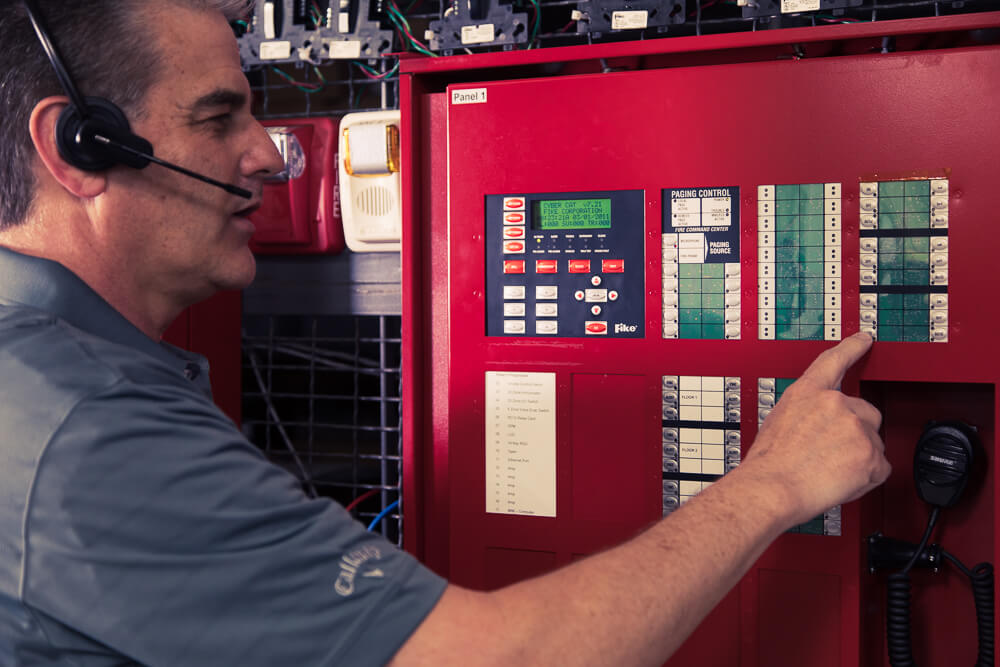
- Integrated with Autocall fire alarm control panels
- High-speed millisecond relay firing outputs
4. Deflagration Venting & Isolation (NFPA 68 & NFPA 69)
Venting protects the primary vessel, while isolation prevents secondary explosions from propagating through interconnected ductwork into your plant.
Explosion Venting (NFPA 68)
Passive explosion relief panels engineered to burst open at a predetermined set pressure ($P_{stat}$), safely releasing overpressure and fireball energy.
- Standard Rupture Panels: Engineered for outdoor dust collectors and silos with direct, unobstructed vent perimeters.
- Flameless Venting: Specialized mesh quenching modules that extinguish flames, arrest dust, and cool venting gases, allowing indoor process vessels to be vented without external ducting.
Explosion Isolation (NFPA 69)
Uncontained dust explosions travel through ductwork at sonic speeds. Isolation creates an immediate physical or chemical barrier.
- Chemical Isolation Barriers: Fast-acting cylinders discharge suppressing powders into interconnecting pipe runs to extinguish propagating flame fronts.
- Mechanical Isolation Valves: High-speed flap valves, pinch valves, and knife gate valves physically seal ductwork within milliseconds to prevent flame and pressure passage.
5. Active High-Rate Discharge (HRD) Suppression
When process vessels are located indoors and cannot accommodate vent ducts or flameless vents, active suppression extinguishes the deflagration entirely within the container.
The 50-Millisecond Extinguishment Window
An unmitigated combustible dust deflagration reaches destructive structural rupture pressure in 100 to 200 milliseconds. Active HRD suppression systems operate on an accelerated response timeline:
- 0 – 10 ms: Dynamic sensors register nascent deflagration pressure rise.
- 10 – 20 ms: High-speed controller verifies the signature and fires fast gas actuators.
- 20 – 50 ms: Pressurized chemical suppressant floods the vessel, quenching the flame kernel and arresting pressure rise well below vessel design limits.
Suppression Hardware & Service
- HRD Canisters: Pressurized vessels charged with specialized sodium bicarbonate chemical extinguishing powder.
- Telescopic Dispersal Nozzles: High-velocity distribution heads designed to penetrate dense dust clouds evenly.
- Emergency Recharge Dispatched: Routine inspections and rapid emergency cylinder replacement through our maintenance and repair division.
6. Spark Detection & Extinguishment Systems (Flamex)
The vast majority of dust collector and silo explosions are caused by friction sparks, hot embers, or foreign objects traveling through pneumatic ducts. We partner with Flamex, Inc. to stop ignition sources before they reach collection vessels.
High-Sensitivity Infrared Detectors
Flamex optical spark detectors mount flush to duct walls, detecting invisible infrared radiation emitted by hot particles and glowing embers traveling at high airflow velocities.
- Detects sub-visible embers under heavy material flow
- High-speed millisecond detection processing
- Weather-resistant and high-temperature models available
Instantaneous Extinguishment
Located downstream from the detector at an engineered distance, rapid-action solenoid valves inject an instantaneous conical curtain of pressurized water mist into the duct.
- Extinguishes sparks instantly without interrupting production
- Minimal water consumption leaves filters dry
- Automatic abort gate redirection if embers persist
Explosion Protection Technical FAQs
Answers to common questions regarding explosion mitigation, DHA requirements, and code compliance.
What is the unified NFPA 660 standard for combustible dust?
NFPA 660 is the consolidated standard merging NFPA 652, NFPA 654, NFPA 61, NFPA 655, and NFPA 664 into a unified combustible dust code. It sets baseline requirements for completing a Dust Hazard Analysis (DHA), establishing explosion mitigation controls (such as venting, isolation, and suppression), and maintaining administrative housekeeping protocols.
How often must our Dust Hazard Analysis (DHA) be reviewed?
Under NFPA codes, an active DHA must be formally reviewed and updated at least every 5 years. However, any significant facility modification—such as changes to raw materials, alterations in dust extraction piping, process equipment replacements, or throughput increases—triggers a mandatory Management of Change (MOC) review immediately.
Can an existing baghouse or dust collector be retrofitted with explosion protection?
Yes. SSI regularly retrofits operating industrial collection units. Depending on your collector’s Pred rating and location (indoor vs. outdoor), retrofits may include installing explosion relief panels, flameless vents, inlet flap isolation valves, or Flamex spark extinguishment modules in the incoming ductwork.
Do you service and recharge discharged explosion suppression canisters?
Yes. Suppression Systems provides 24/7 emergency dispatch across Pennsylvania, New Jersey, New York, Delaware, Maryland, Virginia, and Eastern Ohio. Our field technicians provide HRD canister replacements, sensor recertification, and emergency resets to return your facility to compliant operation with minimal downtime.
Request Information
“*” indicates required fields
"*" indicates required fields