
Fike DuraQuench Pro Water Mist Fire Suppression
A low-pressure, pumped water mist system designed to control fire quickly while using far less water than traditional sprinkler approaches, ideal where downtime, collateral damage, and space constraints matter.
The real problem is not just fire, it is the damage that follows.
In critical spaces, a conventional sprinkler discharge can turn a small fire event into a major outage. DuraQuench Pro focuses on fast fire control with significantly reduced water usage.
At a Glance
What it is
- Low-pressure, pumped water mist fire suppression system
- Designed for tighter spaces and lower installed footprint
- Engineered solution delivered, installed, and serviced by SSI
Why it is chosen
- Reduced water usage compared to conventional sprinkler approaches
- Designed to limit collateral damage and speed return to service
- Supports applications where water supply and space planning are constraints
What you should do next
- Confirm the hazard and protected volume, then define the protection objective.
- Validate water supply options, then pick deluge or closed-head design intent.
- Send SSI your layout, constraints, and performance goals for a design review.
Where DuraQuench Pro Fits Best
DuraQuench Pro is commonly evaluated where fire suppression must be effective, but conventional sprinkler discharge risk is unacceptable, or where equipment rooms are constrained and need a compact pumped solution.


How a Pumped Water Mist System Works
Water mist systems are designed around delivering a fine water mist through engineered nozzles. The system is paired with a pump skid, piping, and nozzles configured for the hazard and the protection objective.
What happens during an event
- The system detects a fire condition, then initiates discharge based on the configured design intent.
- The pump skid supplies water to the nozzle network, producing a fine mist in the protected area.
- The mist helps control fire growth while using less water, reducing the likelihood of widespread water damage.
- The system is restored based on the site’s reset plan, inspection requirements, and service strategy.
Why Facilities Choose Water Mist Over Traditional Sprinklers
Less water, less collateral damage
The DuraQuench Pro overview highlights significantly reduced water usage versus conventional deluge and typical light hazard approaches, which can translate to less cleanup and faster recovery.
Designed for constrained spaces
DuraQuench Pro is positioned as a smaller, lighter pumped skid solution, helpful where footprint, access, and equipment room layout are limiting factors.
Engineered design intent
Water mist performance is design-driven. SSI aligns hazard, nozzle selection, piping layout, and discharge philosophy to the space and the protection objective.
Do not treat water mist like a generic sprinkler swap.
If the layout, nozzle placement, and discharge criteria are not engineered to the hazard and geometry, you can end up with false confidence and a system that does not match real-world constraints.
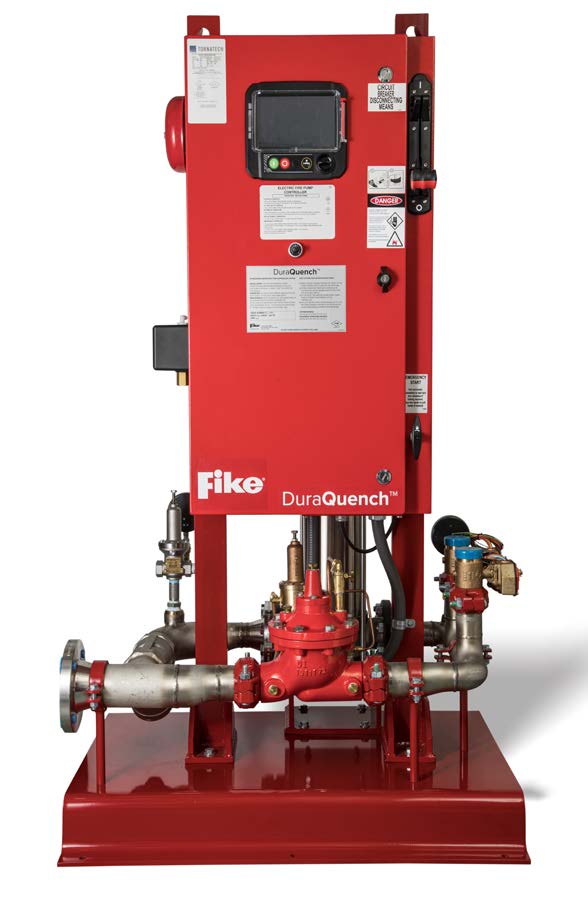
DuraQuench Pro Pump Skid, What Matters for Design
The pump skid is the backbone of a pumped water mist system. Use this section to align stakeholders on what drives scope, schedule, and final performance.
Typical decision points
- Water supply source, building water main or dedicated reservoir strategy
- System type, deluge applications and closed-head approaches based on hazard and occupancy needs
- Pump skid sizing and flow, based on protected volume, nozzle selection, and discharge criteria
- Monitoring and interface requirements, alarms, status points, and integration expectations
- Inspection access and service plan, because maintainability is part of performance
What the pump skid document highlights
| Item | Why it matters |
|---|---|
| Compact, preassembled skid | Reduces field complexity and helps support a cleaner commissioning path. |
| Functional testing before shipment | Improves predictability and reduces on-site troubleshooting time. |
| Flow options, 111 GPM and 155 GPM models | Supports design alignment based on discharge objectives and nozzle demands. |
| Standards context, NFPA 750, NFPA 20, FM 3-7 | Clarifies the framework used for engineering decisions and project review. |
Downloads and Spec References
DuraQuench Pro Overview (PDF)
High-level system positioning, typical applications, and the core value proposition for water mist fire suppression.
Pump Skid Details (PDF)
Pump skid configuration highlights, flow models, construction notes, and standards context used in engineering decisions.
Optional PDF preview
If your WordPress environment allows embedded previews, you can use the frames below. If not, the download links above remain the best user experience.
Preview, DuraQuench Pro Overview
Preview, DuraQuench Pro Pump Skid
Frequently Asked Questions
What is a water mist fire suppression system?
Water mist systems are engineered to discharge fine water mist through specialized nozzles. They are often selected to control fire effectively while reducing total water usage and limiting secondary damage.
When does DuraQuench Pro make sense over sprinklers?
When the consequence of a large sprinkler discharge is unacceptable, or when you need a compact, pumped solution designed for the hazard and space constraints.
Does water mist replace all other suppression approaches?
No. The right solution depends on the hazard, the protected volume, the operational constraints, and compliance requirements. SSI helps evaluate the right approach for the application.
What information speeds up design and quoting?
Room or enclosure drawings, ceiling heights, obstructions, equipment heat sources, water supply details, detection strategy, required interfaces, and any constraints on discharge and downtime.
Next Steps, Get a Design Review
If you are serious about protecting critical assets, stop guessing and get the design right up front. SSI will review the layout, clarify the protection objective, and recommend an engineered water mist configuration aligned with your facility constraints.
Talk with SSI about DuraQuench Pro
We can help define scope, validate feasibility, and support installation and service so your system stays ready, not just installed.
Request a consultation or call 1-800-360-0687 .
Related SSI Solutions

Need help choosing the right approach?
- Define the asset, the hazard, and the acceptable downtime.
- Clarify discharge constraints, water supply, and space limitations.
- Align compliance requirements, then select the engineered solution.
Suppression Systems Inc., 155 Nestle Way, Suite 104, Breinigsville, PA 18031