
Aircraft Hangar Fire Detection: How Optical Flame Detection Triggers NFPA 409 Suppression in Time to Save the Aircraft
Aircraft hangar fires develop in seconds and reach catastrophic intensity in minutes. A fuel spill from a single damaged hose, a static discharge during refueling, a hot work spark, or an electrical fault can ignite a pool fire that engulfs an aircraft worth tens of millions of dollars before personnel can even reach a pull station. By the time conventional smoke detection responds, the aircraft is gone — and the hangar structure is likely lost with it.
Optical flame detection is the only technology capable of identifying a hangar fire fast enough to trigger the foam, water, or alternative suppression response required by NFPA 409 before the fire reaches a containment-impossible scale. UV, UV/IR, and Triple IR (IR3) detectors respond to fire in milliseconds — faster than any heat, smoke, or air sampling technology — and integrate with the high-volume suppression systems that hangar protection requires.
Suppression Systems, Inc. (SSI) designs and installs optical flame detection and integrated hangar fire protection systems across Pennsylvania, New Jersey, Maryland, Virginia, and Delaware — serving commercial airports, FBOs, MRO facilities, military installations, and corporate aviation hangars. Our NICET-certified engineers handle NFPA 409 compliance, the active AFFF-to-fluorine-free foam transition, and the integration of detection, suppression, mass notification, and emergency response into a coordinated system.
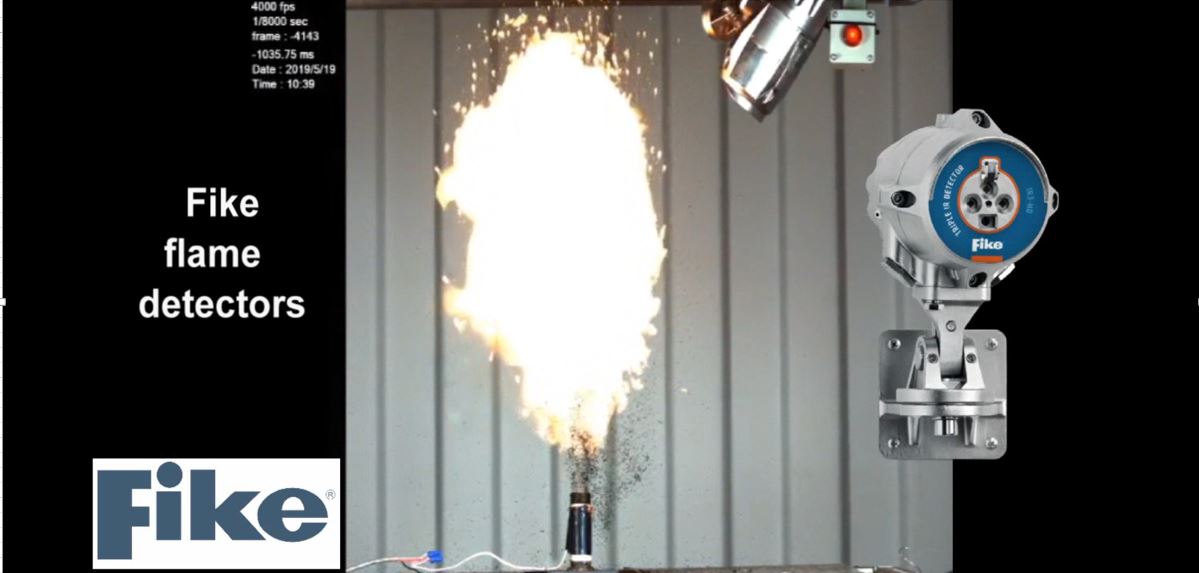
Why Aircraft Hangars Are the Most Demanding Fire Detection Environment in Commercial Construction
Aircraft hangars combine virtually every condition that defeats conventional fire detection. Understanding the engineering problem is the first step in understanding why optical flame detection is not just a preference — it is the only viable technology category.
1. Extreme Ceiling Heights
Modern hangars are sized to accommodate widebody aircraft. The 2026 edition of NFPA 409 updated the aircraft access door height threshold for Group I, II, and III hangars from 28 ft (8.5 m) to 35 ft (10.7 m) — reflecting current aircraft design. Hangar ceilings typically rise well above the door height, putting structural members and ceiling-mounted equipment 40, 50, or 60 feet above the floor. Smoke from a developing fire stratifies long before reaching the ceiling. By the time a ceiling-mounted detector activates, the fire on the floor has already escalated.
2. Frequent Hangar Door Openings
Hangar doors open and close throughout the operational day, exposing the interior to outside air and disrupting the airflow patterns smoke detection relies on. Smoke that would otherwise rise toward a ceiling sensor can be pulled directly out through an open door. Conventional smoke detection becomes effectively non-functional during the operational windows when fire risk is highest.
3. Jet Fuel Pool Fires Develop in Seconds
Jet A and aviation gasoline are highly flammable. A spilled fuel pool can transition from ignition to fully developed pool fire in seconds, with flame heights of 30 to 50 feet within the first minute. Conventional fire alarm detection — even fast spot heat detectors — cannot activate suppression in time. The suppression system must release essentially at the moment of ignition to make a meaningful difference, which requires detection that operates at the speed of light: optical flame detection.
4. False Alarm Conditions Are Constant
Hangars host welding, grinding, hot work on aircraft, jet engine ground runs, halogen and HID lighting, sunlight through skylights and open doors, and reflections off aircraft skin. Any of these can trigger a poorly-engineered flame detection system. A false foam discharge in a hangar means tens of thousands of gallons of foam coating an aircraft worth tens of millions of dollars — making false alarm immunity a critical engineering requirement, not just a nice-to-have.
5. Consequence of Failure Is Catastrophic
A single hangar fire can cost more than the entire fire protection system protecting it — many times over. Commercial widebody aircraft cost $200 million or more; military aircraft and corporate jets are similarly high-value. The aircraft, the hangar structure, the equipment, and the operational disruption of losing a maintenance facility together make hangar fire protection an investment that pays for itself the first time it works correctly.
What Is NFPA 409 and What Does the 2026 Edition Require?
NFPA 409 — Standard on Aircraft Hangars is the central fire safety code governing the construction and protection of aircraft hangars in the United States. First published in the 1930s and updated regularly, the standard establishes hangar classifications, construction requirements, detection requirements, suppression system options, and drainage requirements.
The 2026 edition of NFPA 409 introduced a substantial reorganization and several technical changes that directly affect new construction and major retrofits:
- New Chapter 6 (Construction Features of Aircraft Hangars) consolidating construction requirements
- New Chapter 7 (Protection of Aircraft Hangars) consolidating fire protection requirements
- Aircraft access door height threshold updated from 28 ft to 35 ft for Group I, II, and III hangars
- Modified technical requirements for closed-head water sprinkler systems, low-level foam systems, and drainage floor assemblies
- Revised ITM (Inspection, Testing, Maintenance) requirements in Chapter 8
- Updates to unprotected columns, hangar door tracks, draft curtains, and retention locations
- Expanded scope covering aircraft and fuel types not previously addressed
- Continued recognition of risk-based and performance-based design alternatives introduced in the 2022 edition, allowing alternative protection methods with AHJ approval
- Continued recognition of ignitable liquid floor drainage assemblies as an alternative to foam systems for some applications
The 2026 edition arrives in the middle of a major industry transition — the phase-out of AFFF and the move to fluorine-free foam concentrates — making the timing especially significant for hangar owners planning new construction, system retrofits, or compliance upgrades.
Hangar Groups Under NFPA 409
NFPA 409 classifies hangars by size and construction, with different protection requirements for each group. The 2026 edition continues the four-group structure with updated dimensions:
| Group | Defining Criteria | Typical Protection Approach |
|---|---|---|
| Group I | Largest hangars — exceeds Group II/III size and door height thresholds | Foam-water deluge, water + low-level HEF, or risk-based alternative |
| Group II | Mid-size hangars below Group I threshold | Foam suppression no longer mandatory (2022+); water-based systems and risk-based alternatives permitted |
| Group III | Smaller hangars with reduced footprint and door height | Sprinkler systems with AHJ-approved detection |
| Group IV | Membrane-covered rigid steel frame structures | Detection and suppression engineered to membrane construction |
The 2026 edition also expanded coverage to include specific provisions for painting hangars and hangars for unfueled aircraft, reflecting how hangar usage has evolved. Group classification determines which detection and suppression requirements apply, and is the first decision in any hangar fire protection design.
Which Optical Flame Detector Is Right for Aircraft Hangar Applications?
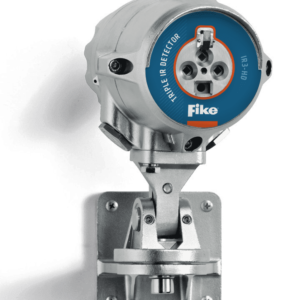
Optical flame detection comes in three technology generations, each with strengths and limitations for hangar applications. The right selection depends on the specific hangar environment, the fuel risk profile, and the false alarm sources present:
UV-Only Detectors
Ultraviolet detectors respond to the short-wavelength UV emission present at the instant of ignition — the fastest theoretical response of any flame detection technology. They can detect invisible flames (hydrogen, alcohols) that have minimal IR signature. Limitation for hangars: UV-only detectors are highly susceptible to false alarms from arc welding, lightning, and sunlight reflection. Generally not recommended as the primary technology for hangar applications unless deployed in cross-zoned pairs with IR detection.
UV/IR Combined Detectors
UV/IR detectors require both UV and IR signals to be present before activating an alarm, dramatically reducing false activations from welding, sunlight, and hot equipment. They balance fast response with reasonable false alarm immunity at a moderate cost. Hangar use: Common in smaller hangars and indoor maintenance bays where direct sunlight exposure is limited and the fuel risk profile justifies the detection capability but not the cost of IR3 systems.
Triple IR (IR3) / Multi-Spectrum IR Detectors
IR3 detectors monitor three distinct infrared wavelengths and analyze the flame flicker signature in each band, distinguishing real hydrocarbon fires from sunlight, hot bodies, welding arcs, and reflections. They are the highest-immunity flame detection technology available and the standard specification for large commercial and military hangars where false discharge of a foam-water deluge system is operationally unacceptable. Hangar use: The dominant choice for Group I hangars, military aircraft installations, and any hangar with significant sunlight exposure through open doors or skylights.
SSI specifies the detection technology based on the specific hangar’s operational profile, sunlight exposure, false alarm risk factors, and budget. For the majority of new commercial hangars, IR3 detection is the right answer — but for some applications, a combination of technologies (IR3 on the floor, UV/IR around equipment areas) delivers the best coverage at the most reasonable cost.
Integration With Hangar Suppression — and the AFFF Phase-Out
Optical flame detection is only the trigger. The suppression system is the response — and hangar suppression is undergoing one of the most significant transitions in the history of fire protection. The AFFF (Aqueous Film-Forming Foam) systems that have been the default for decades contain per- and polyfluoroalkyl substances (PFAS) — “forever chemicals” that are now being phased out by federal and state regulation.
The current landscape:
- Department of Defense was required by the FY2020 NDAA to stop using AFFF at its installations after October 1, 2024, with the Secretary of Defense authorized to grant up to two one-year waivers extending some use through October 1, 2026
- Civilian hangar owners have no single hard federal deadline yet, but state-level PFAS discharge restrictions are tightening, AFFF disposal costs are rising, and insurance carriers are factoring AFFF inventory into underwriting decisions
- Fluorine-Free Foam (F3) — also called Synthetic Fluorine-Free Foam (SFFF) is the industry replacement direction, with multiple manufacturers offering UL-listed and FM-approved alternatives
- NFPA 409 (2022 edition) does not yet explicitly recognize SFFF as a permitted foam type for hangar suppression — the 2026 edition is expected to address this, but designers and AHJs are increasingly using risk-based and performance-based design provisions to approve SFFF installations in the interim
- Transition is not a “drop-in” replacement. Existing AFFF-based foam-water deluge systems typically require hardware changes — different proportioning equipment, different concentrate-handling components, sometimes different sprinkler heads — to operate correctly with fluorine-free foam concentrates
- Encapsulator Agents (such as F-500 EA, now included in FAA AC 150/5210-6E) and ignitable liquid floor drainage assemblies are recognized alternatives for some applications
What this means for hangar owners: any new hangar foam system specified in 2026 should plan for fluorine-free chemistry from the start, not as a future retrofit. Existing facilities with AFFF inventories should be developing a transition plan in coordination with their insurer, AHJ, and fire protection engineer — including how the detection system will be re-validated after suppression hardware changes.
The detection system is largely unaffected by the foam transition — optical flame detectors trigger the suppression release regardless of what’s in the foam concentrate tank. But the integration logic, valve timing, monitor head coordination, and post-discharge testing all change with the suppression hardware. SSI handles this as an integrated re-engineering project, not just a foam concentrate swap.
What Suppression Options Does NFPA 409 Permit?
For Group I hangars (the most common large-aircraft case), NFPA 409 has historically allowed several suppression approaches. The 2026 edition continues to recognize these along with the newer risk-based and performance-based alternatives introduced in 2022:
Option 1: Foam-Water Deluge System
Low-expansion foam (maximum 20:1 expansion ratio) discharged uniformly from open sprinklers across the hangar overhead. Triggered by optical flame detection through a UL 864-listed releasing panel. Historically AFFF-based; new and retrofit installations now planning fluorine-free foam.
Option 2: Water Sprinklers + Floor-Level Foam Coverage
Wet-pipe or pre-action water sprinklers overhead, combined with full-floor coverage from oscillating monitor nozzles or grate nozzles in floor trenches. Foam-water solution creates a film over the flaming pool fire while gravity directs fuel and foam into drainage trenches. Optical flame detection triggers both the overhead and floor-level discharge.
Option 3: Water Overhead + Low-Level High-Expansion Foam (HEF)
Water-only overhead from a wet-pipe or pre-action sprinkler system, combined with high-expansion foam (maximum 1000:1 expansion ratio) generated at floor level by foam generators covering the entire hangar floor. Discharge rate typically 3 cfm/sf of floor area. HEF rapidly fills the hangar with foam to extinguish a fuel pool fire by exclusion of oxygen and cooling.
Option 4: Ignitable Liquid Floor Drainage (No Foam)
Approved under NFPA 409 (2022+) as an alternative to foam-based suppression in certain applications. A purpose-built floor drainage system rapidly removes spilled fuel from the hangar floor before it can develop into a pool fire, working in conjunction with water-only sprinkler suppression. Eliminates the AFFF/PFAS exposure entirely. Optical flame detection still required for sprinkler activation and emergency response.
Option 5: Risk-Based / Performance-Based Design
Introduced in the 2022 edition and continued in 2026 — a documented risk assessment process allowing facility owners and fire protection engineers to propose alternative protection methods to the AHJ. Particularly valuable for hangars with unique operational characteristics, hangars transitioning away from AFFF, and hangars where prescriptive Option 1–4 systems are impractical or do not match the actual fire risk profile.
The Complete Code Stack for Aircraft Hangar Fire Protection
Hangar fire protection operates within a multi-standard framework. SSI designs every installation to meet the full applicable code stack and coordinates with the AHJ, the insurance underwriter, and (for military installations) the responsible service branch:
| Standard | What It Governs |
|---|---|
| NFPA 409 | Standard on Aircraft Hangars — primary code, including 2026 edition reorganization |
| NFPA 72 | National Fire Alarm and Signaling Code — Radiant Energy-Sensing Fire Detector (optical flame detection) requirements |
| NFPA 11 | Standard for Low-, Medium-, and High-Expansion Foam — foam concentrate types and application requirements |
| NFPA 13 | Installation of Sprinkler Systems — overhead sprinkler design requirements |
| NFPA 16 | Installation of Foam-Water Sprinkler and Foam-Water Spray Systems |
| IBC Section 412 | International Building Code — fire separation, floor drainage, and suppression coordination for hangars |
| UFC 4-211-01 | Department of Defense Unified Facilities Criteria for aircraft maintenance hangars |
| FM Data Sheet 7-93 | FM Global guidance for aircraft hangars — insurance underwriting requirements |
| FAA AC 150/5210-6E | FAA Advisory Circular on aircraft fire and rescue communications, including agent guidance |
| UL 864 / FM 3260 | Listing standards for fire alarm control panels and optical flame detectors |
Hangar Types SSI Designs Fire Protection For
- Commercial airline maintenance hangars — Group I facilities for widebody and narrowbody aircraft maintenance, paint, and overhaul
- MRO (Maintenance, Repair, Overhaul) facilities — third-party aircraft maintenance hangars supporting multiple operators
- Cargo aircraft hangars — high-volume cargo operations with continuous aircraft movement and refueling activity
- Military hangars — Department of Defense facilities subject to UFC 4-211-01 and the AFFF phase-out timeline
- Fixed Base Operator (FBO) hangars — general aviation, business jet, and charter operations
- Corporate aviation hangars — single-tenant facilities housing private jets and corporate fleets
- Aircraft paint hangars — specialized facilities with VOC emission control and explosion-proof electrical requirements
- Helicopter hangars — specific protection requirements addressed in NFPA 409 provisions for rotary-wing operations
- Aviation museums and historic aircraft storage — irreplaceable assets requiring specialized risk-based protection design
Frequently Asked Questions
What is NFPA 409?
NFPA 409 is the National Fire Protection Association Standard on Aircraft Hangars. It establishes construction and fire protection requirements for hangars based on size, door height, and construction type. The standard classifies hangars into Group I (largest), Group II, Group III (smallest), and Group IV (membrane-covered steel frame), each with different detection and suppression requirements. The 2026 edition introduced a substantial reorganization including new Chapters 6 and 7 and updated the aircraft access door height threshold from 28 ft to 35 ft.
Why is optical flame detection used in aircraft hangars instead of smoke detection?
Aircraft hangars combine extreme ceiling heights, frequent hangar door openings that disrupt smoke movement, and jet fuel pool fires that develop in seconds. Smoke detection cannot respond fast enough to activate the suppression system before significant fire development. Optical flame detection responds to the radiant energy emitted by fire in milliseconds — fast enough to release the foam-water deluge or sprinkler suppression system at the moment of ignition, when intervention can still be effective.
What’s the difference between UV/IR and Triple IR (IR3) for hangar applications?
UV/IR detectors require both ultraviolet and infrared signals to be present, reducing false alarms from welding, hot equipment, and sunlight. They are common in smaller hangars and indoor maintenance bays. Triple IR (IR3) detectors monitor three distinct infrared wavelengths and analyze flame flicker patterns to distinguish real hydrocarbon fires from false alarm sources. IR3 provides significantly higher false alarm immunity and is the standard specification for large Group I hangars, hangars with significant sunlight exposure, and military hangars where false foam discharge is operationally unacceptable.
When do I have to replace AFFF foam in my hangar?
For Department of Defense installations, the FY2020 NDAA required AFFF phase-out after October 1, 2024, with the Secretary of Defense authorized to grant up to two one-year waivers extending some use through October 1, 2026. For civilian hangars, no single federal deadline exists yet — but state-level PFAS discharge restrictions are tightening, AFFF disposal costs are rising, and insurance carriers are factoring AFFF inventory into underwriting. Industry best practice in 2026 is to plan any new foam system around fluorine-free chemistry from the start and to begin transition planning for existing AFFF systems in coordination with the AHJ and insurance underwriter.
Can I just swap fluorine-free foam concentrate for AFFF in my existing system?
No. Fluorine-free foam is not a drop-in replacement for AFFF. Existing AFFF-based foam-water deluge systems typically require hardware changes — different proportioning equipment, different concentrate-handling components, and sometimes different sprinkler heads — to operate correctly with fluorine-free chemistry. The detection system itself usually does not change, but the integration logic, valve timing, and acceptance testing all need to be re-validated after the suppression hardware modifications. SSI handles this as an integrated engineering project, coordinating with the AHJ and insurance underwriter.
Do Group II hangars still require foam suppression?
No. The 2022 edition of NFPA 409 removed the foam suppression requirement for Group II aircraft hangars based on multiple risk analysis studies. Group II hangar owners can use water-based sprinkler systems or risk-based alternative protection approaches, subject to AHJ approval. The 2026 edition continues this flexibility. Many Group II hangars are now being designed with water-only sprinkler systems and optical flame detection — a significantly less expensive and more environmentally favorable approach than the previous foam-water requirement.
What is an ignitable liquid floor drainage system?
An ignitable liquid floor drainage system is a purpose-built drainage assembly that rapidly removes spilled fuel from the hangar floor before it can develop into a pool fire. NFPA 409 (2022+) recognizes these systems as an alternative to foam-based suppression for some applications, working in conjunction with water-only sprinkler protection. The advantage is complete elimination of AFFF/PFAS exposure. Optical flame detection is still required to activate sprinkler and emergency response, but the suppression strategy shifts from foam fire fighting to physical fuel removal.
How fast does optical flame detection respond?
Optical flame detection responds to the radiant energy emitted by fire at the speed of light. The detector’s actual response time — including signal processing and confirmation logic — is measured in milliseconds. UV-only detectors are the fastest; UV/IR detectors add slight processing time to verify both signals are present; IR3 detectors add additional flame pattern analysis to reject false alarms. Even with the most conservative IR3 processing, response times remain well under one second from ignition to alarm output to the fire alarm panel.
Do optical flame detectors work in outdoor sunlight conditions?
Yes, when the correct technology is specified. UV-only detectors are susceptible to false alarms from sunlight reflection. UV/IR detectors handle sunlight reasonably well. IR3 detectors specifically analyze flame flicker signatures to distinguish real fires from sunlight, hot surfaces, and reflected IR — making them the preferred technology for hangar applications with significant sunlight exposure through open doors, skylights, or partially open structures.
How are optical flame detectors tested and maintained?
Optical flame detectors require periodic functional testing per NFPA 72, typically using purpose-built flame test sources that simulate the spectral signature of a real fire. The detector’s window must be kept clear of dust, oil film, and physical obstruction — particularly important in hangar environments with brake dust, jet exhaust residue, and maintenance activity. SSI provides annual inspection and testing services covering functional verification, sensitivity confirmation, fire alarm panel integration testing, and full documentation per NFPA 72 and AHJ requirements.
Why Work With SSI on Aircraft Hangar Fire Protection
Hangar fire protection is uniquely demanding — and uniquely consequential. The systems must work the first time they’re tested by an actual fire, must satisfy NFPA 409, NFPA 72, NFPA 11, the IBC, the FAA, the insurance underwriter, and (for military) UFC 4-211-01 simultaneously, and must increasingly address the AFFF transition in a defensible way.
SSI brings over 40 years of fire protection engineering experience and certified Fike partnership to aircraft hangar projects. Our services include:
- NFPA 409 (2026 edition) compliance engineering, including the new Chapter 6 and 7 reorganization
- Optical flame detection coverage modeling — field-of-view (FOV) analysis, sightline mapping, detector placement
- UV/IR vs. IR3 technology selection based on operational profile and sunlight exposure
- Foam-water deluge, water + HEF, water + AFFF/SFFF floor coverage, and ignitable liquid drainage system design
- Risk-based and performance-based alternative design under NFPA 409 (2022+) provisions
- AFFF to fluorine-free foam transition planning, including hardware re-engineering and detection re-validation
- Integration with Fike and Autocall fire alarm panels for releasing service
- Mass notification, emergency communication, and bi-directional amplification for first responder coordination
- Acceptance testing, commissioning documentation, and AHJ submittals
- Annual NFPA 72 inspection and testing service throughout the system’s operational life
Planning a new hangar, retrofitting an existing facility, or developing your AFFF transition strategy? Contact SSI today to discuss your project with our certified fire protection engineers. We serve Pennsylvania, New Jersey, Maryland, Virginia, and Delaware.