
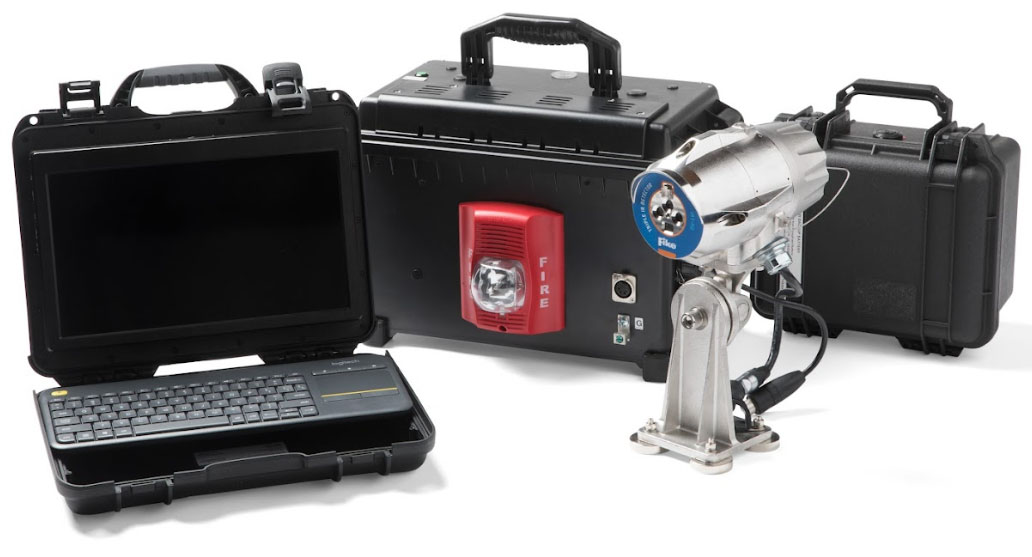
Robotic Fire Watch Systems
A robotic fire watch system is a self-contained, portable fire detection unit that autonomously monitors a site for smoke, flame, and heat in place of — or in addition to — a human fire watch patrol. These units combine Fike IR3-HD triple infrared flame detectors, AI-powered video analytics, and integrated horn-strobe notification into a single rapidly deployable device that operates 24 hours a day, 7 days a week. They are used when fire watch is legally required — during fire alarm system impairments, post-hot work operations, suppression system maintenance outages, and construction-phase monitoring — and when the environment is too hazardous, high-ceiling, or logistically demanding for a continuous human presence. SSI deploys robotic fire watch systems across Pennsylvania, New Jersey, Maryland, Virginia, and Delaware.
What Is a Robotic Fire Watch System?
Traditional fire watch relies on a person stationed on-site to visually monitor an area and manually report a fire — a method that is labor-intensive, subject to human fatigue, and difficult to sustain continuously across extended outages or overnight shifts. A robotic fire watch system replaces that human-dependent approach with a technology-driven solution that monitors continuously without fatigue, documents everything on video, and delivers alarm outputs directly to a fire alarm control panel, a central station, or a mobile device.
Each SSI robotic fire watch unit is a single portable device containing:
- A Fike IR3-HD triple infrared flame detector that responds to open flame signatures with millisecond-speed detection
- AI video analytics that analyze live video for smoke, flame, and heat signatures up to 100 ft (30 m) away
- An integrated horn-strobe for immediate on-site evacuation notification
- Dry-contact relay outputs for alarm, fault, and supervisory signals — wiring directly into a facility’s existing fire alarm or suppression panel
- 24/7 video recording with real-time alert transmission to mobile devices, control rooms, and first responders
The system is designed for rapid deployment — site setup within hours — making it the practical solution for unplanned system impairments, last-minute hot work permits, and construction schedules that cannot accommodate fixed detection infrastructure.
When Is Fire Watch Legally Required?
Fire watch is not optional — it is a code, regulatory, and insurer-mandated obligation that triggers under specific conditions. Understanding the exact trigger criteria is essential for facilities managers, safety officers, and contractors. The table below outlines the primary regulatory and insurance triggers that require fire watch coverage.
| Authority | Trigger Condition | Requirement |
|---|---|---|
| NFPA 72 | Fire alarm system taken out of service for more than 4 hours in a 24-hour period | AHJ and insurer notification required; fire watch or evacuation must be implemented for the affected area |
| NFPA 72 | Suppression system offline for maintenance, upgrade, or repair | Fire watch required for the unprotected area until the system is restored to full service |
| OSHA 29 CFR 1910.252 | Welding, cutting, or grinding (hot work) in or near areas with combustible materials within 35 feet | Fire watch required during hot work and for a minimum of 30 minutes after all hot work has been completed |
| Factory Mutual (FM) | Any impairment to FM-protected fire suppression or detection systems | FM has specific impairment notification and fire watch protocols; failure to comply may affect coverage |
| AHJ / Local Code | Authority Having Jurisdiction requirements vary by municipality, occupancy type, and inspection findings | AHJs may impose fire watch requirements beyond NFPA minimums, particularly for high-risk occupancies |
| Construction Phase | Permanent fire alarm and suppression systems not yet installed or not yet commissioned | Temporary fire watch required for occupied or active construction areas without functional permanent protection |
Robotic vs. Human Fire Watch: How Do They Compare?
Human fire watch satisfies code when properly implemented — but it carries well-documented operational limitations. Robotic fire watch systems were developed specifically to address those limitations while meeting or exceeding NFPA 72 compliance requirements for impaired system monitoring.
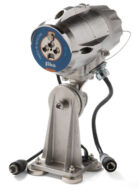
Integrated horn-strobe for immediate on-site evacuation alerting.
| Capability | Human Fire Watch | Robotic Fire Watch |
|---|---|---|
| Hours of operation | Shift-based; requires staffing continuity | 24/7 continuous, no shift changes |
| Detection method | Visual observation; limited field of view | IR3-HD flame detection + AI video analytics to 100 ft (30 m) |
| Response time | Variable; dependent on alertness and proximity | Millisecond-speed flame detection; immediate alarm output |
| Documentation | Manual logs; gaps possible | Continuous video recording for post-incident review and compliance documentation |
| Alarm escalation | Verbal / manual notification | Horn-strobe + FACP dry-contact + mobile / central station alert simultaneously |
| NFPA 72 compliant output | Does not produce panel-compatible signals | Dry-contact relays for alarm, fault, and supervisory — integrates directly with FACP |
| Environmental challenges | Human health hazards limit monitoring in heavy dust, fumes, or extreme heat | Engineered for harsh industrial environments including dust, debris, and variable airflow |
| Deployment speed | Dependent on staffing availability | Site setup within hours of SSI dispatch |
What Detection Technology Is Inside Each Unit?
The capability of a robotic fire watch system is only as strong as the detection technology it houses. SSI’s units integrate three complementary technologies in a single enclosure, each addressing a different detection mechanism — and collectively providing a level of coverage that no single-technology approach can match.
Fike IR3-HD Triple Infrared Flame Detection
The Fike IR3-HD is an industrial-grade triple infrared flame detector. It operates across three independent infrared sensing channels and issues an alarm only when all three channels simultaneously confirm the characteristic radiation signature of a real open flame. This multi-channel architecture virtually eliminates false alarms from common industrial sources — arc welding, sunlight, hot process surfaces, and rotating machinery — that would trigger single-channel IR or UV detectors.
The result is millisecond-speed flame detection that is immune to the false alarm sources most prevalent in the industrial environments where fire watch is required. The IR3-HD is the same Fike flame detection technology SSI specifies for permanent installations in aircraft hangars, turbine enclosures, and petrochemical facilities. Learn more: Optical Flame Detection Systems.
AI Video Analytics
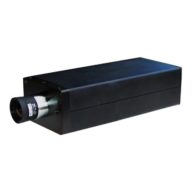
AI-driven video detection for smoke, flame, and heat.
Embedded artificial intelligence analyzes live video continuously, identifying the visual signatures of smoke, flame, and heat up to 100 ft (30 m) from the unit. AI analytics detect developing fire conditions before they become visible to a human observer — including smoldering conditions that produce smoke before an open flame appears.
This predictive capability is what differentiates robotic fire watch from a simple camera installation. The AI is specifically trained to recognize fire and smoke signatures, minimizing false positives while catching incipient events. All video is recorded continuously for post-incident documentation and compliance purposes. For a deeper look at video-based detection technology, see SSI’s Video Imaging Fire Detection page.
Integrated Horn-Strobe and Dry-Contact Relay Outputs
When either the IR3-HD or the AI video analytics system detects a fire event, the unit’s onboard horn-strobe activates immediately — providing local evacuation notification independent of any panel connection. Simultaneously, dry-contact relay outputs for alarm, fault, and supervisory signals allow the unit to interface directly with the facility’s existing fire alarm control panel or suppression releasing panel.
This dual-path notification — local horn-strobe plus panel-connected relay output — ensures that both on-site personnel and remote monitoring stations receive simultaneous notification, consistent with NFPA 72 requirements for impaired system monitoring.
How Does Robotic Fire Watch Meet NFPA 72, OSHA, and Factory Mutual Requirements?
Compliance is the core reason facilities choose a documented, technology-based fire watch solution over an informal human patrol. Each of the major regulatory and insurance frameworks imposes specific requirements that robotic fire watch systems are designed to satisfy.
NFPA 72 — Impaired Systems
NFPA 72 requires that when a fire alarm system is impaired — taken out of service for more than 4 hours in a 24-hour period — the owner must notify the AHJ and insurer and implement fire watch or evacuation for the affected area. SSI’s robotic fire watch units satisfy this requirement by providing NFPA 72-compliant detection outputs (alarm, fault, supervisory via dry-contact relays) that can feed directly into the facility’s existing panel infrastructure, maintaining a documented record of continuous monitoring during the impairment period.
OSHA — Hot Work Fire Watch
OSHA 29 CFR 1910.252 requires a fire watch during welding, cutting, and grinding operations when combustible materials are within 35 feet of the work, and for a minimum of 30 minutes after all hot work is complete. Robotic fire watch units are ideal for post-hot work monitoring — the unit continues monitoring the work area autonomously after the crew has left, satisfying the 30-minute requirement with documented video coverage and automated alarm capability.
Factory Mutual (FM Global)
Factory Mutual imposes specific impairment notification and fire watch protocols for FM-insured properties. Non-compliance during a fire event can affect claim outcomes. SSI’s robotic fire watch units provide the documented, technology-based fire monitoring that FM requirements demand. SSI provides access to FM’s formal fire watch requirements documentation:
→ Download: Factory Mutual Requirements for Fire Watch (PDF)
For the full robotic fire watch system specification sheet:
→ Download: Robotic Fire Watch System Data Sheet (PDF)
Where Is Robotic Fire Watch Deployed?
Robotic fire watch systems are deployed wherever fire watch is required and the environment, operational schedule, or detection challenge makes a conventional human patrol inadequate or insufficient. Key applications SSI serves across the Mid-Atlantic region:
Hot Work Operations — Manufacturing and Industrial Maintenance
Welding, cutting, and grinding operations in manufacturing facilities, refineries, and industrial plants trigger mandatory fire watch under OSHA 29 CFR 1910.252. Robotic units are staged in the hot work zone before operations begin and remain in place through the mandatory post-work monitoring period. The IR3-HD flame detector responds to open flame immediately while the AI video system monitors for smoldering materials that may not ignite until after the work crew has left.
Fire Alarm and Suppression System Impairments
Planned and unplanned system outages — for annual inspections, panel upgrades, suppression agent recharge, or emergency repairs — create impairment windows that require immediate fire watch coverage under NFPA 72. Robotic units can be on-site within hours of an impairment notification, maintaining NFPA 72-compliant detection outputs and continuous video documentation until the permanent system is restored. This is one of the most common SSI robotic fire watch deployments.
Aircraft Hangars
Aircraft hangars require continuous fire protection under NFPA 409. When permanent detection or suppression systems are taken offline for maintenance in an active hangar bay, robotic fire watch units provide NFPA-compliant temporary coverage. High-ceiling hangar environments — where jet fuel fire scenarios demand fast optical detection — are exactly the application the Fike IR3-HD was designed for. See also: Aircraft Hangar Fire Detection Under NFPA 409.
Waste and Recycling Facilities
Waste handling and recycling operations present extreme fire challenges — dense combustible materials, high-dust environments, and long-burning deep-seated fires that are difficult to detect early. Robotic fire watch units are deployed in tipping floors, processing areas, and material storage zones where conventional spot detectors cannot maintain reliable coverage due to airborne particulates and variable conditions. The AI video analytics layer is particularly valuable here, detecting the thermal and visual signatures of a developing waste fire at distances conventional detectors cannot cover.
Construction Sites and Pre-Commissioning Phases
Active construction sites — where permanent fire alarm and suppression systems are not yet installed or commissioned — require temporary fire protection for occupied or operationally active areas. Robotic fire watch units provide code-compliant temporary coverage that scales with construction progress, can be repositioned as the build advances, and is removed cleanly when permanent systems go live.
High-Risk Storage and Processing Areas
Facilities storing flammable liquids, combustible materials, or operating processes with elevated ignition risk benefit from robotic fire watch as either a primary temporary measure or an augmentation layer on top of existing fixed detection systems. Environments with high airflow, large open floor areas, or overhead obstructions that limit conventional detector effectiveness are strong candidates for robotic deployment.
SSI Deployment, Integration, and Service
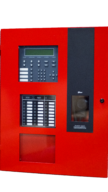
Fike ECS panel integration via dry-contact relay.
SSI provides complete design, deployment, integration, and service for robotic fire watch systems throughout Pennsylvania, New Jersey, Maryland, Virginia, and Delaware. With over 40 years in the fire and explosion protection industry, our NICET-certified engineers assess each deployment for the right unit placement, panel integration approach, and monitoring configuration before equipment arrives on-site.
Integration with the facility’s existing fire alarm infrastructure is handled via the unit’s dry-contact relay outputs — wiring directly into an Autocall fire alarm control panel, a Fike suppression releasing panel, or a third-party FACP. The integration provides alarm, fault, and supervisory signal continuity during the impairment period, consistent with NFPA 72 requirements.
Real-time alarm notifications are transmitted simultaneously to mobile devices, on-site control rooms, and first responders — ensuring that regardless of staffing level or time of day, the right people receive immediate notification at the moment of detection.
SSI robotic fire watch deployment includes:
- Site assessment and unit placement planning by NICET-certified engineers
- Rapid deployment — site setup completed within hours of dispatch
- Dry-contact integration with facility FACP or suppression panel
- Real-time notification configuration (mobile, control room, central station)
- 24/7 video recording throughout the deployment period
- Full service and retrieval upon permanent system restoration
- Advanced Fire Detection Systems Overview
- Optical Flame Detection Systems
- Video Imaging Fire Detection
- VESDA — Very Early Smoke Detection
- Industrial Thermal Imaging Monitoring
- Aircraft Hangar Fire Detection Under NFPA 409
- Fire Alarm & Suppression Integration — A Practical Guide
- Fike Fire Protection Solutions
- Autocall Fire Alarm Systems
Frequently Asked Questions: Robotic Fire Watch
What exactly triggers a fire watch requirement under NFPA 72?
NFPA 72 requires fire watch when a fire alarm or suppression system is taken out of service for more than 4 hours in a 24-hour period. The building owner must notify the AHJ and the insurer, and must immediately implement either fire watch for the affected area or evacuation. Fire watch must continue without interruption until the system is restored to full service. SSI can deploy robotic fire watch units within hours of a planned or unplanned impairment notification anywhere in our service area.
How long after hot work does fire watch need to continue?
OSHA 29 CFR 1910.252 requires that fire watch be maintained for a minimum of 30 minutes after all hot work (welding, cutting, grinding) has been completed, when combustible materials are within 35 feet of the work area. In practice, many AHJs and insurers require longer monitoring periods — particularly when work has been performed near wall, floor, or ceiling penetrations where smoldering may not manifest immediately. Robotic fire watch units are ideal for post-hot work monitoring because they continue documenting the area autonomously after the work crew has left.
Does a robotic fire watch unit fully replace a human fire watch?
In most applications — yes, when the unit provides NFPA 72-compliant detection outputs and is properly deployed to cover the protected area. The critical advantage is that robotic units deliver superior detection capability (IR3-HD flame detection, AI video analytics), continuous 24/7 coverage, and documented video records that human patrol cannot match. However, the specific acceptability of robotic fire watch as a full replacement for human patrol may be subject to AHJ interpretation, insurer requirements, and occupancy type. SSI’s engineers work with AHJs and insurers during deployment planning to confirm compliance for each site.
How does the robotic unit connect to our existing fire alarm panel?
SSI’s robotic fire watch units provide dry-contact relay outputs for alarm, fault, and supervisory signals. These outputs wire directly into the facility’s existing fire alarm control panel — whether Autocall, Fike, or a third-party FACP — providing panel-level signal continuity consistent with NFPA 72 requirements during the impairment period. The integration is performed by SSI’s technicians as part of the deployment process. Units can also be operated in a standalone configuration with mobile and central station notification only, where panel integration is not available or practical.
How quickly can SSI deploy a robotic fire watch unit?
Site setup can be completed within hours of SSI dispatch across our service area — Pennsylvania, New Jersey, Maryland, Virginia, and Delaware. Robotic fire watch is specifically designed for rapid response to both planned impairments (scheduled maintenance windows) and unplanned outages (emergency repairs, equipment failures). For planned impairments, SSI can coordinate deployment in advance so the unit is on-site and operational at the moment the permanent system is taken offline.
Why is the Fike IR3-HD better than a standard IR detector for fire watch?
Standard single-channel IR detectors can produce false alarms from hot process surfaces, rotating machinery, and certain lighting sources — a serious problem in industrial maintenance environments where hot work and welding activity are common. The Fike IR3-HD uses three independent infrared sensing channels and issues an alarm only when all three simultaneously confirm the signature of a real flame. This multi-channel confirmation logic makes it immune to the false alarm sources most prevalent in hot work and industrial maintenance environments, ensuring that when the robotic unit alarms, it is because a real fire event is occurring.
Does SSI provide robotic fire watch for construction projects?
Yes. SSI deploys robotic fire watch for construction-phase coverage in active buildings where permanent fire alarm and suppression systems are not yet installed or commissioned. Units can be repositioned as construction progresses and are removed cleanly when permanent systems are tested and placed in service. SSI coordinates with project managers, general contractors, and AHJs to ensure the temporary fire watch program satisfies both code requirements and insurer specifications throughout the build schedule.
Need Fire Watch Coverage? SSI Deploys Within Hours.
SSI has over 40 years of experience in fire and explosion protection for industrial facilities across Pennsylvania, New Jersey, Maryland, Virginia, and Delaware. Our NICET-certified engineers assess each deployment for correct unit placement, panel integration, and compliance documentation — so your fire watch coverage is defensible under NFPA 72, OSHA, and Factory Mutual requirements.
155 Nestle Way, Suite 104 • Breinigsville, PA 18031 • 1-800-360-0687
Request a Fire Watch Deployment